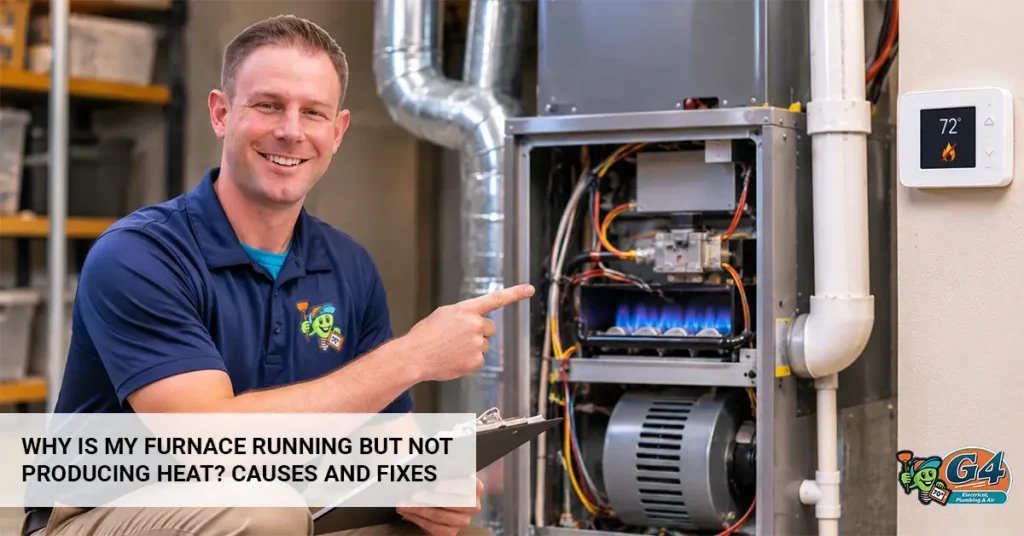
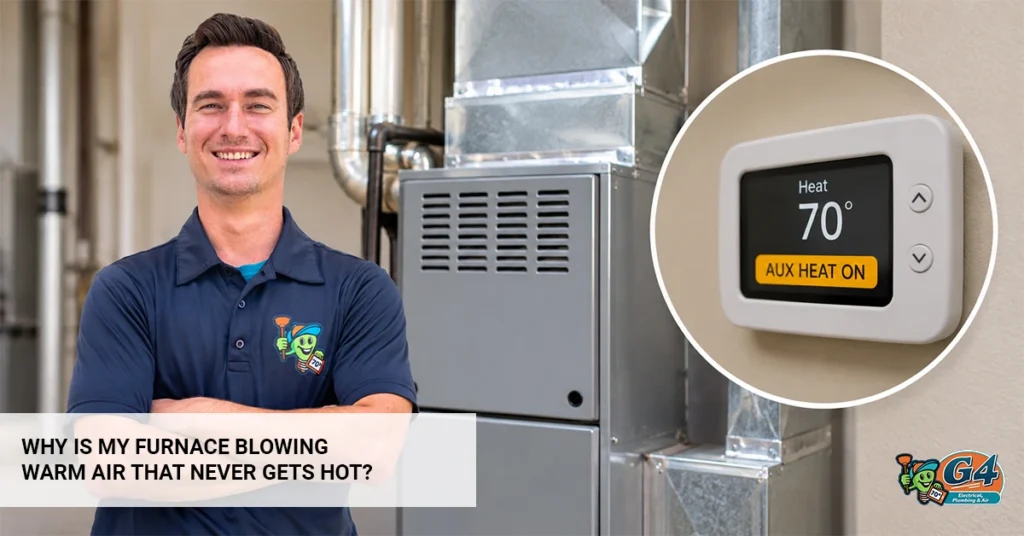
Is your furnace blowing warm air, but your home still feels cold? This usually means your heating system isn’t producing enough heat or isn’t distributing it properly.
Several problems can cause this. A dirty air filter can restrict airflow, while a faulty thermostat may affect when your furnace heats your home. Other possible causes include dirty burners, a malfunctioning flame sensor, or leaking ductwork.
However, not every furnace blowing warm air has a problem. Some modern furnaces use two-stage heating, which means they produce less heat during normal low-stage operation.
So, how can you tell whether your furnace is working normally or needs repair? Let’s look at the most common causes, simple checks you can perform, and when to call an HVAC technician.
Why Is My Furnace Blowing Warm Air That Never Gets Hot?
Your furnace may blow warm air instead of hot air because it isn’t producing enough heat or isn’t moving heated air properly through your home. Common causes include a dirty air filter, incorrect thermostat settings, restricted airflow, dirty burners, a faulty flame sensor, or leaking ductwork.
In some cases, the problem may be related to your furnace’s heating mode. For example, a two-stage furnace often runs at a lower heat setting when your home needs less warmth. As a result, the air coming from the vents may feel warm rather than hot. This is usually normal if your furnace heats your home comfortably.
However, if your furnace keeps running but your home never reaches the temperature you set on the thermostat, something may be wrong. Start by checking the air filter, thermostat settings, and open vents. If the problem continues, have an HVAC technician inspect the system to find out why it isn’t heating properly.
8 Common Reasons Your Furnace Blows Warm Air Instead of Hot Air
Your furnace may blow lukewarm air for several reasons, including a dirty air filter, thermostat problems, restricted airflow, or faulty heating components. Some of these issues are easy to check yourself. However, others need a professional HVAC technician to diagnose and fix.
Here are eight common reasons your furnace isn’t producing enough heat.
1. Your Furnace Air Filter Is Dirty or Clogged
A dirty or clogged air filter can restrict airflow and cause your furnace to overheat. When dust, pet hair, and other debris build up on the filter, your furnace cannot move enough air through the system.
As a result, the heat exchanger may get too hot. When this happens, the high-limit safety switch can shut off the burners to protect the furnace. However, the blower may continue running and push cooler air through your vents.
You may notice these signs:
- Your furnace blows warm air at first, then becomes cooler.
- Airflow from the vents feels weaker than usual.
- Your furnace turns on and off more often.
- Some rooms take longer to warm up.
What you can do: Check your furnace filter and replace it if it looks dirty or clogged. Use the correct filter size and follow the manufacturer’s replacement recommendations. Also, make sure the airflow arrow on the filter points in the right direction.
A clean filter helps your furnace maintain proper airflow and heat your home more effectively. If the problem continues after replacing it, another furnace component or airflow issue may need attention.
You can also learn about other common causes of weak airflow from your furnace and how they affect heating performance.
2. Your Thermostat Has Incorrect Settings
Incorrect thermostat settings can make your furnace blow warm air even when your home needs more heat. Your thermostat controls when the furnace starts, how long it runs, and when the blower circulates air.
For example, if the fan is set to ON instead of AUTO, the blower runs continuously, even when the burners aren’t heating. As a result, you may feel room-temperature or slightly cool air coming through the vents between heating cycles.
Check these thermostat settings:
- Mode: Make sure your thermostat is set to HEAT, not COOL or OFF.
- Fan: Set the fan to AUTO so it runs with the heating cycle rather than continuously.
- Temperature: Set the temperature a few degrees above the current room temperature.
- Schedule: Check your programmed settings to make sure they aren’t lowering the temperature unexpectedly.
- Batteries: Replace the batteries if your thermostat uses them and the display is weak or unresponsive.
After making these changes, give your furnace time to complete a heating cycle.
If the settings are correct but your furnace still blows lukewarm air, the problem may involve the blower, burners, thermostat wiring, or another heating component. In that case, have an HVAC technician inspect the system.
3. Your Furnace Has a Dirty Flame Sensor
A dirty flame sensor can cause your furnace burners to shut off shortly after ignition. As a result, your furnace may start producing warm air but stop heating before your home reaches a comfortable temperature.
Similar problems can cause a furnace to blow cold air even when the heating system is running.
The flame sensor is a small safety component inside a gas furnace. It checks whether the burners have ignited properly and maintains a signal to the control board while the flame is present.
However, dust, dirt, and carbon buildup can affect how the sensor works. If it cannot detect the flame correctly, the furnace control board may shut off the gas supply as a safety measure.
You may notice these warning signs:
- Your furnace starts but stops heating after a short time.
- The burners shut off shortly after ignition.
- The blower continues running after the burners stop.
- Warm air gradually becomes lukewarm or cool.
- Your furnace repeatedly attempts to restart.
What you should do: Have a qualified HVAC technician inspect the flame sensor. They can clean it or replace it if necessary. Avoid handling gas components or bypassing furnace safety controls.
If cleaning the sensor doesn’t solve the problem, the technician may need to check the ignition system, gas supply, or other furnace components.
4. Your Furnace Is Stuck in Low-Heat Mode
Your furnace may blow moderately warm air because it’s running in low-heat mode instead of using its full heating capacity. This is common with modern two-stage furnaces, which adjust their heat output based on how much warmth your home needs.
A two-stage furnace has two heating settings:
- Low stage: Produces a lower level of heat when your home needs only a small temperature increase.
- High stage: Produces more heat when the indoor temperature drops and the furnace needs to warm your home faster.
When the furnace runs in low-stage mode, the air coming from your vents may feel less hot. However, this is normal if your system can still maintain the temperature set on your thermostat.
The problem starts when your furnace cannot switch to high-stage heating when your home needs more warmth. A faulty thermostat, control board, or staging component may prevent the system from increasing its heat output.
What you can do: Check whether your home reaches the temperature set on your thermostat. If the furnace runs continuously but your rooms remain cold, contact an HVAC technician. They can inspect the staging controls, thermostat compatibility, and heating performance to find the problem.
5. Your Furnace Burner Is Not Producing Enough Heat
Dirty or damaged furnace burners can prevent your heating system from producing enough heat to keep your home comfortable. Even if the furnace starts and runs, poor burner performance may leave you with lukewarm air coming through the vents.
Your furnace burners create heat by burning natural gas or propane. The heat then passes through the heat exchanger, which warms the air before the blower sends it through your ductwork.
However, several problems can affect burner performance:
- Dirty burner openings: Dust and debris can interfere with proper burner operation.
- Incorrect gas pressure: Low or unstable gas pressure can affect the furnace’s heating output.
- Faulty gas valve: A malfunctioning valve may prevent the burners from receiving the correct gas supply.
- Ignition problems: A weak or failing igniter can cause unreliable burner operation.
- Unstable burner flames: Irregular combustion can affect how efficiently the furnace produces heat.
When the burners don’t operate properly, your furnace may struggle to maintain the desired indoor temperature. You may also notice longer heating cycles or repeated shutdowns.
What you should do: Contact a qualified HVAC technician to inspect the burners, gas pressure, ignition system, and combustion performance. They can identify the problem and recommend the right repair. Never attempt to adjust gas pressure, clean internal gas components, or repair the gas valve yourself.
6. Your Furnace Has Leaky or Poorly Insulated Ductwork
Leaky or poorly insulated ductwork can prevent heated air from reaching your rooms at the right temperature. Even if your furnace produces enough heat, damaged ducts can waste some of that warmth before it reaches your living spaces.
Your ductwork carries heated air from the furnace to different rooms in your home. However, cracks, loose connections, and damaged insulation can allow warm air to escape along the way.
These leaks can also waste energy and increase your heating costs. Learn how duct leaks increase energy bills.
This problem often occurs in areas such as:
- Attics: Poorly insulated ducts can lose heat while passing through cold attic spaces.
- Crawlspaces: Loose connections or damaged ducts can allow heated air to escape.
- Basements: Unsealed duct joints can reduce the amount of warm air reaching your rooms.
- Garages: Exposed ductwork may lose heat when it isn’t properly insulated.
- Utility spaces: Damaged or poorly connected ducts can affect overall heating performance.
You may notice a few signs if your ductwork has a problem:
- Some rooms feel warm while others remain cold.
- Certain vents have weaker airflow than others.
- Your furnace runs longer but struggles to heat your home.
- Your heating bills increase without a clear reason.
What you can do: Check accessible ductwork for loose connections or visible damage. However, a professional HVAC technician can perform a more complete inspection, locate hidden leaks, and check the insulation.
Sealing duct leaks and repairing damaged insulation can help deliver more heated air to your rooms, improve comfort, and reduce wasted energy.
7. Your Furnace Is Short Cycling
Furnace short cycling happens when your heating system turns on and off repeatedly without running long enough to heat your home properly. As a result, your furnace may blow warm air for a short time before the burners shut down.
If your heating system repeatedly starts and stops, read more about why your furnace keeps turning on and off.
During a normal heating cycle, the furnace runs long enough to bring your home closer to the temperature set on your thermostat. However, short cycling interrupts this process and makes it harder to maintain comfortable indoor temperatures.
Several problems can cause your furnace to short cycle:
- Restricted airflow: Blocked filters or vents can cause the furnace to overheat.
- Dirty air filter: A clogged filter can reduce airflow and trigger the high-limit safety switch.
- Overheating heat exchanger: Excessive heat can cause the burners to shut down for safety.
- Faulty thermostat: Incorrect temperature readings can cause the furnace to stop too early.
- Malfunctioning high-limit switch: A faulty switch may interrupt normal heating operation.
- Incorrect furnace sizing: An oversized furnace may heat the space too quickly and shut down before completing longer heating cycles.
You may notice that your furnace starts, blows warm air, shuts off, and then starts again a short time later. The blower may also continue running after the burners stop, making the air feel cooler.
What you can do: First, check your thermostat settings and replace the air filter if it’s dirty. Also, make sure your supply vents and return grilles aren’t blocked.
If your furnace continues turning on and off frequently, contact an HVAC technician. Repeated short cycling can increase energy use, strain furnace components, and lead to more expensive repairs if left unresolved.
8. Your Furnace Has a Failing Ignition or Heating Component
A faulty furnace component can prevent your heating system from producing and distributing enough warm air. Even if the furnace turns on, a failing part may interrupt the heating cycle or reduce its performance.
Your furnace relies on several components to operate properly. If one starts wearing out or stops working, you may notice lukewarm airflow, repeated shutdowns, or inconsistent heating.
Here are some important components that can cause heating problems:
- Hot surface igniter: This component lights the gas burners. If it becomes weak or fails, your furnace may struggle to ignite consistently.
- Control board: The control board manages the furnace’s heating sequence. A faulty board can interrupt normal operation.
- Limit switch: This safety component monitors furnace temperature and shuts off the burners if the system gets too hot.
- Gas valve: The gas valve controls the fuel supply to the burners. If it malfunctions, the furnace may not produce enough heat.
- Blower motor: The blower motor moves heated air through your ductwork. A weak or failing motor can reduce airflow and affect heating performance.
You may notice that your furnace starts normally but stops heating unexpectedly. In other cases, the blower may run while the burners remain off, causing cooler air to come through the vents.
What you should do: Contact a qualified HVAC technician to inspect your furnace’s ignition system, control board, gas valve, limit switch, and blower motor. They can test each component, identify the faulty part, and recommend the right repair or replacement.
Avoid attempting electrical or gas-related repairs yourself. Professional diagnosis can help prevent further damage and restore reliable heating.
How to Troubleshoot a Furnace That Blows Lukewarm Air
You can troubleshoot a furnace blowing lukewarm air by checking the thermostat, air filter, vents, and heating cycle. These simple checks can help you identify common problems before scheduling a furnace repair.
However, avoid opening internal furnace components or attempting gas and electrical repairs. Follow these six steps to check your heating system safely.
Step 1. Check Your Thermostat Settings
Start by checking your thermostat settings. Make sure the system is set to HEAT and the fan is set to AUTO.
Next, increase the temperature a few degrees above the current room temperature. Give the furnace time to respond and begin a heating cycle.
If the furnace starts heating properly, an incorrect thermostat setting may have caused the problem. Otherwise, you may need to check other parts of the system.
Step 2. Inspect and Replace the Air Filter
A dirty air filter can restrict airflow and affect your furnace’s heating performance. Turn off the furnace before checking the filter.
Remove the filter and look for dust, dirt, or other buildup. If it looks clogged, replace it with the correct size and type recommended by the manufacturer.
Also, check the airflow arrow on the new filter to make sure it’s facing the correct direction.
A clean filter helps your furnace maintain proper airflow and reduces the risk of overheating.
Step 3. Check Supply Vents and Return Grilles
Blocked vents can prevent heated air from reaching different rooms in your home. Walk through each room and check that furniture, curtains, rugs, or other objects aren’t covering the supply vents or return grilles.
Make sure the vents are open and have enough space around them for air to move freely.
If some rooms still receive less warm air than others, your ductwork or airflow balance may need professional attention.
Step 4. Check Whether the Furnace Completes a Heating Cycle
Pay attention to how your furnace operates during a heating cycle. This can help you identify signs of a possible problem.
For example:
- Does the furnace blow warm air briefly before becoming cool?
- Does it turn on and off repeatedly?
- Does the blower keep running after the burners shut off?
- Does your home remain cold even when the furnace runs continuously?
These signs may point to problems with the burners, flame sensor, high-limit switch, thermostat, or control board.
Write down what you notice. This information can help an HVAC technician diagnose the problem more quickly.
Step 5. Look for Furnace Error Codes
Many modern furnaces have diagnostic lights or digital displays that show error codes when something goes wrong.
Check your furnace’s user manual to understand what the displayed code means. You can also write down the code and share it with your HVAC technician.
However, don’t remove safety panels, bypass safety switches, or repeatedly reset the furnace to clear an error. These actions can create additional problems or safety risks.
Step 6. Check Whether Some Rooms Are Warmer Than Others
If some rooms feel warm while others remain cold, your furnace may have an airflow or ductwork problem.
Start by checking whether all supply vents are open and unobstructed. Then compare the airflow between different rooms.
If certain vents consistently deliver weaker airflow, the problem may involve leaking ducts, disconnected sections, or an airflow imbalance.
A professional HVAC inspection can help locate the issue and determine whether your ductwork needs repair, sealing, or adjustment.
Is It Normal for a Furnace to Blow Warm Air Instead of Hot Air?
Yes. A properly working furnace should produce warm air, but it doesn’t need to blow extremely hot air to heat your home effectively. The temperature of the air coming from your vents depends on your furnace type, airflow, and heating settings.
For example, a two-stage furnace often runs at a lower heating level when your home needs less warmth. During this time, the air may feel moderately warm rather than hot. This is normal as long as your furnace can maintain a comfortable indoor temperature.
However, warm airflow isn’t always a sign that everything is working properly. Your furnace may have a heating problem if you notice these signs:
- Your home never reaches the temperature set on the thermostat.
- The furnace runs continuously but your rooms still feel cold.
- The air becomes cooler while the furnace is running.
- The furnace repeatedly turns on and off.
- Your heating bills increase without a clear reason.
So, how can you tell whether your furnace is heating properly?
An HVAC technician can measure the temperature difference between the air entering and leaving your furnace. This measurement is called temperature rise. They compare the result with the manufacturer’s recommended range to determine whether the furnace is producing enough heat.
Keep in mind that every furnace has different temperature requirements. Therefore, air coming from your vents doesn’t need to feel extremely hot for your heating system to work properly. The important thing is whether your furnace can heat your home to the desired temperature.
When Should You Call an HVAC Technician?
You should call an HVAC technician if your furnace continues blowing lukewarm air and cannot keep your home warm after basic troubleshooting. The problem may involve the burners, ignition system, gas supply, blower motor, or other internal components that need professional attention.
If your furnace continues blowing lukewarm air, professional furnace repair can help identify the problem and restore reliable heating.
It’s also helpful to recognize the common signs your furnace needs repair before a minor heating issue becomes a bigger problem.
Some furnace problems are easy to overlook. However, ignoring them can lead to poor heating performance, higher energy bills, or unexpected breakdowns.
Watch for these warning signs:
- Persistent lukewarm airflow: Your furnace runs, but your home never reaches the desired temperature.
- Repeated short cycling: The furnace starts and stops frequently without completing a normal heating cycle.
- Unusual furnace noises: You hear banging, rattling, or other unexpected sounds during operation.
- Uneven heating: Some rooms feel comfortable while others remain noticeably cold.
- Frequent error codes: Your furnace displays warning codes or repeatedly shuts down.
- Higher heating bills: Your energy costs increase even though your home doesn’t feel warmer.
What Does an HVAC Technician Check During a Furnace Inspection?
An HVAC technician checks several parts of your heating system to find out why it’s not producing enough heat.
During the inspection, they may:
- Inspect the air filter and airflow: Check for clogged filters, blocked airflow, and ventilation problems.
- Check the burners: Look for dirt, damage, or improper burner operation.
- Test the flame sensor and igniter: Make sure the furnace can ignite and maintain a stable flame.
- Inspect gas pressure and the gas valve: Check whether the burners receive the correct gas supply.
- Test the blower motor: Make sure the system moves enough heated air through your ductwork.
- Measure furnace temperature rise: Compare supply and return air temperatures with the manufacturer’s specifications.
- Inspect the ductwork: Look for air leaks, loose connections, and damaged insulation.
- Check the thermostat and control board: Make sure the furnace receives the correct signals and follows its normal heating cycle.
After identifying the problem, the technician can recommend the necessary repair or replacement.
Important safety warning: If you smell gas inside your home, leave immediately. Don’t operate electrical switches or use anything that could create a spark. Contact your gas utility or emergency services from outside. Similarly, if your carbon monoxide alarm sounds, leave the building and seek emergency assistance.
Don’t wait for your furnace to stop working completely. If it continues blowing lukewarm air, schedule a professional inspection to restore reliable heating and prevent further problems.
How Can You Prevent Your Furnace From Blowing Lukewarm Air?
You can prevent many furnace heating problems by scheduling regular maintenance, replacing dirty air filters, keeping vents clear, and checking your ductwork. These simple steps help your furnace maintain proper airflow, produce enough heat, and operate more reliably throughout the heating season.
Here are five ways to keep your furnace in good working condition.
Schedule Annual Furnace Maintenance
Schedule a professional furnace inspection at least once a year, preferably before the heating season begins.
Scheduling regular professional furnace maintenance helps identify worn components, improve heating performance, and reduce unexpected breakdowns.
During maintenance, an HVAC technician can inspect the burners, ignition system, blower motor, electrical connections, and other important components.
Regular maintenance also helps identify worn parts, airflow restrictions, and potential heating problems before they cause an unexpected breakdown.
Replace Furnace Filters Regularly
Check your furnace air filter regularly and replace it when it becomes dirty. A clogged filter restricts airflow and can cause your furnace to overheat or shut down its burners.
Homes with pets, heavy dust, or frequent furnace use may need more frequent filter changes.
Always use the filter size and type recommended by your furnace manufacturer.
Keep Vents and Return Air Grilles Clear
Keep your supply vents and return air grilles free from furniture, curtains, rugs, and other obstructions.
When air cannot move freely through your heating system, some rooms may receive less warm air than others.
Keeping vents clear helps your furnace distribute heat more evenly throughout your home.
Inspect Ductwork for Air Leaks
Leaky or poorly insulated ductwork can waste heated air before it reaches your rooms. As a result, your furnace may run longer without keeping your home comfortable.
Check accessible ductwork for loose connections, visible damage, or damaged insulation. Pay particular attention to ducts in attics, basements, and crawlspaces.
If you suspect hidden leaks, ask an HVAC technician to inspect the ductwork and recommend proper sealing or insulation.
Address Unusual Furnace Behavior Early
Don’t ignore changes in how your furnace operates. Weak airflow, repeated shutdowns, unusual noises, and inconsistent heating can all indicate developing problems.
Although these issues may seem minor at first, they can become more expensive if left unresolved.
If you notice anything unusual, have an HVAC technician inspect your system before the problem gets worse. Regular attention can help extend your furnace’s lifespan, maintain heating performance, and reduce the risk of unexpected repairs.
Frequently Asked Questions
Why Is My Furnace Blowing Warm Air but My House Is Still Cold?
Your furnace may blow warm air but fail to heat your home because of restricted airflow, dirty filters, leaking ductwork, or burner problems. An undersized furnace can also struggle to keep up with your home’s heating needs.
Start by checking your air filter and thermostat settings. If your furnace continues running without warming your rooms, have an HVAC technician inspect the system.
Why Does My Furnace Run Constantly but Never Get Hot?
A furnace that runs constantly without heating your home may have a dirty air filter, leaking ductwork, insufficient heating output, or a thermostat problem. In some cases, the system may also be too small for your home’s heating requirements.
If the furnace cannot reach the temperature set on your thermostat, schedule a professional inspection to identify the cause.
Can a Dirty Air Filter Cause Furnace Air to Feel Lukewarm?
Yes. A dirty air filter can restrict airflow and cause your furnace to overheat. When this happens, the high-limit safety switch may shut off the burners while the blower continues running.
As a result, the air coming through your vents may feel lukewarm or cool. Replacing a clogged filter can help restore proper airflow and heating performance.
Why Does My Furnace Blow Hot Air at First and Then Turn Lukewarm?
Your furnace may blow hot air initially and then turn lukewarm because the burners shut off before the blower stops running. This can happen because of restricted airflow, overheating, a dirty flame sensor, or another faulty component.
If this happens repeatedly, have an HVAC technician inspect the furnace to find out why the burners are shutting down.
Should Furnace Air Feel Hot When It Comes Out of the Vents?
No. Furnace air doesn’t need to feel extremely hot to heat your home properly. A properly working furnace should produce enough warm air to maintain the temperature set on your thermostat.
The actual supply-air temperature depends on the furnace type, airflow, and manufacturer’s recommended temperature rise.
Can a Bad Flame Sensor Cause a Furnace to Blow Lukewarm Air?
Yes. A dirty or faulty flame sensor can cause the furnace burners to shut off when the sensor cannot detect the flame correctly. The blower may continue running after the burners stop, pushing cooler air through the vents.
A qualified HVAC technician can inspect the flame sensor and clean or replace it if necessary.
How Long Should It Take for a Furnace to Produce Warm Air?
Most conventional gas furnaces begin delivering warm air shortly after the burners ignite and the blower starts. However, the exact timing depends on the furnace model and its startup sequence.
If your furnace takes unusually long to produce warm air or repeatedly blows cool air, it may have an ignition, airflow, or heating problem.
Does a Furnace Need Repair If It Blows Warm Air but Cannot Heat the House?
Yes, it may need repair if it cannot maintain the temperature set on your thermostat. Common causes include dirty burners, restricted airflow, faulty heating components, or leaking ductwork.
A professional HVAC technician can inspect the burners, blower motor, thermostat, and other components to identify the problem and recommend the right repair.
Get Professional Help for a Furnace That Isn’t Heating Properly
If your furnace keeps blowing warm air but never gets hot enough to heat your home, it’s time to have it inspected by an HVAC professional. While a dirty air filter or incorrect thermostat setting may be the cause, the problem could also involve faulty burners, ignition components, restricted airflow, or furnace controls.
Start by checking your thermostat, replacing a dirty air filter, and making sure your vents are clear. However, if your home still feels cold, don’t keep running the furnace without finding out what’s wrong.
A qualified HVAC technician can inspect your heating system, identify the underlying problem, and recommend the right repair. This can help restore proper heating, improve system performance, and prevent further damage.
Don’t wait until a small heating problem turns into an expensive furnace breakdown. Schedule a professional furnace inspection and keep your home warm and comfortable throughout the heating season.