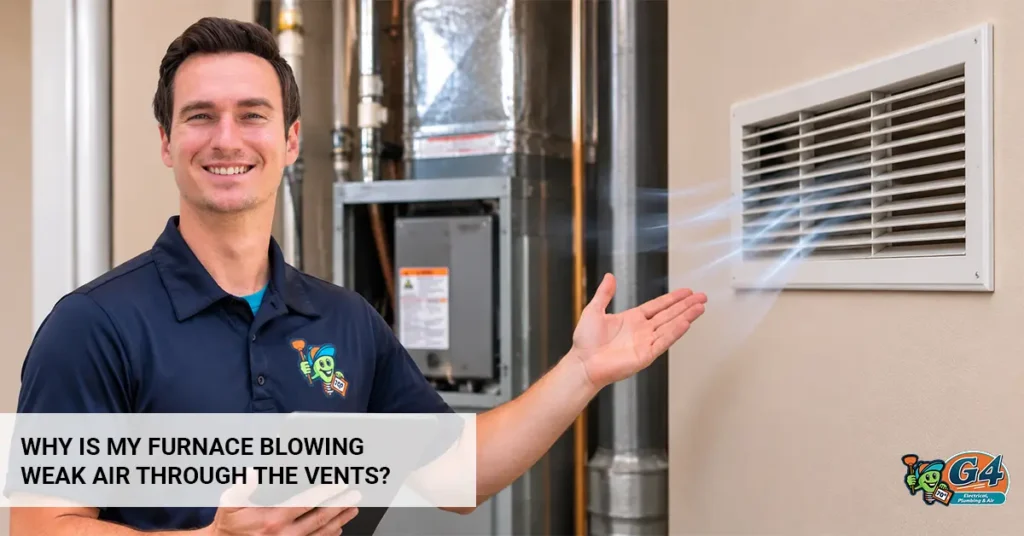
If your furnace is running but barely blowing air through the vents, a dirty air filter, blocked vent, damaged duct, or blower problem may be restricting airflow. These issues can make it harder for your furnace to move warm air throughout your home.
You may notice that some rooms get plenty of warm air while others stay cold. Sometimes, airflow is weak from every vent. This difference can help you narrow down the problem.
Start by checking the air filter and making sure your supply and return vents are clear. These simple steps may solve minor airflow problems. If the airflow stays weak, the blower motor, ductwork, or another internal component may need professional attention.
Why Is My Furnace Blowing Weak Air Through the Vents?
Your furnace may blow weak air because something is blocking airflow or the blower isn’t moving enough air through your home. A dirty air filter, blocked return vent, damaged ductwork, or failing blower motor can all reduce the amount of warm air coming through your vents.
Here are eight common reasons your furnace may have weak airflow:
- Dirty or clogged air filter: Dust and debris build up on the filter and make it harder for air to pass through.
- Blocked supply or return vents: Furniture, rugs, or curtains can block the openings and restrict airflow.
- Restricted return air ducts: Blocked or undersized return ducts prevent enough air from reaching the furnace.
- Leaking or damaged ductwork: Loose connections, holes, or crushed ducts can reduce the amount of warm air reaching your rooms.
- Dirty blower wheel: Dust buildup on the fan blades makes it harder for the blower to move air through the system.
- Weak or failing blower motor: A worn motor may struggle to spin the fan at the correct speed, reducing airflow.
- Dirty evaporator coil: Dust and debris on the indoor coil can block airflow in systems that have a central air conditioner.
- Incorrect blower speed settings: Incorrect motor settings or control problems can prevent the blower from moving enough air.
Pay attention to where the airflow is weak. If every vent blows weak air, the problem may involve the filter, return ducts, or blower. If only one or two rooms have weak airflow, blocked or damaged ductwork may be the cause.
Checking the air filter and clearing blocked vents are good first steps. If those checks don’t improve airflow, have an HVAC technician inspect the system and find the problem.
8 Common Reasons Your Furnace Is Blowing Weak Air
A furnace can blow weak air when something blocks airflow or prevents the blower from moving enough air through your home. Common causes include a dirty air filter, blocked vents, damaged ductwork, or a problem with the blower motor.
Here are eight common furnace problems that can reduce airflow and how to address them.
1. Dirty or Clogged Furnace Air Filter
A dirty or clogged furnace air filter can restrict airflow and make your furnace blow less warm air through the vents. As dust, pet hair, and other debris build up on the filter, less air can pass through it.
Your furnace needs a steady flow of air to heat and circulate warm air throughout your home. When the filter gets clogged, airflow drops, and some rooms may not get enough warm air. Severe restrictions can also cause the furnace to overheat and shut off temporarily.
Watch for these signs of a dirty air filter:
- Weak airflow from several supply vents.
- Uneven heating between rooms.
- Longer heating times.
- A visibly dirty or dusty filter.
- The furnace shutting down before completing a heating cycle.
How to fix it: Turn off your furnace before checking the air filter. Remove it and look for dust and debris. If the filter is dirty or clogged, replace it with a new one that matches your furnace’s required size and specifications.
Check your air filter once a month, especially during the heating season. Replace it according to the manufacturer’s recommendations. The right schedule depends on the filter type, pets, household dust, and how often you use your furnace.
2. Blocked or Closed Supply and Return Vents
Blocked or closed air vents can reduce airflow and make it harder for your furnace to heat every room. Your heating system needs clear supply and return vents to move air properly.
Supply vents push warm air into your rooms, while return vents pull cooler air back toward the furnace. When furniture, rugs, curtains, or other objects cover these openings, air can’t move freely through the system. This can leave some rooms with less warm air than others.
Watch for these common signs:
- Weak airflow from vents in certain rooms.
- Uneven temperatures throughout your home.
- Rooms that take longer to warm up.
- Unusual airflow noises near blocked vents.
How to fix it: Walk through your home and check all accessible supply and return vents. Move furniture, rugs, curtains, and other objects away from the openings. Make sure the supply registers are open, and the return vents are clear.
Avoid closing multiple supply vents in unused rooms to redirect warm air. This can increase pressure in your ductwork and affect airflow throughout the system.
If your furnace still blows weak air after you clear the vents, the problem may involve restricted ductwork or another part of the heating system.
3. Restricted or Undersized Return Air Ductwork
Restricted or undersized return air ducts can reduce furnace airflow by preventing enough air from reaching the blower. Your furnace needs a steady supply of return air to circulate warm air throughout your home.
Return ducts carry cooler air from your rooms back to the furnace. If these ducts are blocked, too small, or poorly designed, the blower may struggle to pull in enough air.
Restricted return airflow can also cause unusual whistling sounds near your vents or filter compartment. Read our guide on why your furnace makes a whistling or squealing noise to understand the possible causes. As a result, less warm air reaches your supply vents.
Watch for these common signs of return duct problems:
- Weak airflow from several supply vents.
- Whistling or unusual noises near return vents.
- Uneven heating between rooms.
- Rooms that take longer to warm up.
- Increased airflow noise near the filter compartment.
How to fix it: Check your return air grilles for dust buildup or visible blockages. Move furniture and other objects away from the openings to let air flow freely.
If airflow remains weak, the return ducts may be too small or have a hidden blockage. Ask an HVAC technician to inspect the ductwork and check the system’s airflow and air pressure. They can determine whether the ducts need cleaning, repair, or resizing.
4. Leaking, Crushed, or Disconnected HVAC Ductwork
Leaking, crushed, or disconnected ductwork can reduce the amount of warm air reaching your rooms. When ducts have holes, loose connections, or damaged sections, heated air can escape before it reaches the vents.
Damaged or disconnected ductwork may require professional HVAC duct repair to restore proper airflow and prevent heated air from escaping.
Flexible ducts can also become crushed, twisted, or sharply bent. This makes it harder for air to move through the system and can leave certain rooms with weak airflow.
Watch for these common signs of ductwork problems:
- Weak airflow in one or more rooms.
- Some vents blow normally while others have very little airflow.
- Dust buildup around duct connections.
- Rooms that take longer to warm up.
- Visible gaps, loose joints, or damaged duct sections.
How to fix it: If you can safely access exposed ductwork, check for loose connections, visible gaps, crushed flexible ducts, or disconnected sections.
Have an HVAC technician inspect the ductwork if you find damage or can’t locate the problem. Depending on its condition, the ductwork may need sealing, reconnecting, repairing, or replacing.
Don’t try to repair hidden ducts or make major changes to your ductwork yourself. Improper repairs can create more airflow problems.
5. Dirty Furnace Blower Wheel
A dirty furnace blower wheel can reduce airflow because dust and debris build up on its blades and make it harder to move air through your ductwork. Your furnace may keep running, but less warm air reaches the vents.
The blower wheel is the fan that pushes heated air through your home’s ductwork. Over time, dust, dirt, and other debris can collect on its blades. This buildup can affect how efficiently the fan moves air and may cause it to become unbalanced.
You may notice these signs of a dirty blower wheel:
- Weak airflow from several vents.
- Rattling or vibrating sounds near the furnace.
- Dust buildup around the blower compartment.
- Uneven heating between rooms.
- The blower running but moving very little air.
How to fix it: Have an HVAC technician inspect the blower wheel and clean it if necessary. The technician can also check for damaged blades, dirt buildup, or other problems affecting airflow.
Don’t try to remove or clean the blower assembly yourself. It contains electrical components and requires proper handling and tools.
6. Weak or Failing Furnace Blower Motor
A weak or failing blower motor can make your furnace blow less warm air through the vents. The blower motor powers the fan that moves heated air through your home’s ductwork.
Over time, the motor can wear out or develop electrical problems. When this happens, it may struggle to spin the blower fan at the correct speed. A failing blower motor may also produce unusual sounds during operation. Learn about the common noises your furnace can make and what they may indicate.
A faulty capacitor in systems that use one can also prevent the motor from starting or running properly.
Watch for these common signs of a failing blower motor:
- Weak airflow from several vents.
- Humming or buzzing sounds near the furnace.
- Grinding or rattling noises during operation.
- The blower fan struggling to start.
- The blower starting and stopping unexpectedly.
- The furnace overheating or shutting down repeatedly.
How to fix it: Have an HVAC technician inspect the blower motor and its electrical components. The technician can test the motor, check its operating speed, and inspect the capacitor if your furnace uses one.
Depending on the problem, the repair may involve replacing a faulty capacitor, fixing an electrical connection, or installing a new blower motor.
Don’t ignore unusual blower motor noises or poor performance. A motor that continues to struggle can eventually stop working and leave your furnace without proper airflow.
7. Dirty Indoor Evaporator Coil
A dirty evaporator coil can restrict airflow and reduce the amount of warm air coming through your furnace vents. This problem can affect homes with a furnace and central air conditioning system that share the same indoor blower and ductwork.
The evaporator coil is part of your air conditioning system. It usually sits near the furnace or air handler. Air passes through the coil as the blower moves it through your home’s ductwork.
Over time, dust and debris can build up on the coil’s surface. When the buildup becomes heavy, it can block airflow and make it harder for the blower to circulate enough air.
Watch for these common signs of a dirty evaporator coil:
- Weak airflow from several supply vents.
- Uneven temperatures throughout your home.
- Reduced airflow even with a clean air filter.
- Longer heating or cooling cycles.
- Ice buildup on the coil during air conditioning operation.
How to fix it: Have an HVAC technician inspect the evaporator coil and clean it if necessary. The technician can also check for dirt buildup and other airflow restrictions around the coil.
Don’t remove the coil panels or attempt to clean the coil yourself. Its thin metal fins can bend easily, and improper cleaning may damage the system.
8. Incorrect Blower Speed or Airflow Settings
Incorrect blower speed settings can cause your furnace to blow weak air through the vents. The blower motor needs to run at the right speed to move enough air through your home’s ductwork.
Some furnaces allow technicians to adjust blower speed through the motor settings or control board. If the speed is set too low, the blower may not move enough air to keep your rooms comfortable.
A faulty control board or electrical problem can also affect how the blower operates.
Watch for these signs:
- Weak airflow throughout your home.
- The blower running but moving very little air.
- Uneven heating between rooms.
- Airflow problems after recent furnace repairs or maintenance.
- The blower running at an unusually low speed.
How to fix it: Have an HVAC technician check the blower speed settings, motor, and control board. The technician can compare the current settings with the furnace manufacturer’s specifications and make the necessary adjustments.
Don’t try to increase the blower speed yourself. Incorrect settings can create excessive noise, affect furnace performance, and cause other airflow problems.
Why Is Airflow Weak From Some Furnace Vents but Not Others?
If only a few furnace vents have weak airflow, the problem may be a blocked vent, damaged duct, or airflow imbalance affecting those rooms. Similar airflow problems can affect your cooling system. Read our guide on common causes of weak airflow from HVAC vents to understand what may be restricting air circulation.
If every vent blows weak air, the problem is more likely related to the furnace, air filter, return ducts, or blower system.
The location of the problem can help you narrow down the cause. Here’s what different airflow patterns may indicate:
| What you notice | Possible cause |
| Weak airflow from every vent | Dirty filter, restricted return airflow, or blower problem |
| Weak airflow in one room | Blocked or damaged branch duct |
| Weak airflow on the upper floor | Ductwork or airflow balancing problem |
| Airflow suddenly becomes weak | Clogged filter or mechanical problem |
| Airflow starts strong but later drops | Possible overheating or system control issue |
| Some vents blow strongly while others barely move air | Duct restriction or airflow imbalance |
What if only one room has weak airflow? Start by checking the supply vent and any accessible ductwork serving that room. A closed register, crushed flexible duct, or loose duct connection may be restricting airflow.
What if every room has weak airflow? Check the furnace air filter and make sure all return vents are clear. If those look fine, the problem may involve the blower motor, blower wheel, evaporator coil, or main ductwork.
If checking the vents and filter doesn’t improve airflow, have an HVAC technician inspect the system to find the cause.
How to Improve Airflow From Your Furnace Vents
You can improve furnace airflow by replacing a dirty air filter, clearing blocked vents, checking the filter installation, and fixing visible ductwork problems. These simple checks can help restore airflow and make your home more comfortable.
Try these five steps before calling an HVAC technician.
1. Replace the Dirty Furnace Air Filter
Replacing a clogged air filter can help restore proper airflow through your furnace. Dust, pet hair, and other debris collect on the filter over time, making it harder for air to pass through.
Turn off your furnace, remove the filter, and check for visible dirt buildup. If it’s dirty, replace it with a clean filter that matches your furnace’s required size and specifications.
2. Open and Clear All Supply and Return Vents
Blocked vents can prevent warm air from reaching your rooms. Check all supply and return vents throughout your home.
Move furniture, rugs, curtains, and other objects away from the openings. Make sure the supply registers are open and the return grilles are clear.
3. Check the Air Filter Size and Installation
A poorly fitted air filter can restrict airflow or allow air to pass around its edges. Both problems can affect how well your furnace operates.
Check the size printed on your old filter and make sure the replacement matches. Also, follow the airflow arrow when installing it and check that it fits securely inside the housing.
Choose a filter that meets your furnace manufacturer’s recommendations. A higher MERV rating doesn’t always mean better airflow.
4. Look for Visible Ductwork Damage
Damaged ductwork can allow warm air to escape before it reaches your rooms. Check accessible duct sections for loose connections, holes, disconnected joints, or crushed flexible ducts.
If you notice any damage, contact an HVAC technician for an inspection. Proper duct repairs can help restore airflow and prevent heated air from escaping.
5. Schedule Professional Furnace Maintenance
If replacing the filter and clearing the vents don’t improve airflow, the problem may involve an internal furnace component.
An HVAC technician can inspect the blower motor, blower wheel, evaporator coil, and ductwork. They can also measure airflow and check for hidden restrictions that may be preventing your furnace from moving enough air.
Regular furnace maintenance helps catch these problems early and keeps your heating system working properly.
Is Weak Airflow From a Furnace Dangerous?
Weak airflow from your furnace isn’t always dangerous, but severe airflow restrictions can cause the system to overheat. When not enough air moves across the heat exchanger, the furnace can get too hot and trigger its high-limit safety switch.
This safety switch shuts off the burners when the furnace reaches an unsafe temperature. The blower may continue running to help cool the system. If this happens repeatedly, your furnace may keep turning on and off without heating your home properly.
Watch for these warning signs:
- The furnace shuts off before completing a heating cycle.
- The burners turn off while the blower continues running.
- The furnace repeatedly starts and stops.
- Airflow becomes weaker while the furnace runs.
- You notice a burning smell or unusual electrical noises.
If your furnace keeps overheating or shutting down, turn it off and call an HVAC technician. Continuing to run it with restricted airflow can damage internal components and lead to more expensive repairs.
What if you smell gas? Leave your home immediately. Don’t operate electrical switches, appliances, or other equipment inside. Contact your gas utility or emergency services from a safe location outside.
If your carbon monoxide alarm sounds, leave the home and contact emergency services. Don’t return until authorities confirm it’s safe.
When Should You Call an HVAC Technician for Weak Furnace Airflow?
Call an HVAC technician if your furnace still blows weak air after replacing the filter and clearing blocked vents. The problem may involve a failing blower motor, damaged ductwork, a dirty blower wheel, or another internal component that needs professional repair.
If your furnace continues to produce weak airflow, schedule professional heater and furnace repair to identify the cause and restore proper heating performance.
Don’t wait until your furnace stops working completely. Schedule an inspection if you notice any of these signs:
- Airflow remains weak after replacing the air filter.
- The blower makes grinding, humming, or rattling noises.
- The furnace repeatedly overheats or shuts down.
- Some rooms receive very little warm air.
- The blower struggles to start or stops unexpectedly.
- Airflow suddenly drops without an obvious reason.
- You notice a burning smell or unusual electrical noises.
During an inspection, an HVAC technician can check the filter housing, blower wheel, blower motor, evaporator coil, and ductwork. They can also measure airflow and system pressure to find hidden restrictions.
Depending on the problem, your furnace may need a thorough cleaning, ductwork repairs, electrical repairs, or a replacement part.
Getting the problem checked early can help prevent further damage, avoid unexpected breakdowns, and restore proper airflow throughout your home.
How to Prevent Weak Airflow From Your Furnace
You can prevent weak furnace airflow by replacing dirty filters, keeping vents clear, and scheduling regular furnace maintenance. These simple habits help your heating system move air properly and reduce the risk of unexpected problems.
Follow these maintenance tips to keep your furnace airflow in good shape:
- Check your air filter every month: Look for dust and debris buildup. Replace the filter when it gets dirty.
- Keep supply and return vents clear: Move furniture, rugs, and curtains away from vent openings so air can move freely.
- Use the right air filter: Choose a filter that matches your furnace’s required size and filtration rating.
- Schedule regular furnace maintenance: Have an HVAC technician inspect the blower motor, blower wheel, and other important components.
- Check accessible ductwork: Look for loose connections, visible damage, or crushed duct sections that could restrict airflow.
- Address airflow problems early: If you notice weaker airflow or uneven heating, check the filter and vents before the problem gets worse.
A little regular maintenance can go a long way. Keeping the filter clean, vents clear, and furnace components in good condition helps your system circulate warm air more evenly throughout your home.
Frequently Asked Questions About Weak Furnace Airflow
Why is my furnace blowing weak air in every room?
Your furnace may blow weak air in every room because of a dirty air filter, blocked return vent, restricted ductwork, or a failing blower motor. Start by checking the air filter and making sure all return vents are clear. If airflow doesn’t improve, have an HVAC technician inspect the blower and duct system.
Why is my furnace airflow weak in only one room?
Weak airflow in one room usually means there’s a problem with the ductwork or vent serving that room. A blocked register, crushed duct, loose connection, or incorrectly adjusted damper can reduce airflow. Check the vent for obstructions and have an HVAC technician inspect the duct if the problem continues.
Can a dirty furnace filter cause weak airflow?
Yes, a dirty furnace filter can reduce airflow by trapping dust and debris that block the passage of air. As the filter becomes clogged, less air reaches the blower, so less warm air comes through your vents. Replacing it with the correct size and type can help restore normal airflow.
Can a bad blower motor cause weak airflow?
Yes, a failing blower motor can cause weak airflow because it may not spin the fan at the speed needed to circulate enough air. You may also hear humming, grinding, or rattling noises near the furnace. An HVAC technician can test the motor and determine whether it needs repair or replacement.
Can dirty ductwork reduce furnace airflow?
Yes, dirty or damaged ductwork can restrict airflow and reduce the amount of warm air reaching your rooms. Dust buildup, loose connections, holes, and crushed duct sections can all affect air movement. A professional inspection can help determine whether your ducts need cleaning or repair.
Why did my furnace airflow suddenly become weak?
Your furnace airflow may suddenly become weak because of a clogged filter, blocked vent, disconnected duct, or failing blower component. Check the air filter and accessible vents first. If you can’t find the cause or airflow drops suddenly without warning, contact an HVAC technician.
Can weak furnace airflow cause overheating?
Yes, weak airflow can cause your furnace to overheat because not enough air moves across the heat exchanger to carry away the heat. The furnace’s high-limit safety switch may shut off the burners to protect the system. If this happens repeatedly, turn off the furnace and arrange a professional inspection.
Should I close vents in unused rooms to improve airflow?
No, closing vents in unused rooms usually isn’t a good way to improve furnace airflow. It can increase pressure inside the duct system and affect airflow throughout your home. Keep supply vents open unless your HVAC technician recommends a different setting for your system.
Get Professional Help for Weak Furnace Airflow
If your furnace continues blowing weak air after basic troubleshooting, it’s time to call an HVAC technician. A dirty air filter or blocked vent may be easy to fix, but problems with the blower motor, ductwork, or blower wheel often need professional repair.
Don’t ignore weak airflow or wait until your furnace stops working. An HVAC technician can inspect the system, find what’s restricting airflow, and recommend the right repair.
Schedule a professional furnace inspection to restore proper airflow, improve heating performance, and keep your home comfortable throughout the heating season.