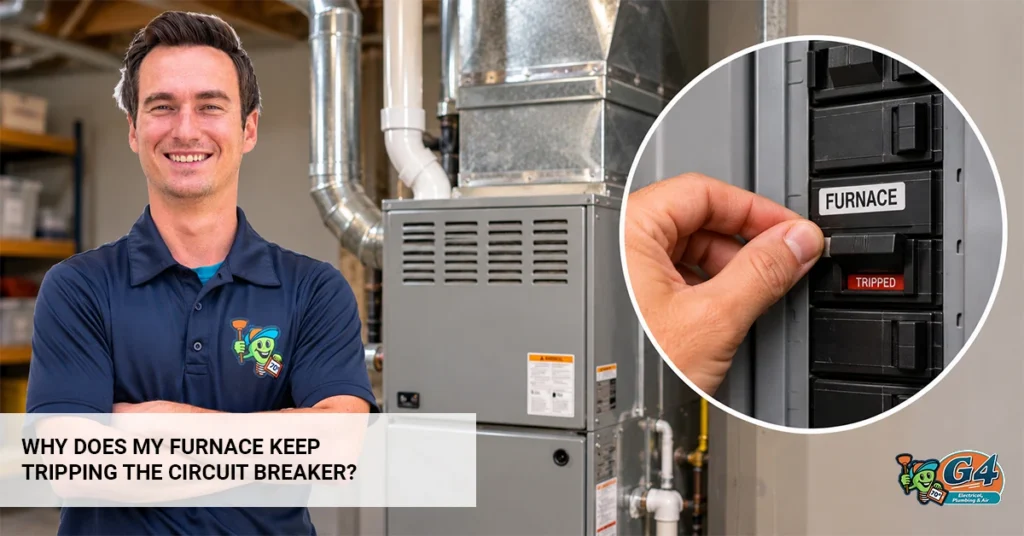
If your furnace keeps tripping the circuit breaker, it may have an electrical problem that needs professional attention. Common causes include a faulty blower motor, damaged wiring, a failing capacitor, an overloaded circuit, or a bad circuit breaker.
Your furnace needs electricity to run important parts, including the blower motor, control board, and gas valve. If one of these components develops a fault or draws too much current, the circuit breaker shuts off the power to protect the electrical system.
Sometimes, the problem comes from the home’s electrical circuit rather than the furnace itself. For example, an overloaded circuit or damaged wiring can also cause repeated breaker trips.
Don’t keep resetting the breaker if it trips again. A circuit breaker is a safety device, and repeated trips can point to a fault that needs inspection. Leave it off and contact a qualified HVAC technician or electrician.
In this guide, we’ll explain the most common reasons your furnace keeps tripping the breaker, what you can safely check, and when to call a professional.
Why Does a Furnace Circuit Breaker Keep Tripping?
A furnace circuit breaker keeps tripping when the system detects too much electrical current or an electrical fault. This often happens because of a faulty blower motor, damaged wiring, an overloaded circuit, or a failing furnace component.
Your furnace relies on electricity to run several parts, including the blower motor, control board, and ignition system. If one of these components develops a fault, it may draw more current than the circuit can safely handle. A damaged wire or loose electrical connection can also cause a problem.
When the breaker detects an unsafe electrical condition, it shuts off the power. This helps protect the wiring and equipment from damage and reduces the risk of overheating.
If your furnace keeps tripping the breaker, don’t keep switching it back on. Leave it off and have the furnace and electrical circuit inspected by a qualified HVAC technician or electrician. Finding the cause is the best way to prevent further damage and get your heating system running safely again.
8 Common Reasons Your Furnace Keeps Tripping the Circuit Breaker
Your furnace may keep tripping the circuit breaker because of an electrical fault, a failing motor, damaged wiring, or another problem with the heating system. In some cases, the issue starts with restricted airflow or overheating. In others, the home’s electrical circuit may be responsible.
Here are eight common causes to check. Some affect how your furnace operates, while others need a qualified HVAC technician or electrician to diagnose.
1. Dirty or Clogged Furnace Air Filter
A dirty furnace air filter can restrict airflow and cause your furnace to overheat. While a clogged filter usually doesn’t trip the circuit breaker directly, it can make the blower work harder and contribute to other furnace problems.
Your furnace needs enough airflow to move heat safely through the system. However, dust, pet hair, and other debris can build up on the filter and block airflow.
When airflow becomes too restricted, the heat exchanger can get too hot. The furnace’s high-limit safety switch may then shut off the burners to protect the system. The blower may continue running to help cool the furnace.
Signs your air filter may be clogged include:
- Weak airflow from the supply vents.
- Furnace turns on and off more often than usual.
- Some rooms take longer to warm up.
- Furnace shuts off before your home reaches the thermostat setting.
- Air filter looks covered in dust and debris.
What you can do: Turn off the furnace before checking the filter. If it’s dirty, replace it with the correct size and type recommended by the manufacturer. Also, check that the airflow arrow points in the right direction.
Check the filter regularly, especially during periods of heavy furnace use. If the breaker continues to trip after you replace it, don’t keep resetting the breaker. The problem may involve the blower motor, wiring, or another electrical component. Have a qualified professional inspect the system.
2. Faulty Furnace Blower Motor
A faulty furnace blower motor can trip the circuit breaker because it may draw too much electricity while starting or running. This often happens when the motor wears out, its bearings become damaged, or an internal electrical fault develops.
The blower motor moves heated air through your home’s ductwork and into each room. So, when it stops working properly, your furnace may struggle to distribute heat.
For example, worn motor bearings can make the blower harder to turn. As a result, the motor may work harder and draw more electrical current than normal. A damaged motor winding can also cause an electrical fault that trips the breaker.
A failing blower motor can also create other operating problems, so it’s important to recognize common furnace repair issues and have the system inspected.
Watch for these warning signs:
- The circuit breaker trips when the blower motor starts.
- You hear humming, grinding, or squealing noises.
- Airflow from the vents becomes weaker than usual.
- The furnace starts but doesn’t distribute warm air properly.
- The blower struggles to start or stops unexpectedly.
What you should do: If the breaker keeps tripping, turn off the furnace and leave the breaker OFF. Then, contact a qualified HVAC technician to inspect the blower motor, wiring, and electrical connections.
The technician can test the motor, measure its electrical current, and check for worn or damaged parts. If the motor has failed, they can recommend the right repair or replacement.
Avoid opening the furnace or attempting electrical repairs yourself. A professional inspection can help identify the actual problem and prevent further damage.
3. Short Circuit in Furnace Wiring
A short circuit in your furnace wiring can trip the circuit breaker as soon as the heating system starts. It happens when electricity takes an unintended path because of damaged wires, worn insulation, or loose electrical connections.
Your furnace has several wires that supply power to components such as the blower motor, control board, and ignition system. Over time, heat, vibration, aging, or poor installation can damage these wires.
When damaged wires touch each other or another conductive surface, they can create a short circuit. This allows excessive current to flow, so the circuit breaker shuts off the power to protect the electrical system.
Watch for these warning signs:
- The breaker trips as soon as you turn on the furnace.
- You notice a burning smell near the furnace or electrical panel.
- You see damaged or exposed wiring.
- The furnace suddenly loses power.
- The breaker trips repeatedly during a heating cycle.
What you should do: Stop using the furnace and leave the tripped breaker OFF. Contact a qualified HVAC technician or licensed electrician to inspect the wiring and find the source of the short circuit.
The professional can check the electrical connections, identify damaged wires, and make the necessary repairs safely.
Never touch exposed wires, remove electrical covers, or try to repair furnace wiring yourself. If you notice smoke, sparks, or a strong burning smell, stay away from the equipment and seek immediate professional help.
4. Overloaded Electrical Circuit
An overloaded electrical circuit can cause your furnace breaker to trip when the total electrical demand becomes higher than the circuit can safely handle.
Your furnace uses electricity to run the blower motor, control board, and other components. However, if other appliances share the same circuit, they can add to the electrical load.
For example, running a furnace and another high-power appliance at the same time may push the circuit beyond its capacity. When this happens, the circuit breaker trips and cuts off the power.
Watch for these warning signs:
- The breaker trips when the furnace and another appliance run together.
- Other devices on the same circuit suddenly lose power.
- The furnace works normally at times but trips during heavier electrical use.
- The breaker trips when several electrical devices operate at once.
What you should do: Avoid running additional high-power appliances on the affected circuit. However, don’t move electrical connections, change the wiring, or install a larger breaker yourself.
Instead, contact a licensed electrician to inspect the circuit, wiring, and breaker rating. They can check whether the circuit has enough capacity for your furnace and determine if it needs a dedicated circuit.
The correct setup depends on your furnace’s electrical requirements and local electrical codes. A professional inspection can help prevent repeated breaker trips and reduce the risk of electrical damage.
5. Faulty Furnace Capacitor
A faulty furnace capacitor can make the blower motor struggle to start or run properly. When the motor doesn’t get the electrical support it needs, it may draw too much current and contribute to a circuit breaker trip.
Some furnace blower motors use a capacitor to help them start and run smoothly. It stores and releases electrical energy to support the motor during operation.
However, capacitors can wear out over time. When one becomes weak or fails, the blower motor may struggle to start, run slowly, or stop working altogether.
Watch for these warning signs:
- The blower motor hums but doesn’t start.
- Your furnace struggles to begin its heating cycle.
- Airflow from the vents becomes weaker than usual.
- The blower starts and stops unexpectedly.
- The circuit breaker trips when the blower motor starts.
What you should do: Contact a qualified HVAC technician to inspect the capacitor and blower motor. The technician can test the capacitor and compare its reading with the manufacturer’s specifications.
If the capacitor has failed, they can replace it with the correct type and rating for your furnace.
Don’t try to remove or replace the capacitor yourself. Even after the power is turned off, a capacitor can hold an electrical charge and cause a dangerous shock. Professional testing and replacement are the safest options.
6. Dirty or Failing Furnace Blower
A dirty or failing furnace blower can reduce airflow and make the blower motor work harder than usual. If the motor develops mechanical or electrical problems, it may draw too much current and cause the circuit breaker to trip.
The blower assembly includes the motor and fan components that push heated air through your home’s ductwork. When these parts work properly, warm air reaches every room.
However, dust and debris can build up around the blower wheel over time. Worn bearings, damaged fan blades, or other mechanical problems can also affect how smoothly the blower operates.
Watch for these warning signs:
- You hear humming, rattling, or grinding noises.
- Airflow feels weak from several vents.
- Your furnace struggles to distribute warm air.
- The blower starts and stops unexpectedly.
- The circuit breaker trips when the blower runs.
What you should do: If the breaker keeps tripping, turn off the furnace and leave the breaker OFF. Then, contact a qualified HVAC technician to inspect the blower assembly, motor, and electrical connections.
The technician can check for dust buildup, worn parts, and motor problems. Depending on the condition, the blower may need cleaning, repair, or replacement.
They can also test the electrical components to find out whether another fault is causing the breaker to trip. A proper inspection helps restore airflow and prevents further damage to your heating system.
7. Faulty Circuit Breaker
A faulty circuit breaker can cause your furnace to lose power even when the system isn’t drawing more current than it should. However, the breaker may not be the actual problem, so it’s important to check the furnace and electrical circuit before replacing it.
Like other electrical components, circuit breakers can wear out over time. Internal damage, loose connections, or excessive heat can affect how they work. You can learn more about common circuit breaker problems and what may cause a breaker to stop working properly.
When a breaker becomes damaged, it may trip during normal furnace operation. As a result, your heating system suddenly loses power, even when there isn’t an obvious overload.
Watch for these warning signs:
- The breaker trips repeatedly during normal furnace operation.
- The breaker feels unusually warm.
- You hear buzzing or unusual sounds near the electrical panel.
- The breaker won’t stay in the ON position.
- Other electrical devices on the same circuit also lose power.
What you should do: Contact a licensed electrician to inspect the circuit breaker and electrical panel. They can test the breaker, check for loose connections, and determine whether it needs replacement. If the breaker is damaged or no longer operates correctly, a qualified electrician can provide circuit breaker repair and replacement.
Don’t try to replace the breaker yourself or install one with a higher rating to stop repeated trips. The breaker must match the circuit wiring and your furnace’s electrical requirements.
A proper inspection can help identify whether the breaker is faulty or another electrical problem is causing it to trip.
8. Furnace Control Board or Electrical Component Failure
A faulty furnace control board or damaged electrical component can interrupt your heating system and cause the circuit breaker to trip. This may happen when an internal part develops an electrical fault or stops working correctly.
The control board acts as the main control center of your furnace. It manages the heating cycle and sends signals to important components, including the blower motor, ignition system, and safety switches.
However, the control board isn’t the only part that can cause problems. A damaged relay, loose wiring connection, or faulty electrical component can also affect normal furnace operation.
Watch for these warning signs:
- Your furnace starts and stops unexpectedly.
- The blower motor or ignition system behaves irregularly.
- Your furnace displays an error code.
- Heating cycles become inconsistent.
- The circuit breaker trips while the furnace is running.
What you should do: Contact a qualified HVAC technician to inspect the control board and related electrical components. They can test the system, check the wiring, and identify which part is causing the problem.
If the control board has failed, the technician can recommend the correct replacement. However, don’t replace it without proper testing. Other electrical problems can cause similar symptoms, so an accurate diagnosis can help you avoid unnecessary repairs.
Why Does My Furnace Trip the Breaker After a Few Minutes?
Your furnace may trip the breaker after running for a few minutes because a motor, wire, or electrical component develops a problem during operation. Common causes include a failing blower motor, damaged wiring, an overloaded circuit, or a faulty electrical connection.
For example, your blower motor may start normally but begin drawing too much current as it runs. Similarly, a loose or damaged electrical connection may cause problems after the furnace has been operating for a while.
The timing of the breaker trip can help narrow down the possible cause.
Pay attention to when the breaker trips:
- Trips immediately: A short circuit, damaged wire, or faulty electrical component may be responsible.
- Trips when the blower starts: The blower motor, capacitor, or related wiring may have a problem.
- Trips after several minutes: A failing motor or electrical connection may be causing trouble as the system runs.
- Trips when another appliance runs: The circuit may be overloaded by multiple electrical devices.
These signs can help an HVAC technician or electrician understand where to start. However, they don’t confirm the exact cause without proper testing.
What you should do: If your furnace keeps tripping the breaker, turn it off and leave the breaker OFF. Contact a qualified HVAC technician or licensed electrician to inspect the system.
Don’t keep resetting the breaker to see how long the furnace will run. Repeated trips may indicate an electrical fault that needs attention before you use the heating system again.
Why Does My Furnace Trip the Breaker When the Heat Turns On?
Your furnace may trip the circuit breaker when the heat turns on because an electrical component has a fault or draws too much current during startup. Common causes include a faulty blower motor, damaged wiring, a failing capacitor, or a problem with the ignition system.
When you set your thermostat to HEAT, your furnace begins a series of startup steps. Depending on the model, the control board activates components such as the inducer motor, ignition system, and gas valve. The blower motor starts later to move heated air through your home.
If one of these components develops an electrical problem, the circuit breaker may trip and shut off the furnace.
The timing of the breaker trip can help narrow down the cause:
- Trips immediately: A short circuit, damaged wire, or faulty electrical component may be responsible.
- Trips when the blower starts: The blower motor, capacitor, or its wiring may need inspection.
- Trips during the heating cycle: A motor or another electrical component may be developing a fault while running.
These symptoms can help a technician understand where to start, but proper testing is needed to confirm the problem.
What you should do: If the breaker trips whenever you turn on the heat, leave it OFF and contact a qualified HVAC technician. They can inspect the furnace startup sequence, test the electrical components, and identify the cause.
Don’t open the furnace, touch internal wiring, or attempt electrical repairs yourself. A professional inspection can help prevent further damage and keep your heating system safe.
How to Troubleshoot a Furnace That Keeps Tripping the Breaker
If your furnace keeps tripping the circuit breaker, start with a few basic safety checks. You can inspect the thermostat, air filter, and vents. However, leave electrical testing and internal repairs to a qualified professional.
Follow these six steps to check your furnace safely.
Step 1: Stop Resetting the Circuit Breaker
If your furnace breaker trips repeatedly, leave it OFF. A tripping breaker may indicate an electrical fault, and repeatedly resetting it won’t fix the underlying problem.
Don’t keep switching the breaker back on to restart your furnace. Instead, arrange a professional inspection before using the system again.
Step 2: Check Your Thermostat Settings
Check your thermostat display for error messages or unusual behavior. Make sure it’s set to HEAT and that the display works normally.
Also, check whether the thermostat has power and responds to your settings.
However, if the furnace breaker has tripped, don’t keep changing thermostat settings to force the system to restart. Leave the breaker OFF until the electrical problem has been checked.
Step 3: Inspect the Furnace Air Filter
A dirty air filter can restrict airflow and cause your furnace to overheat. This may affect heating performance and put additional strain on the blower motor.
If the filter is easy to access, check whether it’s covered in dust or debris. Replace it if necessary, using the correct size and type recommended by the manufacturer.
Remember, a dirty filter usually causes airflow or overheating problems rather than directly tripping the circuit breaker. If the breaker keeps tripping, the furnace may have a separate electrical issue.
Step 4: Check Supply Vents and Return Grilles
Blocked supply vents and return grilles can restrict airflow and affect how your furnace operates.
Walk through your home and make sure furniture, curtains, rugs, or other objects aren’t covering the vents.
Keep these openings clear so your furnace can move air properly and distribute heat throughout your home.
Step 5: Look for Visible Warning Signs
Check the area around your furnace and electrical panel for visible signs of a problem. However, don’t remove covers, touch wires, or open electrical components.
Watch for these warning signs:
- Burning smells near the furnace or electrical panel.
- Visible damage to accessible wiring.
- Unusual humming or buzzing sounds.
- Smoke or sparks.
- Signs of overheating around the equipment.
If you notice smoke, sparks, or a burning smell, stay away from the equipment and seek immediate professional help.
Step 6: Schedule a Professional Inspection
If your furnace breaker continues to trip, contact a qualified HVAC technician or licensed electrician.
An HVAC technician can inspect the blower motor, capacitor, control board, and furnace wiring. An electrician can check the circuit breaker, electrical panel, circuit capacity, and household wiring.
Depending on the cause, you may need one or both professionals.
A proper inspection helps identify the actual electrical fault, prevent further damage, and determine which repairs your furnace needs.
Is It Safe to Keep Resetting a Furnace Circuit Breaker?
No. You should never keep resetting a furnace circuit breaker if it trips repeatedly. The breaker shuts off power to protect your electrical system from excessive current, short circuits, or other electrical faults.
When you reset it without fixing the problem, the same electrical fault may happen again. Depending on the cause, this can overheat wires, damage furnace components, or increase the risk of an electrical fire.
If the breaker trips once, don’t assume your furnace has a major problem. However, if it trips again, leave it OFF and arrange a professional inspection.
Follow these important safety rules:
- Never repeatedly reset a breaker that keeps tripping.
- Never install a larger breaker to stop repeated trips.
- Don’t open the electrical panel or furnace wiring compartment.
- Never touch exposed or damaged wires.
- Don’t bypass furnace safety switches or electrical protections.
What if you notice a burning smell or sparks?
Stay away from the furnace and electrical panel. Don’t touch the equipment or attempt to restore power. If you see smoke, sparks, or an active fire, leave the building and contact emergency services.
Remember, a tripping circuit breaker is a warning that something may be wrong. Finding and fixing the cause is much safer than repeatedly restoring power.
When Should You Call an HVAC Technician or Electrician?
Call an HVAC technician or electrician if your furnace keeps tripping the circuit breaker, especially when the problem happens every time you turn on the heat. Repeated breaker trips can point to a faulty furnace component, damaged wiring, or an overloaded electrical circuit.
You should also recognize the warning signs of an unsafe furnace, especially when you notice unusual smells, sounds, or repeated shutdowns.
Don’t wait until your furnace stops working completely. Electrical problems can damage important components and create safety risks if you ignore them.
Contact a professional if you notice any of these warning signs:
- Repeated breaker trips: Your furnace loses power every time you try to run it.
- Blower motor problems: The blower hums, struggles to start, or makes unusual noises.
- Burning smells: You notice an electrical or burning smell near the furnace or panel.
- Unexpected shutdowns: Your furnace starts normally but loses power during the heating cycle.
- Visible wiring damage: You notice damaged or exposed wires.
- Breaker problems: The breaker feels unusually warm, makes buzzing sounds, or won’t stay in the ON position.
An HVAC technician can diagnose problems inside the furnace. However, if the issue involves the electrical panel, circuit breaker, or household wiring, you’ll need a licensed electrician.
What Does an HVAC Technician Check During a Furnace Inspection?
An HVAC technician checks the furnace’s electrical and mechanical components to find out why the circuit breaker keeps tripping. The inspection helps identify faulty parts, damaged connections, and other problems affecting the heating system.
Depending on your furnace’s symptoms, the technician may inspect:
- Blower motor: Checks whether the motor runs properly and draws the correct amount of electrical current.
- Capacitor: Tests whether the capacitor is working within the manufacturer’s specified range.
- Electrical connections: Looks for loose, damaged, or worn connections inside the furnace.
- Control board: Checks the control board, relays, and related electrical components for faults.
- Ignition system: Inspects the ignition sequence and related components for electrical problems.
- Airflow: Checks the air filter, blower assembly, and ductwork for restrictions.
- Electrical supply: Works with an electrician when the problem may involve the circuit breaker, electrical panel, or household wiring.
If the inspection reveals a problem with the breaker, electrical panel, or household wiring, a licensed electrician should handle those repairs.
Once the cause is clear, the professional can recommend the right repair or replacement. This helps restore reliable furnace operation and reduces the risk of the same problem happening again.
How Can You Prevent Your Furnace From Tripping the Circuit Breaker?
You can reduce the risk of furnace breaker trips by scheduling regular maintenance, replacing dirty air filters, keeping vents clear, and fixing electrical problems early. These simple steps help your heating system operate properly and can prevent some common issues.
Following a regular HVAC maintenance checklist can help identify worn components, airflow restrictions, and developing furnace problems early.
Regular maintenance won’t prevent every electrical failure. However, it can help you catch worn parts, airflow problems, and loose connections before they cause bigger issues.
Here are five ways to keep your furnace in good condition.
Schedule Annual Furnace Maintenance
Schedule a professional furnace inspection once a year, preferably before the heating season begins.
During the inspection, an HVAC technician can check the blower motor, electrical connections, ignition system, and other important components.
They can also identify worn parts, restricted airflow, and early signs of electrical problems. Fixing these issues early can help prevent unexpected breakdowns.
Replace Furnace Air Filters Regularly
Check your furnace air filter regularly and replace it when it becomes dirty.
A clogged filter restricts airflow and can cause your furnace to overheat. It may also make the blower motor work harder than necessary.
Follow the manufacturer’s filter replacement recommendations. If you have pets, excess dust, or use your furnace frequently, check the filter more often.
Keep Vents and Return Air Grilles Clear
Keep your supply vents and return air grilles free from furniture, curtains, rugs, and other obstructions.
Blocked vents can restrict airflow and affect how well your furnace heats your home.
Make sure air can move freely through your ductwork. This helps your heating system distribute warm air more evenly and operate properly.
Address Unusual Furnace Behavior Early
Don’t ignore unusual noises, weak airflow, frequent shutdowns, or repeated circuit breaker trips.
These signs may point to a developing problem with the blower motor, electrical connections, or another furnace component.
If you notice anything unusual, arrange a professional inspection. Early repairs can help prevent further damage and unexpected heating problems.
Have Your Electrical System Inspected
If your furnace has tripped the circuit breaker more than once, ask a licensed electrician to inspect the electrical system.
They can check the breaker rating, circuit capacity, wiring condition, and electrical connections. They can also determine whether your furnace needs a dedicated circuit.
Make sure all electrical repairs follow the furnace manufacturer’s specifications and applicable electrical codes. A properly inspected electrical system helps your furnace operate more safely and reliably.
Frequently Asked Questions
Why Does My Furnace Keep Tripping the Breaker Every Time It Starts?
Your furnace may trip the breaker every time it starts because of damaged wiring, a short circuit, a faulty blower motor, or another electrical problem. The issue may occur as soon as a furnace component receives power. If this happens repeatedly, leave the breaker OFF and contact a qualified professional to find the cause.
Can a Dirty Furnace Filter Cause the Circuit Breaker to Trip?
A dirty furnace filter can restrict airflow and cause your heating system to overheat. This usually triggers the high-limit safety switch, which shuts off the burners rather than directly tripping the circuit breaker. However, restricted airflow can make the blower motor work harder and contribute to other operating problems. Replace a dirty filter and have the system inspected if the breaker continues to trip.
Can a Bad Blower Motor Trip a Furnace Breaker?
Yes. A faulty blower motor can trip a furnace breaker if it draws too much electrical current. Worn bearings, damaged motor windings, or internal electrical faults can cause this problem. An HVAC technician can test the motor, check its electrical connections, and determine whether it needs repair or replacement.
Why Does My Furnace Breaker Trip After 5 Minutes?
Your furnace breaker may trip after five minutes because a blower motor, electrical connection, or another component develops a problem while the system runs. For example, a failing motor may start normally but draw excessive current after running for a short time. Leave the breaker OFF and arrange a professional inspection to identify the cause.
Should I Reset My Furnace Breaker If It Keeps Tripping?
No. You should not repeatedly reset a furnace breaker that keeps tripping. Repeated trips may indicate an electrical overload, short circuit, or faulty component. Leave the breaker OFF and contact a qualified HVAC technician or electrician before using the furnace again.
Can a Bad Capacitor Cause a Furnace to Trip the Breaker?
Yes. A faulty capacitor can prevent the blower motor from starting or running properly. When the motor struggles to start, it may draw excessive electrical current and contribute to a breaker trip. A qualified HVAC technician can test the capacitor and replace it if necessary.
Does a Furnace Need Its Own Circuit Breaker?
Many furnaces require a dedicated electrical circuit, but the exact requirement depends on the furnace model and its electrical specifications. Check the manufacturer’s installation instructions and ask a licensed electrician to confirm the correct circuit size and installation requirements.
Should I Call an HVAC Technician or an Electrician for a Tripping Furnace Breaker?
Call an HVAC technician if you suspect a problem with the furnace itself, such as a faulty blower motor, capacitor, or control board. If the issue involves the circuit breaker, electrical panel, or household wiring, contact a licensed electrician. In some cases, both professionals may need to inspect the system to find and fix the problem.
Get Professional Help for a Furnace That Keeps Tripping the Breaker
If your furnace keeps tripping the circuit breaker, have it inspected by a qualified professional. The problem may involve a faulty blower motor, damaged wiring, an electrical overload, or another failing component.
If the problem comes from a faulty furnace component, professional furnace repair can help identify the cause and restore reliable heating.
Start with simple checks, such as inspecting your air filter, thermostat, and accessible vents. However, if the breaker trips again, leave it OFF instead of repeatedly resetting it.
An experienced HVAC technician can inspect your furnace, identify faulty components, and recommend the right repair. If the problem involves your electrical panel, circuit breaker, or household wiring, a licensed electrician can check and repair the electrical system.
Don’t ignore repeated breaker trips or wait until your furnace stops working completely. Schedule a professional inspection to fix the underlying problem and keep your heating system operating safely and reliably.