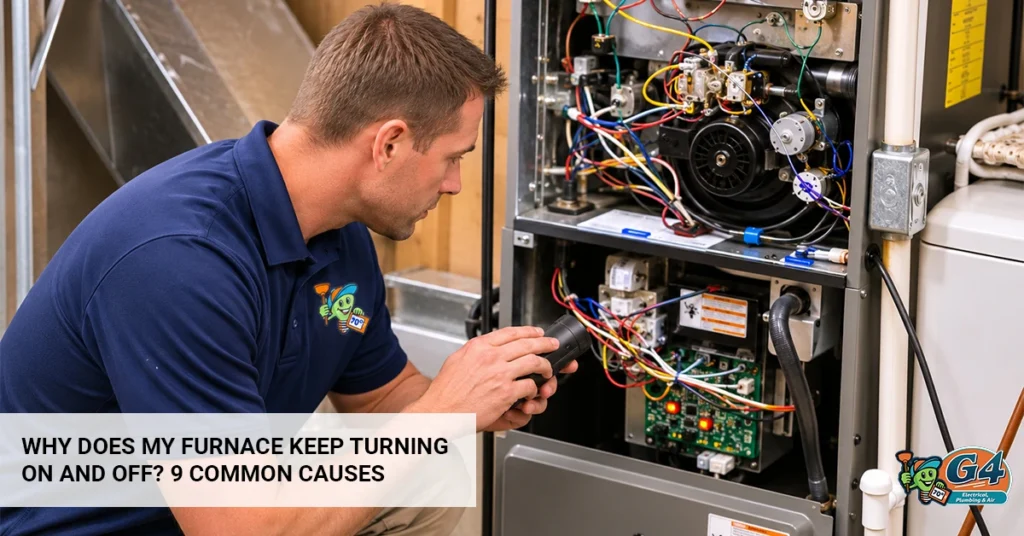
Does your furnace turn on, run for a few minutes, shut off, and then start again? This is called furnace short cycling. It happens when your furnace stops heating too soon and starts another cycle shortly afterward.
A dirty air filter, thermostat problem, or restricted airflow can cause short cycling. Your furnace may also overheat, have a faulty flame sensor, or be too large for your home.
Some problems are easy to fix, such as replacing a clogged air filter or correcting a thermostat setting. Others need an HVAC technician to inspect the ignition system, blower motor, or safety controls.
Frequent cycling can waste energy, make your home less comfortable, and put extra wear on furnace components.
In this guide, you’ll learn why your furnace keeps turning on and off, how to recognize short cycling, what you can safely check, and when to call an HVAC professional.
Why Does My Furnace Keep Turning On and Off?
Your furnace keeps turning on and off because something is interrupting its heating cycle or making it reach the thermostat’s target temperature too quickly. Common causes include a dirty air filter, faulty thermostat, restricted airflow, overheating, or an oversized furnace.
This problem is called short cycling. It happens when your furnace starts and stops repeatedly instead of running long enough to heat your home properly.
For example, a clogged air filter can restrict airflow and cause the furnace to overheat. When the temperature gets too high, the high-limit switch shuts off the burners to protect the system. The blower may keep running until the furnace cools down. Then, the furnace may start another heating cycle.
A thermostat that reads the wrong room temperature can also cause short cycling. The same problem can happen when your furnace is too large for your home’s heating needs.
If your furnace keeps cycling every few minutes, it’s worth finding the cause before the problem leads to more wear on the system.
9 Common Reasons Your Furnace Keeps Turning On and Off
Several issues can cause your furnace to turn on and off repeatedly. This is called short cycling. Below are nine common causes and the signs to watch for.
1. A Dirty or Clogged Furnace Air Filter
A dirty furnace air filter can restrict airflow and cause your furnace to overheat. When this happens, the high-limit switch may shut off the burners before the heating cycle finishes.
Your furnace needs enough airflow to heat your home properly. If your furnace runs but fails to produce warm air, learn about the common causes of a furnace running but not producing heat. Over time, dust, dirt, and pet hair build up on the filter. As the filter gets clogged, less air can pass through it.
Restricted airflow can cause heat to build up inside the furnace. If the temperature gets too high, the high-limit switch shuts off the burners to protect the system. The blower may continue running to cool the furnace. Once the system cools down, the furnace may start another heating cycle.
Common signs of a dirty furnace filter include:
- The furnace starts and stops more often than usual.
- Airflow from the vents feels weak.
- Some rooms stay colder than others.
- The furnace struggles to heat your home.
- The system shuts off because of overheating.
How to check your furnace filter:
- Turn off the furnace before removing the filter.
- Find the filter compartment.
- Remove the filter and inspect it for dust and dirt.
- Replace it if it looks clogged or heavily covered in debris.
- Choose a replacement with the correct size and filter rating for your furnace.
- Install the new filter with the airflow arrow pointing in the correct direction.
Most disposable furnace filters need replacement every one to three months. However, the right schedule depends on the filter type, household conditions, and how often you use your furnace. Check the manufacturer’s recommendations for your specific filter.
If your furnace keeps short-cycling after you replace the filter, the problem may involve another airflow restriction or an overheating component. Have an HVAC technician inspect the system.
2. Your Thermostat Is in the Wrong Location
A thermostat in the wrong location can make your furnace shut off before the rest of your home reaches the desired temperature.
Your thermostat measures the temperature around it and tells the furnace when to start or stop heating. If it sits near a heat source, it may detect more warmth than the rest of your home.
For example, direct sunlight can heat the thermostat and make it signal the furnace to stop. Meanwhile, other rooms may still feel cold.
Common thermostat placement problems include:
- Direct sunlight hitting the thermostat.
- Installation near a fireplace or heat-producing appliance.
- Placement above or too close to a supply air vent.
- Exposure to cold drafts from doors or windows.
- Installation in an unusually warm or cold area.
Ideally, your thermostat should sit in a central indoor location with good airflow. Keep it away from direct sunlight, drafts, and other sources of heat or cold.
If your furnace keeps turning on and off, ask an HVAC professional to check the thermostat’s location and installation. They can also determine whether the thermostat itself is causing the problem.
3. Your Thermostat Has Incorrect Settings or a Fault
Incorrect thermostat settings or a faulty thermostat can cause your furnace to turn on and off repeatedly. This happens when the thermostat sends incorrect signals or fails to read the room temperature accurately.
Your thermostat controls when the furnace starts and stops. If its temperature sensor gives inaccurate readings, it may signal the furnace to stop heating before your home reaches the desired temperature.
Common thermostat problems include:
- Incorrect temperature settings.
- Low or dead batteries.
- Loose or damaged thermostat wiring.
- Incorrect programming or heating schedules.
- A faulty temperature sensor.
- Incorrect heating cycle settings.
What can you check?
- Make sure the thermostat is set to HEAT.
- Set the target temperature above the current room temperature.
- Check for a low-battery warning on the display.
- Replace the batteries if your thermostat uses them.
- Review the heating schedule and programmed settings.
If your furnace continues to short cycle, the thermostat may need testing, recalibration, or replacement. Have a qualified HVAC technician inspect the thermostat, wiring, and operation to identify the problem.
4. Your Furnace Is Overheating
An overheating furnace may shut off its burners and restart after cooling down. This happens when the high-limit switch detects excessive heat and interrupts the heating cycle.
The high-limit switch is a safety device that monitors the furnace’s internal temperature. When the temperature rises above its safe operating range, the switch signals the control board to shut off the burners.
The blower may continue running to cool the system. Once the temperature drops, the furnace may start another heating cycle.
Common causes of furnace overheating include:
- Dirty or clogged air filters.
- Blocked return air vents.
- Closed or obstructed supply vents.
- Dirty blower components.
- Restricted ductwork.
- Incorrect blower speed.
- A faulty high-limit switch.
Start by checking the air filter and making sure furniture, rugs, or other objects aren’t blocking the supply and return vents.
If your furnace continues to overheat, turn it off and contact an HVAC technician. Don’t repeatedly reset the system or bypass its safety switch. A professional needs to identify and fix the underlying problem.
5. Your Furnace Is Too Large for Your Home
An oversized furnace can cause short cycling because it heats your home too quickly. The thermostat reaches the target temperature before the system has enough time to distribute heat evenly.
Every home has different heating needs. A furnace should be sized based on factors such as square footage, insulation, window types, home layout, and local climate.
When a furnace produces more heat than your home needs, it may reach the thermostat’s target temperature quickly and shut off. As the indoor temperature drops, the thermostat calls for heat again. This repeated cycle can make your furnace turn on and off more often than normal.
Common signs of an oversized furnace include:
- The furnace runs for short periods before shutting off.
- The system starts again shortly after stopping.
- Some rooms feel warmer than others.
- Indoor temperatures fluctuate frequently.
- Short cycling has continued since the furnace was installed.
A qualified HVAC contractor can evaluate your furnace size and your home’s heating requirements. A professional load calculation can help determine whether your system is properly sized.
If your furnace is oversized, changing the thermostat settings may not fix the underlying problem. An HVAC professional can assess the system and explain the available options.
6. A Dirty Flame Sensor Is Causing the Burners to Shut Off
A dirty or faulty flame sensor can cause your furnace burners to ignite briefly and then shut off. This happens when the sensor fails to detect the flame properly.
The flame sensor is a safety device inside a gas furnace. It checks whether the burners have ignited and sends a signal to the control board. If the sensor doesn’t detect a flame, the furnace shuts off the gas supply to prevent unburned gas from accumulating.
Over time, dirt and oxidation can build up on the sensor and interfere with its ability to detect the flame.
Common signs of a flame sensor problem include:
- The burners ignite but shut off after a few seconds.
- The furnace repeatedly attempts to restart.
- The system displays an ignition or flame-sensing error code.
- The furnace enters a safety lockout.
- Your home doesn’t receive consistent heat.
A dirty flame sensor and a faulty ignitor can cause similar symptoms, but they perform different jobs. The ignitor lights the burners, while the flame sensor confirms that a flame is present.
A qualified HVAC technician can test the flame sensor and determine whether it needs cleaning or replacement. Avoid working on internal furnace components yourself, as improper handling can damage the system or create a safety risk.
7. Your Furnace Has an Ignition or Gas Supply Problem
An ignition or gas supply problem can prevent your furnace burners from lighting or staying lit. When the furnace can’t ignite properly, it may shut down and try to start another heating cycle.
Most modern gas furnaces use an electronic ignition system. If the ignitor is damaged or isn’t working correctly, the burners may fail to light.
Other problems can also interrupt the gas supply, including:
- A faulty gas valve.
- Low or inconsistent gas pressure.
- A malfunctioning gas pressure regulator.
- A damaged gas line.
- An interruption in the natural gas supply.
Common signs of an ignition or gas supply problem include:
- The furnace repeatedly attempts to ignite.
- The burners light briefly and then shut off.
- The system displays an ignition-related error code.
- The furnace stops before reaching the thermostat’s target temperature.
- Other gas appliances also stop working, depending on the cause.
These symptoms can also point to a faulty flame sensor or an electrical problem. A qualified HVAC technician can inspect the ignition system and gas supply to identify the cause.
Gas safety warning: If you smell gas, leave your home immediately. Don’t operate electrical switches, use appliances, or try to locate the leak. Contact your gas utility or emergency services from a safe location.
Never adjust gas valves or attempt to repair gas lines yourself.
8. Your Furnace Blower Motor Is Not Working Properly
A faulty blower motor can cause your furnace to overheat and shut off before completing a heating cycle. This happens when the blower cannot move enough air through the heat exchanger.
The blower motor pushes heated air through your ductwork and into your rooms. If the motor runs too slowly, overheats, or stops working, the furnace may not release heat properly.
As the temperature inside the furnace rises, the high-limit switch may shut off the burners to protect the system. Once the furnace cools down, it may attempt another heating cycle.
Common signs of a blower motor problem include:
- Weak or inconsistent airflow from the vents.
- Humming, rattling, or grinding noises.
- The blower starts and stops unexpectedly.
- The furnace overheats frequently.
- Some rooms receive very little warm air.
Other issues, such as a damaged capacitor, loose wiring, dirty blower wheel, or faulty motor control, can also affect blower operation.
An HVAC technician can test the blower motor and its related electrical components. Depending on the cause, the motor or another faulty part may need repair or replacement.
9. A Blocked Exhaust Vent or Faulty Safety Control Is Interrupting Operation
A blocked exhaust vent or faulty safety control can cause your furnace to shut down before completing its heating cycle. This may lead to repeated startup attempts and short cycling.
Gas furnaces need a clear path to release combustion gases safely. High-efficiency models also use intake and exhaust pipes, along with a condensate drainage system.
Leaves, dirt, ice, or other debris can block an outdoor vent opening. This can interfere with proper ventilation and trigger a furnace safety shutdown.
A clogged condensate drain can also stop some high-efficiency furnaces from operating. When water backs up inside the system, it may activate a safety switch and interrupt heating.
Other possible problems include a faulty pressure switch, limit switch, or furnace control board.
Signs of a venting or safety control problem include:
- The furnace starts but shuts down shortly afterward.
- The system repeatedly attempts to ignite.
- Water collects around the furnace.
- The furnace displays a pressure-switch or other diagnostic error code.
- An outdoor intake or exhaust opening appears blocked.
You can visually check accessible outdoor vent openings for obvious obstructions. Don’t climb onto the roof, disconnect vent pipes, or insert objects into the openings.
A qualified HVAC technician can inspect the exhaust system, condensate drain, pressure switch, and other safety components to identify the cause and restore proper operation.
How Often Should a Furnace Turn On and Off?
A furnace should run long enough to heat your home before the thermostat ends the heating cycle. The exact run time depends on several factors, including the furnace model, heating capacity, thermostat settings, outdoor temperature, and your home’s insulation.
There isn’t one cycle length that applies to every furnace. A single-stage furnace may operate differently from a two-stage or variable-speed system.
A normal furnace heating cycle generally follows these steps:
- The thermostat detects that your home needs heat.
- The furnace starts its heating sequence.
- The burners produce heat.
- The blower distributes warm air through the vents.
- The thermostat reaches its target temperature.
- The furnace completes the heating cycle and shuts off.
Short cycling is different. The furnace repeatedly shuts down before properly heating your home or reaching the thermostat’s target temperature.
If your furnace consistently runs for only a few minutes before shutting off and restarting, have it inspected. Repeated shutdowns may point to an airflow restriction, thermostat issue, overheating, or mechanical problem.
How Do You Fix a Furnace That Keeps Turning On and Off?
You can troubleshoot some common causes of furnace short cycling by checking the thermostat, air filter, and vents. However, problems involving internal components require professional diagnosis.
Try these basic checks before scheduling a service call:
1. Check the thermostat settings.
Make sure the thermostat is set to HEAT and the target temperature is above the current room temperature. Review the heating schedule and replace the batteries if needed.
2. Inspect the furnace air filter.
A clogged filter can restrict airflow and cause the furnace to overheat. If the filter looks dirty, replace it with one that matches your furnace’s required size and filter rating.
3. Check the supply and return vents.
Make sure furniture, curtains, rugs, and other objects aren’t blocking the vents. Keep all airflow openings clear so your furnace can circulate air properly.
4. Check the furnace display for error codes.
If your furnace has a diagnostic light or display, look for an error code. Write it down and check your owner’s manual for its meaning. This information can help an HVAC technician diagnose the problem.
5. Inspect accessible outdoor vent openings.
If your furnace has outdoor intake and exhaust pipes, look for visible blockages such as leaves, dirt, or ice. Don’t dismantle the pipes or attempt internal repairs.
6. Contact an HVAC technician if the problem continues.
If your furnace keeps starting and stopping after these basic checks, arrange a professional inspection. The cause may involve the flame sensor, ignition system, blower motor, limit switch, or control board.
Never bypass furnace safety switches or attempt to repair gas lines and internal electrical components yourself. These repairs require a qualified HVAC professional.
When Should You Call an HVAC Technician for Furnace Short Cycling?
Call an HVAC technician if your furnace keeps shutting down, overheats, fails to ignite, or continues short cycling after basic troubleshooting. These problems may point to a faulty component or another issue that needs professional attention.
Here are six signs that it’s time to schedule furnace repair:
1. Your furnace shuts off every few minutes.
Frequent shutdowns may indicate restricted airflow, overheating, a thermostat problem, or a faulty safety component.
2. The burners won’t stay lit.
A dirty flame sensor, faulty ignitor, gas valve problem, or another ignition issue may prevent the burners from staying on.
3. Your furnace overheats repeatedly.
A clogged filter, blower motor problem, restricted ductwork, or faulty limit switch can cause the furnace to overheat.
4. You hear unusual noises.
Grinding, loud banging, or repeated clicking sounds may point to a mechanical or ignition problem. Don’t ignore new or persistent noises.
5. You notice a burning or electrical smell.
Turn off the furnace if you can do so safely and arrange a professional inspection. If you smell gas, leave the building immediately. Don’t operate electrical switches or appliances. Contact your gas utility or emergency services from a safe location.
6. Your furnace keeps displaying error codes.
Repeated diagnostic warnings may indicate a problem with the ignition system, pressure switch, limit switch, or control board. Note the error code and share it with your technician.
A professional inspection can identify why your furnace keeps short cycling and help prevent further damage to the heating system.
Contact G4 Electrical for professional furnace repair if your heating system continues to shut down unexpectedly.
How Much Does It Cost to Fix a Furnace That Keeps Turning On and Off?
The cost to fix a furnace that keeps turning on and off depends on the faulty component, furnace model, labor rates, and repair complexity.
For example, cleaning or replacing a flame sensor may cost less than repairing a blower motor, gas valve, or control board. The final price also depends on whether the technician needs to replace additional parts.
Before approving the repair, ask your HVAC contractor for an itemized estimate that includes:
- Diagnostic or service-call fees.
- Replacement parts.
- Labor charges.
- Any additional repairs.
- Applicable parts and labor warranties.
Don’t assume you need a new furnace just because it keeps short-cycling. A faulty component, dirty filter, or airflow restriction may be causing the problem.
Ask your technician whether repairing your existing furnace makes more financial sense than replacing it. A professional diagnosis can help you understand your options and avoid unnecessary expenses.
How Can You Prevent Furnace Short Cycling?
Regular furnace maintenance can help prevent short cycling and keep your heating system running properly. Simple steps, such as replacing dirty filters and keeping vents clear, help maintain proper airflow and reduce unnecessary strain on the system.
Here are five ways to care for your furnace.
Replace Furnace Filters Regularly
Check your furnace filter regularly and replace it when it becomes dirty or clogged. Follow the manufacturer’s recommendations for replacement frequency.
A clean filter allows air to move through the system properly. It also helps prevent airflow restrictions that can cause the furnace to overheat.
Schedule Annual Furnace Maintenance
Have an HVAC professional inspect your furnace at least once a year, preferably before the heating season begins.
Scheduling regular furnace maintenance can help identify worn components and airflow problems before they cause unexpected shutdowns.
During maintenance, a technician can check the burners, ignition system, heat exchanger, blower motor, electrical connections, and safety controls.
Regular inspections can help identify worn or damaged components before they cause a breakdown.
Keep Supply and Return Vents Clear
Keep furniture, rugs, curtains, and other objects away from your supply and return vents.
Blocked vents can restrict airflow, create uneven heating, and increase the risk of furnace overheating.
Keep the Thermostat in a Suitable Location
Place your thermostat away from direct sunlight, drafts, fireplaces, and other heat sources.
A suitable location helps the thermostat measure your home’s temperature accurately and control the heating cycle properly.
Address Furnace Problems Early
Don’t ignore repeated shutdowns, weak airflow, unusual noises, or uneven heating.
These symptoms may indicate a developing furnace problem. Contact an HVAC technician when you notice something unusual instead of waiting for the system to stop working completely.
Frequently Asked Questions
Why Does My Furnace Turn On and Off Every Few Minutes?
Your furnace may turn on and off every few minutes because of a dirty air filter, restricted airflow, overheating, a faulty flame sensor, or a thermostat problem. This is called short cycling. Check the filter and thermostat first. If the problem continues, contact an HVAC technician.
Is It Normal for a Furnace to Turn On and Off Frequently?
No, repeated short cycling is generally not normal. Your furnace should run long enough to heat your home before the thermostat ends the heating cycle. If it repeatedly shuts off after only a few minutes, the system may have an airflow, thermostat, or mechanical problem.
Can a Dirty Air Filter Cause Furnace Short Cycling?
Yes, a dirty air filter can cause furnace short cycling. A clogged filter restricts airflow and may cause the furnace to overheat. The high-limit switch can then shut off the burners until the system cools down. Replace the filter and contact an HVAC technician if the problem continues.
Can a Bad Thermostat Cause a Furnace to Keep Turning On and Off?
Yes, a faulty or poorly positioned thermostat can cause frequent furnace cycling. Inaccurate temperature readings, low batteries, wiring problems, or placement near heat sources can cause the thermostat to send incorrect signals to the furnace.
Does Short Cycling Damage a Furnace?
Repeated short cycling can increase wear on furnace components and reduce heating efficiency. Frequent starts and stops put extra strain on parts such as the ignitor, blower motor, and control components. Fixing the underlying problem can help prevent unnecessary wear and repair costs.
Can an Oversized Furnace Cause Short Cycling?
Yes, an oversized furnace can cause short cycling because it heats your home too quickly. The thermostat reaches its target temperature before the system distributes heat evenly. A professional heating-load calculation can help determine whether your furnace is properly sized.
Should I Turn Off My Furnace If It Keeps Short Cycling?
If your furnace repeatedly shuts down and restarts, turn it off and arrange a professional inspection, especially if it overheats or displays repeated error codes. Don’t keep resetting the system or bypass its safety controls. If you smell gas or your carbon monoxide alarm sounds, leave the building immediately and contact emergency services from a safe location.
How Long Should a Furnace Run Before Shutting Off?
There is no single run time that applies to every furnace. Heating cycles depend on the equipment, outdoor temperature, thermostat settings, and home conditions. If your furnace repeatedly runs for only a few minutes before shutting off, it may be short cycling and should be inspected.
Get Professional Help for Furnace Short Cycling
If your furnace keeps turning on and off, don’t ignore the problem. Short cycling can result from a dirty air filter, thermostat issue, restricted airflow, overheating, or a faulty furnace component.
Start by checking the thermostat, replacing a clogged filter, and making sure your supply and return vents are clear. These simple steps may help resolve basic airflow or thermostat problems.
If your furnace continues to short-cycle, schedule a professional inspection. An HVAC technician can check the ignition system, flame sensor, blower motor, safety switches, and other components to identify the cause.
Need help with a furnace that keeps turning on and off? Contact G4 Electrical Plumbing & Air to discuss your heating concerns and schedule professional furnace service.