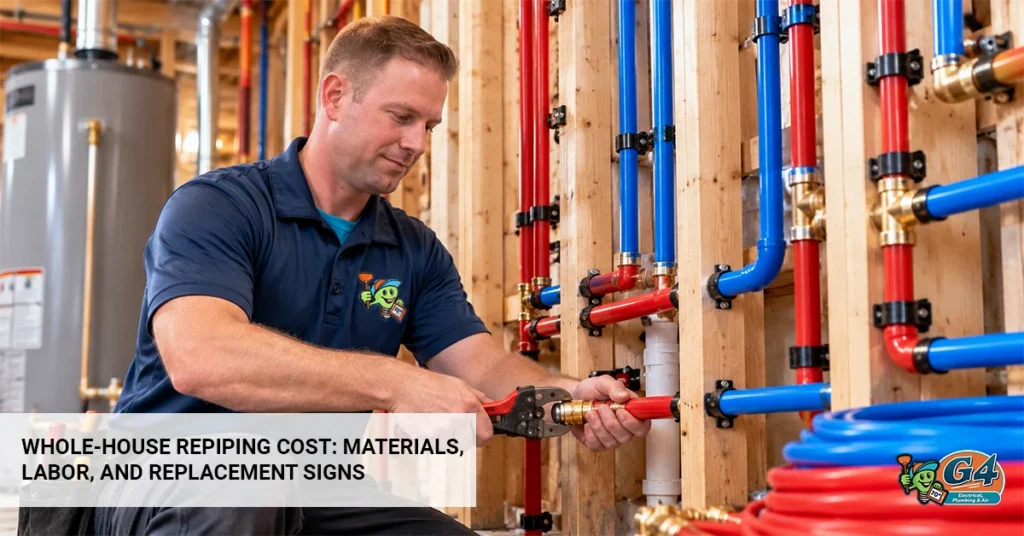
Whole-house repiping typically costs $1,500 to $15,000 or more in the United States, depending on your home’s size, pipe material, labor rates, and how easily plumbers can access the existing pipes. Larger homes and projects that require extensive wall repairs may cost more.
Repiping means replacing some or all of the water supply pipes in your home. You may need it if your plumbing develops frequent leaks, corrosion, persistent low water pressure, or other problems that make repeated repairs impractical.
The total cost includes more than the pipes themselves. You may also need to pay for plumbing labor, permits, inspections, and repairs to walls or floors after installation.
This guide covers whole-house repiping costs, compares PEX, copper, and CPVC pipes, and explains the warning signs that your home may need new plumbing.
How Much Does Whole-House Repiping Cost?
Whole-house repiping typically costs $1,500 to $15,000 or more in the United States. The final price depends on your home’s size, number of plumbing fixtures, pipe material, and how easily a plumber can reach the existing pipes. Larger homes, copper pipes, and difficult installations usually cost more.
The total price may include new pipes, fittings, plumbing labor, and connections to sinks, showers, toilets, and other fixtures. Permits, inspections, drywall repairs, painting, and other restoration work may cost extra.
Before accepting a quote, ask your plumber whether it covers the entire project or only the replacement of water supply lines. This helps you compare estimates and avoid unexpected expenses.
If your home has recurring leaks or deteriorating pipes, explore our pipe repair and repiping services to discuss the right solution.
Whole-House Repiping Cost by Home Size
The cost of repiping a home generally increases with its size, but the number of fixtures and accessibility of the pipes also matter. The table below provides rough U.S. estimates for replacing a home’s water supply pipes.
| Home Size | Estimated Repiping Cost | What Affects the Price |
| Under 1,000 sq. ft. | 2,000–5,000 | Pipe access and number of fixtures |
| 1,000–1,500 sq. ft. | 3,000–7,000 | Bathroom count and pipe material |
| 1,500–2,000 sq. ft. | 4,000–9,000 | Labor, wall access, and layout |
| 2,000–2,500 sq. ft. | 5,000–12,000 | Multiple floors and fixture count |
| Over 2,500 sq. ft. | 7,000–15,000+ | Complex layouts and extensive piping |
These figures are general budgeting estimates, not guaranteed prices. Your actual cost may be higher or lower depending on local labor rates, pipe material, and the amount of repair work required after installation.
Home size isn’t the only factor that determines repiping cost. A smaller home with several bathrooms and pipes buried in concrete may cost more to repipe than a larger home with plumbing that is easy to access.
Whole-House Repiping Cost by Pipe Material
The cost of whole-house repiping depends partly on the pipe material you choose. PEX and CPVC usually cost less than copper, while copper pipes generally have higher material costs and can require more labor to install.
| Pipe Material | Approximate Material Cost per Linear Foot | Main Cost Consideration |
| PEX | 0.40–2 | Flexible tubing can make installation easier in many homes |
| CPVC | 0.50–1 | Rigid plastic pipes use solvent-cement joints |
| Copper | 2–8 | Higher material costs and more labor-intensive joints |
These figures cover pipe materials only, not the full installation. The final price also depends on pipe diameter, fittings, labor rates, local prices, and how easily the plumber can access the existing plumbing.
When comparing estimates, ask for the total installed cost for each material. A cheaper pipe may not always result in the lowest overall bill, especially if the installation requires extra labor or repairs to walls and floors.
What Factors Affect the Cost of Repiping a House?
The cost of repiping a house depends on its size, pipe material, local labor rates, pipe accessibility, permit requirements, and repair work after installation. The more time and work the project requires, the higher the total cost is likely to be.
Home Size and Number of Bathrooms
Larger homes usually cost more to repipe because they need more piping and labor. The number of bathrooms, kitchens, laundry connections, and other plumbing fixtures also affects the price.
For example, a single-story home with one bathroom and accessible pipes may cost less to repipe than a two-story home with three bathrooms and a complex plumbing layout.
When comparing quotes, ask plumbers to consider the number of fixtures and the actual work involved, not just your home’s square footage.
Pipe Material
The pipe material affects both material costs and installation time. PEX and CPVC are generally less expensive than copper, but each option has different installation requirements.
- PEX: Flexible tubing that can make routing pipes through walls easier.
- CPVC: Rigid plastic piping joined with solvent cement.
- Copper: Durable metal piping that generally costs more for materials and installation labor.
Ask your plumber to explain the pros and cons of each option, including its suitability for your home and any local plumbing code requirements.
Accessibility of Existing Pipes
Hard-to-reach pipes increase repiping costs because plumbers may need extra time and demolition work to access them. Pipes hidden behind walls, beneath floors, inside tight crawl spaces, or under concrete slabs can make the job more complicated.
If you suspect a leak beneath your home’s concrete foundation, learn more about our slab leak repair services.
If your pipes are accessible through a basement, attic, or crawl space, the plumber may be able to complete the work with less demolition. However, the home’s layout and the location of each pipe still matter.
Before accepting a quote, ask whether it includes opening walls or floors and restoring those areas after installation.
Labor Costs and Project Complexity
Labor can account for a large share of the total repiping cost. Angi estimates that labor may make up around 70% of the project cost, although the actual percentage varies by home and job complexity.
Your labor costs depend on local plumbing rates, the number of workers needed, installation time, and how difficult it is to reach and replace the pipes. A straightforward project may cost less than one involving multiple floors, tight spaces, or relocated fixtures.
Ask for a breakdown of labor and material costs so you can see what you’re paying for.
Permits, Inspections, and Local Plumbing Codes
Permits and inspections can add to the cost of repiping a house. Requirements vary by location and project scope, so check with your local building department before work begins.
Angi’s U.S. cost guide gives a broad permit estimate of approximately 50–500, but actual fees may fall outside that range depending on your location.
Confirm whether your plumber will obtain the required permits, schedule inspections, and include those fees in the estimate. Using the right materials and following local plumbing codes can also help prevent costly corrections later.
Drywall, Flooring, and Finish Repairs
Repiping can add to your costs if plumbers need to open walls, ceilings, or floors to reach the existing pipes. Once the new pipes are installed, you may need drywall patching, painting, tile replacement, or flooring repairs.
Some plumbing quotes include basic patching, while others cover only the plumbing work. Extensive restoration can add considerably to the final bill.
Ask for an itemized estimate that separates plumbing work from repair costs. This helps you understand the full project price before work starts.
Whole-House Repiping Cost by Material
The cost of whole-house repiping depends on the material you choose, how easy it is to install, and the condition of your existing plumbing. PEX is often a more affordable option, while copper typically costs more. CPVC can also be a budget-friendly choice where local plumbing codes permit its use.
PEX Repiping Cost
PEX repiping often costs less than copper because the tubing is flexible and usually easier to route through walls and around corners. It can also reduce the number of fittings needed in some layouts, which may lower labor costs.
PEX is widely used for residential hot and cold water supply lines. It resists corrosion and works well in many homes when installed correctly.
However, PEX isn’t suitable for every situation. Direct sunlight can damage it, and the tubing, fittings, and installation methods must meet manufacturer requirements and local plumbing codes.
When comparing quotes, ask for the full installed cost, including tubing, fittings, labor, fixture connections, and any necessary wall repairs.
Copper Repiping Cost
Copper repiping generally costs more than PEX or CPVC because the material is more expensive and some installation methods require additional labor. Your final price depends on pipe size, the number of connections, local material prices, and the layout of your plumbing system.
Copper has a long history of use in residential water supply systems and can last for decades under suitable conditions. However, certain water conditions can cause corrosion, and freezing temperatures can damage copper pipes.
Copper may be a good choice if you prefer metal piping, but the higher price doesn’t automatically make it the best option. Compare the total installed cost, expected service life, and suitability for your home’s water conditions before deciding.
CPVC Repiping Cost
CPVC repiping typically costs less than copper repiping because CPVC pipes are generally cheaper per linear foot. These rigid plastic pipes use solvent cement to join sections and carry hot and cold water in residential plumbing systems where local codes permit their use. However, the total cost depends on your home’s size, the number of pipes being replaced, labor rates, and how easily plumbers can access the existing plumbing.
Because CPVC is rigid, plumbers must measure and cut it carefully to fit the plumbing layout. The material also has temperature limits and specific requirements for pipe, fittings, and joints.
CPVC can be a practical option for some homes, but its suitability depends on local plumbing codes, manufacturer specifications, and installation conditions.
When comparing CPVC with PEX and copper, look beyond the price of the pipe itself. Ask for an itemized quote that includes labor, fittings, connections, and any restoration work.
What Are the Signs Your House Needs Repiping?
Frequent leaks, low water pressure, discolored water, visible corrosion, and repeated plumbing repairs can signal that your home’s pipes are deteriorating. These problems don’t always mean you need to replace every pipe, but they are good reasons to schedule a plumbing inspection.
Frequent Pipe Leaks
Frequent leaks in different parts of your home can indicate that your plumbing system is deteriorating. If you keep repairing one pipe only to find another leak elsewhere, whole-house repiping may be more practical than paying for repeated repairs.
One leak alone doesn’t mean you need new plumbing throughout the house. A plumber can inspect the system and determine whether the damage is isolated or affects multiple sections.
Low Water Pressure
Low water pressure can result from corroded pipes, mineral buildup, leaks, faulty valves, or a problem with the main water supply.
Older galvanized steel pipes can develop internal corrosion that narrows the passage for water. If several faucets or showers have weak flow, ask a plumber to investigate before assuming you need repiping.
If you’re experiencing persistent low water pressure, our water pressure services can help identify the cause.
Replacing deteriorated pipes may restore water flow when the pipes are the cause. However, repiping won’t solve pressure problems caused by faulty fixtures or the water supply itself.
Rusty, Brown, or Discolored Water
Rusty or brown water can indicate corrosion inside iron or steel pipes, but it isn’t always caused by your home’s plumbing. Utility work, disturbed sediment, or other water supply issues can also change the water’s color.
If the discoloration keeps returning or appears at several fixtures, arrange a plumbing inspection. If you suspect contamination, have the water tested as appropriate. Clear water isn’t proof that it is safe to drink, and discolored water alone doesn’t confirm that your pipes need replacement.
Visible Pipe Corrosion
Rust, flaking, green deposits on copper pipes, and moisture around pipe joints can indicate corrosion or deterioration. These signs may mean a pipe is weakening and could develop a leak.
Not every corroded pipe requires whole-house repiping. Have a plumber assess the affected sections and check whether the problem is isolated or widespread.
Old or Deteriorating Plumbing
Older plumbing may need closer inspection, particularly if your home has galvanized steel, lead, or polybutylene pipes.
- Galvanized steel: Can corrode internally over time, restricting water flow and increasing the risk of leaks.
- Lead: Can contaminate drinking water and pose serious health risks. If you suspect lead pipes, arrange an assessment and follow local public-health guidance.
- Polybutylene: This older plastic piping has a history of failures in some installations and may warrant professional evaluation.
A pipe’s age alone doesn’t determine whether it needs replacement. A plumber can identify the material, assess its condition, and recommend the appropriate next step.
Repeated Plumbing Repairs
Repeated leaks, pipe replacements, and water damage can make ongoing repairs expensive. If plumbing problems keep returning, compare the cost of continued repairs with a whole-house repiping estimate.
Replacing deteriorated supply lines can reduce the risk of future leaks in those sections. However, the best choice depends on the condition of the remaining pipes, the likely need for further repairs, and your plumber’s assessment.
How Long Does Whole-House Repiping Take?
Whole-house repiping usually takes several days, although some projects may take longer. The timeline depends on your home’s size, the number of plumbing fixtures, pipe accessibility, and whether walls or floors need to be opened.
A smaller home with accessible pipes may take less time to repipe than a multi-story house with several bathrooms and plumbing hidden behind finished walls.
A typical repiping project includes these steps:
- Preparing the work area: The plumber protects nearby surfaces and shuts off the water supply as needed.
- Removing or disconnecting old pipes: The crew accesses the existing plumbing and prepares it for replacement.
- Installing new pipes: Plumbers run the new supply lines and connect sinks, showers, toilets, and other fixtures.
- Testing the plumbing: The plumber checks for leaks and confirms that the system works properly.
- Completing inspections and repairs: The project may require a plumbing inspection, drywall patching, painting, or other restoration work.
You may have to go without running water for part of the project. Ask your plumber how long each water shutoff will last, whether they can restore water in stages, and when the new system will be ready to use.
Before work begins, get an estimated completion date and confirm whether the timeline includes inspections and wall or floor repairs.
Does Whole-House Repiping Increase Home Value?
Whole-house repiping can make your home more attractive to buyers, but it doesn’t guarantee a specific increase in resale value. Replacing deteriorating pipes can reduce concerns about leaks, plumbing failures, and costly repairs after the sale.
The benefit depends on your home’s condition, the local housing market, and whether the existing plumbing could create problems during a home inspection. If buyers are concerned about aging or damaged pipes, new plumbing may give them more confidence in the property.
If you repipe your home, keep copies of permits, inspection reports, invoices, pipe specifications, and warranties. These records help show potential buyers what work was completed and when.
If you’re planning to sell soon, compare the estimated repiping cost with other repairs your home needs. A local real estate professional can help you decide whether replacing the pipes is likely to make your property more competitive in your market.
Can You Repipe a House Without Removing Drywall?
Yes, you can sometimes repipe a house without removing much drywall, especially when plumbers can access the plumbing through an attic, basement, crawl space, or existing openings. However, some wall or ceiling cuts may still be necessary to reach connections and route the new pipes.
PEX tubing can make installation easier in some homes because its flexibility allows plumbers to route it around corners and through smaller access points. Copper and CPVC may require different access depending on the pipe layout and connection locations. No material guarantees a damage-free installation.
The amount of drywall removal depends on your home’s construction, the location of the existing pipes, and the route the plumber chooses for the new lines.
Before work begins, ask your plumber to explain the proposed pipe routes and identify which walls, ceilings, or floors may need to be opened. Also confirm whether drywall patching, painting, tile replacement, and other finish repairs are included in the estimate. This helps you budget for the full project and avoid unexpected restoration costs.
Is Whole-House Repiping Worth the Cost?
Whole-house repiping is often worth the cost when pipes are deteriorating throughout the home, leaks keep recurring, or repeated repairs are becoming expensive. If the problem affects only one damaged section, a targeted repair may be the more affordable option.
Before deciding, consider these factors:
- Condition of your pipes: Are leaks and corrosion limited to one area, or are multiple sections showing signs of deterioration?
- History of plumbing repairs: Have you needed frequent repairs for leaks, low water pressure, or damaged pipes?
- Long-term costs: Would continued repairs and potential water damage cost more than replacing the plumbing?
- Scope of the project: Does the estimate cover all the pipes that need replacement, or only certain sections?
- Choice of pipe material: Which suitable option offers the best balance of upfront cost, installation requirements, and expected service life?
Repiping can help reduce the risk of future leaks in the replaced sections, but it doesn’t guarantee that all plumbing problems will disappear. The right decision depends on your home’s plumbing condition and the cost of the available options.
Get an inspection and compare itemized quotes from at least two qualified plumbers. Ask each plumber whether partial repiping would solve the problem or whether replacing the entire water supply system makes more sense. This will help you weigh the upfront expense against the likely cost of ongoing repairs.
How to Save Money on Whole-House Repiping
You can save money on whole-house repiping by comparing itemized quotes, choosing a suitable pipe material, and confirming all project costs before work begins. The goal is to reduce unnecessary expenses without compromising installation quality or plumbing safety.
If your repiping project also involves problems with your hot water supply, see our water heater repair and installation services.
Here are practical ways to keep your budget under control:
- Get multiple itemized quotes: Ask at least two or three plumbers to break down material costs, labor, fixture connections, permits, testing, and restoration work.
- Compare pipe materials: Ask whether PEX, copper, or CPVC is suitable for your home. Compare the total installed price rather than the cost per foot alone.
- Confirm repair costs upfront: Find out whether the estimate includes drywall patching, painting, tile replacement, and flooring repairs.
- Budget for permits and inspections: Check local requirements and confirm who will obtain the permits and arrange inspections.
- Address recurring problems early: If several pipes are deteriorating, ask whether planned repiping could reduce repeated repair costs and the risk of further water damage.
- Check the contractor’s qualifications: Review relevant licensing, insurance, references, warranties, and the exact scope of work before hiring a plumber.
Don’t choose a plumber based on the lowest quote alone. A cheaper estimate may exclude important work or use different materials. Compare quotes that cover the same tasks, materials, and restoration requirements so you can make a fair decision and avoid unexpected expenses.
Frequently Asked Questions
How much does it cost to repipe a 2,000-square-foot house?
Repiping a 2,000-square-foot house may cost around 4,000–9,000 in some cases, although the actual price can fall outside this range. The total depends on pipe material, bathroom count, labor rates, pipe accessibility, and any wall or floor repairs. Get local estimates based on your home’s plumbing layout.
Is PEX or copper cheaper for whole-house repiping?
PEX is generally cheaper to install than copper. PEX tubing usually costs less and can be quicker to route through walls, which may reduce labor costs. Copper typically costs more for both materials and installation. Your choice should also account for local plumbing codes, installation conditions, and your budget.
Does homeowners insurance cover whole-house repiping?
Homeowners insurance generally doesn’t cover replacing pipes simply because they’re old or deteriorating. However, a policy may cover certain sudden and accidental water damage caused by a plumbing failure. Coverage for the damaged pipe itself depends on the policy and circumstances. Review your policy and contact your insurer before scheduling the work.
How long does repiping a house take?
Whole-house repiping often takes several days, but complex projects can take longer. Home size, pipe accessibility, the number of fixtures, inspections, and restoration work all affect the timeline. Ask your plumber how long the work will take and when your water supply will be interrupted.
Can you live in your home during repiping?
Yes, many homeowners can stay in their homes during repiping, but they should expect noise, workers moving through the house, and temporary water shutoffs. Whether staying is practical depends on the project’s scope and your household’s needs. Ask your contractor which areas will be affected and how long water service will be unavailable.
Does repiping include replacing drain pipes?
No, whole-house repiping usually refers to replacing hot and cold water supply lines, not drain pipes. Drain, waste, and vent pipes carry wastewater away from fixtures and may require separate work. Ask your plumber to specify which pipes are included in the quote and whether any drain or sewer repairs are needed.
How do I know if my house needs full or partial repiping?
Full repiping may be necessary when pipes are deteriorating throughout the home or leaks keep appearing in different areas. Partial repiping may be enough if the damage is limited to one section. A plumber can inspect the system and recommend the most practical option based on the condition of the pipes.
Is whole-house repiping worth the investment?
Whole-house repiping can be worth the investment when deteriorating pipes cause frequent leaks, repeated repair bills, or ongoing water-flow problems. Replacing the affected supply lines can reduce the risk of future leaks in those sections. Compare the upfront cost with the likely expense of continued repairs before deciding.
Final Thoughts
Whole-house repiping can cost several thousand dollars, depending on your home’s size, pipe material, labor rates, and how easily plumbers can access the existing pipes. PEX is often a more affordable option, while copper generally costs more to install.
If your home has frequent leaks, persistent low water pressure, visible corrosion, or recurring plumbing problems, have a qualified plumber inspect the system. They can determine whether you need a few targeted repairs or a complete replacement.
For help with pipe leaks, repiping, and other plumbing problems, explore our residential plumbing services.
Before hiring a contractor, compare itemized quotes and check which pipe materials suit your home. Make sure the estimate covers labor, permits, inspections, and any necessary drywall or flooring repairs.
The best way to control repiping costs is to understand the full scope of work before installation begins. A clear estimate helps you plan your budget, compare contractors fairly, and avoid unexpected expenses.