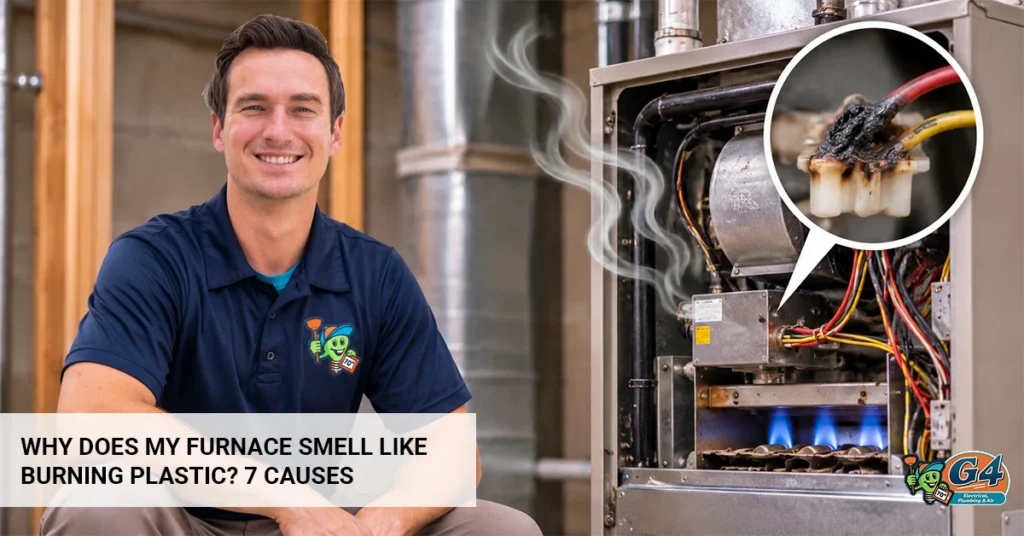
If your furnace smells like burning plastic, it could have an electrical problem, an overheating motor, damaged wiring, or a foreign object touching a hot component. Some causes are minor, but others can create a fire risk.
A dirty air filter, for example, can restrict airflow and make furnace components work harder than they should. Damaged wires, loose electrical connections, or an overheating blower motor are more serious problems that need professional attention.
If you notice a burning plastic smell, turn off your furnace and have an HVAC technician inspect it before turning it back on. Don’t open the furnace cabinet or try to repair electrical parts yourself.
In this guide, we’ll cover seven common reasons your furnace smells like burning plastic, the warning signs to watch for, and how an HVAC technician can identify and fix the problem.
What Should You Do If Your Furnace Smells Like Burning Plastic?
If your furnace smells like burning plastic, turn it off immediately and don’t use it again until a professional checks it. The smell could come from overheating wires, a failing blower motor, or another electrical problem inside the system.
Follow these steps to stay safe:
Turn Off Your Furnace Immediately
Set your thermostat to OFF to stop the furnace from heating. If you can safely reach the furnace power switch or circuit breaker, turn off the power supply too.
Don’t keep running the furnace to see if the smell goes away. If an electrical component is overheating, continued operation could cause more damage or create a fire risk.
Look for Smoke or Signs of Overheating
From a safe distance, check the area around your furnace for smoke or visible signs of damage.
Watch for:
- Smoke coming from the furnace cabinet.
- Melted or discolored materials around the unit.
- Unusual heat coming from the furnace exterior.
- A strong burning odor near the furnace or air vents.
Don’t touch damaged parts, remove access panels, or reach inside the furnace.
If you see smoke or suspect a fire, leave the building and call emergency services. Don’t try to investigate the source yourself.
Call an HVAC Technician
Have a qualified HVAC technician inspect your furnace before turning it back on. The technician can check the wiring, blower motor, control board, electrical connections, and other components to find the source of the smell.
If the inspection shows that the odor comes from your home’s electrical wiring or another appliance rather than the furnace, contact a qualified electrician instead.
Don’t restart the heating system until the problem has been identified and fixed.
Is a Burning Plastic Smell From Your Furnace Dangerous?
Yes, a burning plastic smell from your furnace can be dangerous. It may indicate overheating electrical parts, damaged wire insulation, or plastic components melting from excessive heat.
The level of risk depends on what’s causing the smell. A little dust burning off when you first turn on the furnace is different from a sharp smell of melting plastic or burning electrical insulation.
Watch for these warning signs:
- Burning electrical smell: May point to overheated wiring, a failing blower motor, or a loose electrical connection.
- Melting plastic odor: Could mean a plastic part or foreign object is getting too hot.
- Smoke near the furnace: May indicate severe overheating or an active fire.
- Repeated furnace shutdowns: Could mean a safety switch is shutting the system down because of an underlying problem.
Don’t assume the smell is harmless just because you can’t see smoke. Some electrical problems produce a strong odor before visible damage appears.
A burning plastic smell can be an early warning of a serious heating system problem. Learn about other unsafe furnace signs that homeowners should never ignore.
If you notice a burning plastic or electrical smell, turn off the furnace and arrange a professional inspection before using it again.
What If You Smell Gas Instead of Burning Plastic?
A natural gas leak often smells like rotten eggs because gas suppliers add a strong-smelling chemical to help people detect leaks.
If you smell gas near your furnace:
- Leave the building immediately.
- Don’t turn electrical switches or appliances on or off.
- Don’t use matches, lighters, or other open flames.
- Don’t use a phone inside the building.
- Call your gas utility or emergency services from a safe location.
Stay outside until the gas utility or emergency responders confirm it’s safe to return.
Can a Furnace Burning Smell Indicate Carbon Monoxide?
A burning plastic smell doesn’t mean carbon monoxide is present. Carbon monoxide (CO) has no smell, color, or taste, so you can’t detect it with your senses.
However, a faulty furnace or a combustion problem can create a carbon monoxide hazard. That’s why every home with fuel-burning heating equipment should have working carbon monoxide alarms.
If your CO alarm sounds, get everyone outside immediately and call emergency services. Don’t go back inside until responders confirm the building is safe.
7 Common Reasons Your Furnace Smells Like Burning Plastic
Your furnace may smell like burning plastic because of overheated wiring, a failing blower motor, restricted airflow, or damaged electrical components. Some problems affect how the furnace runs, while others can create a fire risk. Here are seven possible causes an HVAC technician may check.
1. Overheated or Damaged Electrical Wiring
Overheated or damaged electrical wiring can cause a burning plastic smell when the wire insulation gets too hot and starts to break down.
Your furnace uses electrical wiring to power the blower motor, ignition system, control board, and other parts. Loose connections, worn insulation, or damaged wires can create excessive heat around electrical connection points.
As the insulation overheats, it may release a sharp odor that smells like melting plastic or burning rubber.
Common signs of an electrical wiring problem include:
- A strong burning plastic or electrical smell near the furnace.
- Melted, cracked, or discolored wire insulation.
- Furnace operation that starts and stops unexpectedly.
- Repeated system shutdowns.
- Buzzing or crackling sounds near electrical components.
How to Fix an Electrical Wiring Problem
An HVAC technician can inspect the furnace’s wiring and electrical connections to find the source of the overheating.
If damaged wiring or an electrical fault is responsible for the burning smell, professional electrical repair services can help identify and address the problem.
The inspection may include:
- Checking wires for melted or damaged insulation.
- Inspecting electrical connections for looseness or corrosion.
- Testing circuits and electrical components.
- Looking for heat damage around connection points.
- Replacing damaged wiring or faulty connections.
The technician should also identify why the wiring overheated so the problem doesn’t happen again.
Don’t touch exposed wires or attempt electrical repairs yourself. Turn off the furnace and arrange a professional inspection before using it again.
2. An Overheating Furnace Blower Motor
An overheating blower motor can create a burning plastic or electrical smell when its internal parts get too hot.
The blower motor powers the fan that pushes warm air through your ductwork and into your rooms. If the motor has worn bearings, damaged wiring, or internal electrical problems, it may struggle to run properly and produce excessive heat.
Restricted airflow can also put extra strain on the motor. For example, a severely clogged air filter can make it harder for the furnace to move air through the system.
An overheating blower motor can also affect heating performance. If your furnace runs but doesn’t produce warm air, read our guide on why your furnace is blowing cold air to understand the possible causes.
Common signs of an overheating blower motor include:
- A burning smell when the furnace fan runs.
- Humming or buzzing sounds from the furnace.
- Weak airflow from supply vents.
- Unusual vibrations while the blower operates.
- The blower struggling to start or run.
- The furnace shutting down unexpectedly.
How to Fix an Overheating Blower Motor
An HVAC technician can inspect the blower motor, fan assembly, bearings, and electrical connections to find the cause of the overheating.
Depending on the problem, the repair may involve:
- Removing dirt and debris from the blower assembly.
- Servicing worn bearings if the motor allows it.
- Repairing damaged electrical connections.
- Correcting airflow restrictions.
- Replacing a damaged or failing blower motor.
The technician should also check whether restricted airflow or another system problem caused the motor to overheat.
If you notice a burning smell while the blower is running, turn off the furnace. Don’t keep using it until a technician has inspected the system.
3. A Dirty Air Filter Is Restricting Airflow
A dirty furnace air filter can restrict airflow, causing the heating system to overheat and putting extra strain on the blower motor.
Your furnace needs steady airflow to move heat through the ductwork and maintain safe operating temperatures. Over time, dust, pet hair, and other debris build up on the filter and make it harder for air to pass through.
When airflow drops too low, the furnace may overheat and trigger its high-limit safety switch. The blower motor may also have to work harder to move air through the system.
Common signs of a clogged furnace filter include:
- Weak airflow from supply vents.
- The furnace shutting down before reaching the thermostat setting.
- Uneven heating between rooms.
- Frequent heating interruptions.
- A visibly dirty or clogged air filter.
How to Fix a Dirty Furnace Air Filter
Replacing a clogged filter is a simple maintenance step that can help restore proper airflow.
Follow these steps:
- Turn off the furnace.
- Find the air filter compartment.
- Remove the existing filter.
- Check its size and the airflow direction marked on the frame.
- Install a new filter with the correct dimensions and recommended rating.
- Make sure the filter fits securely.
- Check whether airflow improves after the filter replacement.
Check your filter regularly and replace it according to the manufacturer’s recommendations. Homes with pets, heavy dust, or frequent furnace use may need more frequent filter changes.
Keep in mind: A dirty filter can contribute to overheating, but it doesn’t automatically explain a burning plastic smell. If you notice that odor, keep the furnace off and arrange a professional inspection before using it again.
4. A Failing Capacitor, Relay, or Control Board
A failing capacitor, relay, or furnace control board can cause a burning electrical or plastic smell if the component overheats or becomes damaged.
These electrical parts help your furnace start, run, and control the heating cycle. Each one has a different job:
- Capacitor: Helps certain furnace motors start and run properly.
- Relay: Controls the flow of electrical power to specific components.
- Control board: Manages the furnace’s operating sequence and coordinates its electrical functions.
When one of these parts develops an electrical fault, it may generate excessive heat. That heat can damage nearby insulation or plastic components and produce a burning odor.
Common signs of a failing electrical component include:
- A burning plastic or electrical smell near the furnace.
- The furnace failing to start or start consistently.
- The blower motor struggling to run.
- Heating that starts and stops unexpectedly.
- Repeated furnace shutdowns.
- Visible discoloration or heat damage around electrical parts.
How to Fix a Failing Furnace Electrical Component
An HVAC technician can test the capacitor, relay, control board, and related wiring to identify the faulty part.
If the control board is damaged, the repair cost will depend on the furnace model, replacement part, and labor involved. See our guide to furnace control board repair costs to understand the potential expenses.
Depending on the inspection results, the repair may involve:
- Replacing a faulty capacitor.
- Repairing or replacing a damaged relay.
- Replacing a malfunctioning control board.
- Repairing damaged wiring or electrical connections.
- Checking for excessive electrical load or another underlying fault.
Don’t try to test or replace these components yourself. Some electrical parts can retain a dangerous charge even after the furnace power is turned off.
If you notice a burning smell, leave the furnace off and have a qualified technician inspect it before restarting the system.
5. Plastic or Foreign Objects Are Touching Hot Furnace Components
Plastic materials or foreign objects near hot furnace components can create a burning smell when they become too hot.
For example, loose plastic packaging, debris, or other materials may come into contact with hot surfaces or get pulled into an area where they shouldn’t be. The heat can cause these materials to soften, melt, or burn, releasing an unpleasant odor.
The smell may spread through the furnace cabinet or travel into your rooms through the ductwork.
Common signs of a foreign object near the furnace include:
- A burning plastic smell that’s strongest near the furnace.
- An odor that appears when the heating cycle starts.
- Loose debris or packaging around the equipment.
- A burning smell coming from one or more air vents.
- Visible melting or damage to nearby materials.
How to Address Foreign Objects Near the Furnace
Turn off the furnace and let it cool before checking the area around it.
You can remove loose objects from the outside of the furnace if they’re easy to reach and safe to handle. However, don’t open the cabinet, reach inside the unit, or try to remove anything stuck near internal components.
An HVAC technician can inspect the furnace cabinet, accessible air passages, and ductwork to locate the source of the smell and remove any foreign material safely.
To help prevent this problem, keep plastic bags, cardboard, packaging, cleaning supplies, and other loose materials away from your furnace. Keep the area around the equipment clear and follow the manufacturer’s required clearance guidelines.
6. A New Furnace Is Releasing Manufacturing Odors
A new furnace may produce a temporary odor during its first few heating cycles as manufacturing residues or protective coatings heat up.
Some new heating systems release a mild smell when materials used during manufacturing or installation get warm for the first time. This odor should usually fade after the initial heating cycles.
However, a sharp burning plastic or electrical smell isn’t something you should automatically consider normal, even with a newly installed furnace.
Signs of a temporary new-furnace odor include:
- The smell appears during the first few heating cycles.
- The odor gradually becomes weaker.
- There are no signs of smoke or visible damage.
- The furnace heats your home normally.
What to Do If a New Furnace Smells Like Burning Plastic
Check the manufacturer’s instructions for information about odors during initial operation.
If the smell is strong, continues after the first few cycles, or resembles melting plastic or burning electrical insulation, turn off the furnace and contact the installer or a qualified HVAC technician.
A professional can inspect the installation, electrical wiring, blower assembly, and other components to make sure the system is operating safely.
Don’t assume a burning plastic smell is normal just because your furnace is new. Have it checked if the odor is sharp, persistent, or unusual.
7. The Smell Is Coming From Another Electrical Appliance
A burning plastic smell near your furnace may actually come from another electrical appliance or component in your home.
For example, an overheated electrical outlet, damaged extension cord, appliance motor, or nearby heating equipment can produce a burning odor. Air movement may also carry the smell toward your furnace or through nearby vents.
This can make it seem like the furnace is causing the problem when the actual source is somewhere else.
Common signs the smell is coming from another electrical source include:
- The odor is stronger near an electrical outlet or appliance.
- The smell continues even when the furnace is turned off.
- Another appliance makes unusual buzzing or humming sounds.
- You notice discolored outlets or damaged electrical cords.
- The odor is stronger in a room away from the furnace.
How to Identify the Source of the Smell
Don’t restart the furnace just to check whether the odor goes away.
If the smell continues after you turn off the furnace, another electrical source may be responsible. However, this doesn’t rule out a furnace problem.
Don’t touch suspicious outlets, damaged cords, or appliances that feel unusually hot. If you suspect an electrical fault, keep away from the affected area and contact a qualified electrician.
An HVAC technician can also inspect the furnace and ductwork to determine whether the odor is coming from the heating system.
Finding the actual source matters because repairing the furnace won’t solve the problem if another electrical component is overheating.
How to Tell the Difference Between Burning Plastic, Dust, and Electrical Smells
You can often narrow down the cause of a furnace odor by noticing how it smells and when it appears. A temporary dusty smell during the first heating cycle is different from a sharp burning plastic or electrical odor.
Here’s how common furnace-related smells compare:
| Type of smell | Possible cause | What to do |
| Burning plastic | Melting plastic, damaged insulation, or overheating components | Turn off the furnace and arrange an inspection |
| Burning electrical smell | Overheated wiring, blower motor, or electrical connections | Stop using the furnace and call an HVAC technician |
| Burning dust | Dust heating up on internal surfaces after a period of inactivity | A mild, brief odor may fade; seek inspection if it persists or becomes strong |
| New furnace odor | Manufacturing residues or installation materials heating up | Follow the manufacturer’s instructions and contact the installer if the smell is strong or persistent |
| Rotten eggs | Possible natural gas leak | Leave the building and contact the gas utility or emergency services from a safe location |
A mild dusty smell may appear when you first turn on your furnace after months of inactivity. It usually fades as the accumulated dust burns off.
A burning plastic or electrical smell is different. It may indicate melting materials, damaged wiring, or an overheating component. Don’t keep running the furnace to see whether the odor disappears.
If you’re unsure what the smell is, turn off the furnace and arrange a professional inspection. If you suspect a gas leak, leave the building immediately rather than investigating the furnace.
How to Troubleshoot a Furnace That Smells Like Burning Plastic
If your furnace smells like burning plastic, turn it off before doing any basic checks. Continuing to run the system could make an overheating or electrical problem worse.
You can perform a few simple visual checks without opening the furnace cabinet or touching internal components.
Follow these steps:
- Turn off the furnace: Set your thermostat to OFF. If you can safely reach the furnace power switch or circuit breaker, turn off the electrical supply.
- Check for smoke: Look for visible smoke from a safe distance. If you suspect a fire, leave the building and contact emergency services.
- Check the air filter: Look for heavy dust buildup or a clogged filter. You can replace it with the correct size if needed, but don’t restart the furnace while the burning smell remains unexplained.
- Look at accessible vents: Check whether furniture, rugs, or other objects are blocking the supply or return vents.
- Check the area around the furnace: Look for loose plastic packaging, cardboard, or debris near the outside of the equipment. Remove nearby objects only if it’s safe to do so.
- Note when the smell started: Remember whether the odor appeared when the furnace started, while the blower was running, or after the heating cycle ended. This information can help the technician diagnose the problem.
- Arrange professional service: Have a qualified HVAC technician inspect the furnace and identify the source of the smell before turning it back on.
Don’t remove furnace access panels, touch internal wiring, test electrical components, or attempt to repair the ignition system yourself.
Important: These checks can help you identify possible external issues, but they can’t confirm that the furnace is safe to operate. If you notice a burning plastic smell, keep the system off until a professional has inspected it and addressed the problem.
How Does an HVAC Technician Diagnose a Burning Plastic Smell?
An HVAC technician finds the cause of a burning plastic smell by inspecting the furnace’s wiring, blower motor, airflow, electrical components, and surrounding areas.
The goal is to identify what’s overheating or producing the odor and determine whether any parts need repair or replacement.
Here’s what the inspection usually involves.
Inspecting Electrical Wiring and Connections
The technician checks the furnace wiring, insulation, and electrical connections for signs of overheating or damage.
They look for problems such as:
- Melted or discolored wire insulation.
- Loose or damaged electrical connections.
- Worn wiring near the blower motor or control board.
- Heat damage around electrical terminals.
If the technician finds damaged wiring or loose connections, they’ll repair or replace the affected parts and check what caused the overheating.
Testing the Blower Motor
The technician inspects the blower motor to determine whether it’s running properly or generating excessive heat.
This may involve checking the motor bearings, electrical connections, mounting hardware, and blower wheel.
They may also measure the motor’s electrical performance to see whether it operates within its specified limits.
If the motor has internal damage or continues to overheat, it may need repair or replacement.
Inspecting the Air Filter and Airflow
The technician checks the air filter, return vents, blower assembly, and ductwork for restrictions that could affect airflow.
A clogged filter or blocked duct can make the furnace work harder and contribute to overheating.
The technician may also check airflow and operating temperatures to determine whether the system is moving enough air.
Correcting airflow problems can help prevent further strain on the furnace.
Testing Electrical Components
The technician may test the furnace capacitor, relays, control board, and other electrical components to find faulty parts.
These tests help identify components that are overheating, malfunctioning, or operating outside their specified electrical limits.
If a component is damaged, the technician can replace it and check the related wiring and connections.
Inspecting the Furnace Cabinet and Ductwork
The technician also checks the furnace cabinet and accessible ductwork for foreign objects, melted materials, and signs of overheating.
This inspection helps determine whether something inside the furnace is producing the odor or whether it may be coming from another part of the heating system.
Once the source is identified, the technician can explain the problem and recommend the necessary repair before restarting the furnace.
When Should You Call an HVAC Professional?
Call an HVAC professional if your furnace smells like burning plastic, particularly when the odor is strong, persistent, or accompanied by unusual noises or heating problems.
The smell may indicate overheated wiring, a failing blower motor, or another damaged component. These problems require a proper inspection to identify the cause and prevent further damage.
Burning odors aren’t the only indication that your heating system needs attention. Check these signs your furnace needs repair to identify other problems before they become more serious.
Arrange a professional furnace inspection if:
- You notice a burning plastic smell near the furnace.
- The odor gets stronger when the heating system runs.
- You smell burning electrical insulation.
- The blower motor makes unusual humming, buzzing, or grinding noises.
- The furnace repeatedly shuts down during a heating cycle.
- You notice melted insulation or other visible heat damage.
- The smell continues after replacing a dirty air filter.
- Your furnace struggles to heat your home or operates irregularly.
An HVAC technician can inspect the wiring, blower motor, control board, and other components to find the source of the odor and recommend the right repair.
If your furnace is producing a burning plastic smell, schedule professional heater and furnace repair to identify the faulty component and restore safe heating operation.
Don’t wait for the smell to disappear on its own. Keep the furnace turned off until a professional has checked it and confirmed it’s safe to operate.
If you see smoke or suspect a fire, leave the building and contact emergency services. If you smell gas or your carbon monoxide alarm sounds, get everyone outside immediately and seek emergency assistance.
How to Prevent Furnace Burning Plastic Smells
Regular furnace maintenance can help prevent problems that lead to overheating, damaged components, and burning odors. Replacing dirty filters, keeping the area around the furnace clear, and scheduling professional inspections can help your heating system run properly.
Following a regular HVAC maintenance checklist can help you keep important heating components in good condition and identify potential problems early.
Follow these maintenance practices to reduce the risk of furnace problems.
Replace Furnace Air Filters Regularly
Check your furnace air filter regularly and replace it according to the manufacturer’s recommendations.
A clogged filter restricts airflow and makes it harder for the blower motor to move air through the system. This can increase strain on the motor and contribute to furnace overheating.
Replacing dirty filters helps maintain proper airflow and supports normal heating system operation.
Schedule Annual Furnace Maintenance
Have a qualified HVAC technician inspect your furnace at least once a year, preferably before the heating season begins.
A routine maintenance visit may include:
- Inspecting electrical wiring and connections.
- Checking the blower motor and fan assembly.
- Inspecting burners and ignition components.
- Testing furnace safety controls.
- Checking airflow and accessible ductwork.
- Looking for worn, damaged, or overheating components.
Regular inspections can help catch developing problems before they lead to unexpected breakdowns.
Keep the Furnace Area Clean
Keep plastic bags, cardboard boxes, cleaning supplies, and other loose materials away from your furnace.
These items can create problems if they come into contact with hot equipment or block required airflow and clearances.
Keep the surrounding area clean and follow the manufacturer’s recommended clearance requirements.
Address Electrical Problems Early
Don’t ignore unusual buzzing sounds, repeated furnace shutdowns, burning odors, or problems during startup.
These symptoms may point to an electrical or mechanical problem that needs attention. Turn off the furnace if you notice a burning plastic or electrical smell, and arrange a professional inspection.
Inspect Your Furnace Before the Heating Season
Schedule a furnace inspection before you start relying on your heating system regularly.
An HVAC technician can check the blower motor, wiring, electrical connections, and safety controls to identify worn or damaged parts.
Taking care of these issues early can help reduce unexpected breakdowns and keep your furnace operating safely throughout the heating season.
Frequently Asked Questions
Why Does My Furnace Smell Like Burning Plastic When I Turn It On?
Your furnace may smell like burning plastic when it starts because of overheated wiring, a failing blower motor, damaged electrical components, or foreign objects near hot surfaces. A new furnace may also release temporary manufacturing odors during its first heating cycles. If the smell is sharp or resembles melting plastic or burning electrical insulation, turn off the furnace and arrange a professional inspection.
Is a Burning Plastic Smell From a Furnace Dangerous?
Yes, a burning plastic smell from your furnace can be dangerous. It may indicate overheated wiring, damaged insulation, or a failing electrical component. These problems can create a fire risk if the furnace continues running. Turn off the system and have an HVAC technician inspect it before restarting.
Can a Dirty Furnace Filter Cause a Burning Plastic Smell?
A dirty furnace filter can restrict airflow and contribute to overheating. This puts extra strain on the blower motor and may affect other furnace components. Replace a clogged filter with the correct size, but don’t assume it’s the source of the burning plastic smell. If the odor remains, keep the furnace off and arrange a professional inspection.
Why Does My Furnace Smell Like Burning Plastic but No Smoke Is Visible?
Your furnace can produce a burning plastic smell without visible smoke. Overheated wire insulation, a failing blower motor, or a damaged electrical component may release an odor before visible damage appears. Turn off the furnace and arrange a professional inspection rather than waiting for smoke to develop.
Why Does My New Furnace Smell Like Burning Plastic?
A new furnace may produce temporary odors as manufacturing residues or protective coatings heat up during initial operation. However, a strong or persistent smell of melting plastic or burning electrical insulation isn’t normal to ignore. Turn off the furnace and contact the installer or an HVAC technician to check the system.
Can an Overheating Blower Motor Smell Like Burning Plastic?
Yes, an overheating blower motor can produce a burning plastic or electrical smell. Excessive heat may damage the motor’s internal insulation or nearby materials. Worn bearings, electrical faults, and restricted airflow can contribute to overheating. An HVAC technician can test the motor and determine whether it needs repair or replacement.
Should I Turn Off My Furnace If It Smells Like Burning Plastic?
Yes, turn off your furnace immediately if you notice a burning plastic or electrical smell. Don’t keep running it to see whether the odor disappears. Arrange a professional inspection before restarting the system. If you see smoke or suspect a fire, leave the building and contact emergency services.
How Much Does It Cost to Fix a Furnace That Smells Like Burning Plastic?
The cost depends on what’s causing the smell and which parts need repair or replacement. Fixing damaged wiring, replacing a blower motor, or installing a new capacitor or control board involves different parts and labor costs. An HVAC technician can inspect the system, identify the faulty component, and provide a repair estimate before starting the work.
Get Professional Help for Furnace Burning Plastic Smells
A furnace that smells like burning plastic may have overheated wiring, a failing blower motor, restricted airflow, or damaged electrical components. Finding the cause early can help prevent further damage and reduce potential safety risks.
If you notice this smell, turn off your furnace and arrange a professional inspection. Don’t keep running the system or attempt to repair internal components yourself.
G4 Electrical can help homeowners identify furnace problems and find the right repair solution. The team can inspect your heating system, diagnose faulty components, and recommend the necessary repairs.
Contact G4 Electrical today to schedule a professional furnace inspection and get your heating system back to safe operation.