Power surges in Canton, TX homes can happen because of lightning, utility problems, power restoration, faulty equipment, or electrical issues inside the home. Even a surge that lasts less than a second can damage sensitive electronics and appliances.
You may not notice a power surge when it happens. Sometimes the first sign is a damaged appliance, flickering lights, a tripped breaker, or several electronic devices suddenly stopping.
Knowing what can cause a power surge can help you spot warning signs early and take steps to protect your home’s electrical system.
What Is a Power Surge?
A power surge is a sudden, short increase in electrical voltage that moves through your home’s electrical system. It can happen in a fraction of a second, but the extra voltage can still damage sensitive electronics and appliances.
Small surges may pass without any noticeable signs. A larger surge can damage circuit boards, power supplies, motors, and other electrical components.
Power surges can start outside your home, such as from lightning, utility problems, or power restoration. They can also come from inside the home when electrical equipment starts, stops, or develops a fault.
The amount of damage depends on the size of the surge and the equipment connected to the electrical system.
What Causes Power Surges in Canton, TX Homes?
Power surges in Canton, TX homes usually come from lightning, utility problems, power restoration, faulty equipment, or electrical issues inside the home. The source can be outside your property or somewhere within your own electrical system.
Lightning Strikes
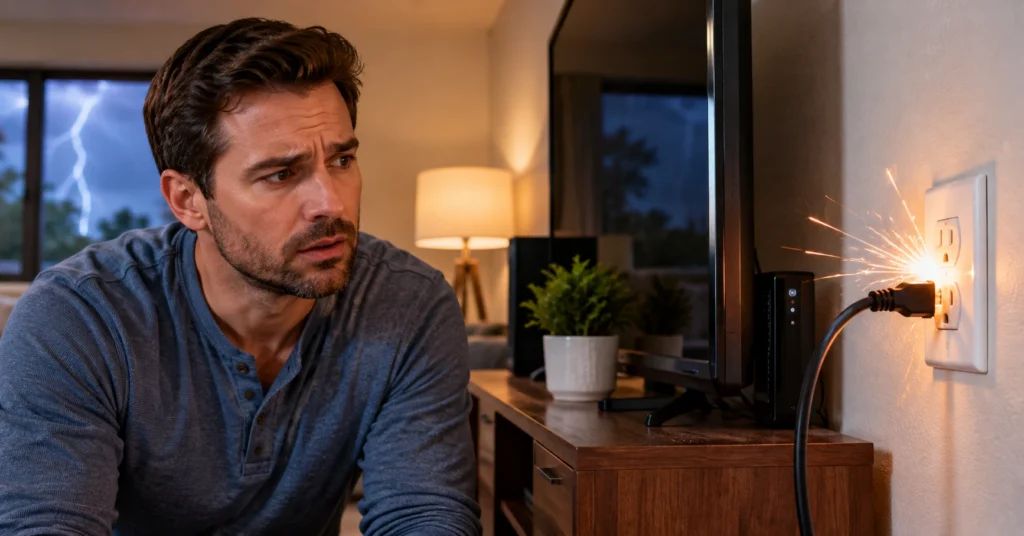
Lightning can cause a powerful electrical surge that may damage equipment in your home. A strike does not have to hit your house directly to cause problems.
A nearby lightning strike can affect power lines and other connected systems. The resulting surge may then travel through the electrical system and reach your home.
During severe thunderstorms, unplugging sensitive electronics when it is safe to do so can reduce their exposure to a surge. A properly installed surge protective device can also provide another layer of protection.
Utility Company Problems
Utility problems can cause temporary voltage changes that may affect homes connected to the electrical grid. Equipment failures, transformer problems, and utility switching are some possible sources.
You cannot control problems on the utility side, but you can reduce the potential impact on your electronics with appropriate surge protection.
Power Outages and Restoration
A power outage does not automatically cause a surge, but voltage can fluctuate when electricity is restored. That change can affect appliances and sensitive electronics that are still connected.
If several devices start behaving strangely or stop working after an outage, there may be an electrical problem worth checking. An electrician can inspect the system and look for signs of damage.
Faulty Electrical Equipment
Faulty electrical equipment can cause electrical disturbances and voltage changes. Motors, compressors, transformers, and other equipment can affect the electrical system as they start, stop, or fail.
Large appliances and HVAC equipment contain motors and electronic controls. If one piece of equipment repeatedly causes flickering lights or other unusual electrical behavior, have it inspected rather than continuing to use it.
Electrical Problems Inside the Home
Electrical problems inside your home can also cause unusual voltage changes and create safety concerns. Damaged wiring, loose connections, faulty components, and other defects should be checked by a qualified electrician.
Watch for warning signs such as repeated flickering lights, buzzing or crackling sounds, burning smells, warm outlets, or frequently tripping breakers. These symptoms can indicate an electrical problem that needs professional attention.
Can Lightning Cause a Power Surge?
Yes, lightning can cause a power surge by sending a large amount of electrical energy into nearby power lines or other connected systems. The surge can then travel through the electrical system and damage electronics and appliances.
Lightning does not have to strike your house directly to cause damage. A nearby strike can affect power lines and create a surge that reaches connected homes.
Some damage may not be obvious right away. An appliance might continue working after a storm but develop problems later if its internal electrical components were damaged.
During a severe thunderstorm, unplug sensitive electronics if you can do so safely before the storm reaches your area. A properly installed whole-house surge protection system can also help reduce the impact of certain electrical surges.
Can a Power Outage Cause a Surge?
A power outage does not automatically cause a surge, but voltage fluctuations can occur when electricity comes back on. These changes can affect appliances and sensitive electronics that remain connected.
After an outage, you may notice clocks resetting, electronics restarting, or appliances behaving differently. If several devices stop working or become damaged at the same time after power returns, a surge or another electrical problem may be involved.
If you suspect a damaging surge, avoid repeatedly turning affected equipment on and off. Check for obvious signs of damage, such as burning smells, damaged plugs, or unusual sounds.
If electrical problems continue after power is restored, have a qualified electrician inspect the system and affected equipment.
What Are the Signs of a Power Surge?
Common signs of a power surge include damaged electronics, flickering lights, tripped breakers, and appliances that suddenly stop working. The signs can appear during the surge or shortly afterward.
You may notice:
- Several devices stop working at once: Multiple electronics failing after a storm or outage can be a warning sign.
- Appliances restart unexpectedly: Electronics may shut down and restart when the voltage changes.
- Burn marks around outlets or plugs: Scorching or discoloration can indicate electrical damage.
- A burning smell: A burnt odor near an outlet, appliance, or electrical equipment should not be ignored.
- Flickering or unusual lights: Lights may flicker, dim, or behave differently after an electrical event.
- Tripped circuit breakers: A breaker may trip when an electrical fault or other problem occurs.
- Intermittent electronics: A device may work normally one moment and malfunction the next.
One damaged appliance does not necessarily prove that a power surge occurred. Other electrical or equipment problems can cause similar symptoms. If several devices are affected or you notice signs of electrical damage, have a qualified electrician inspect the system.
Which Appliances Are Most Vulnerable to Power Surges?
Electronics with circuit boards and sensitive controls are often more vulnerable to power surges than simple electrical devices. A short voltage spike can damage these components even if the surge lasts only a moment.
Common appliances and electronics that may be affected include:
- Televisions and streaming devices
- Computers and monitors
- Refrigerators and freezers
- Washing machines and dryers
- Dishwashers
- HVAC systems, including air conditioners and heat pumps
- Routers and networking equipment
- Smart home devices
- Gaming consoles
- Home theater and other entertainment equipment
Many newer appliances use electronic control boards, sensors, and digital displays. These components can be sensitive to sudden voltage changes.
If several appliances stop working or begin acting strangely after a storm, outage, or other electrical event, avoid assuming the damage is limited to one device. An electrician can check the home’s electrical system and help identify whether a power surge may have contributed to the problem.
Can Power Surges Damage HVAC Systems?
Yes, a power surge can damage HVAC components such as control boards, capacitors, motors, and other electrical parts. A large surge can cause the system to stop working or behave unusually.
Modern air conditioners and heating systems rely on electronic controls and electrical components to operate. A sudden voltage spike can damage these parts, sometimes without leaving obvious signs of damage.
You may notice that the HVAC system:
- Won’t turn on
- Shuts off unexpectedly
- Doesn’t respond to the thermostat
- Runs but does not cool or heat properly
- Trips the circuit breaker
- Starts making unusual electrical noises
If your HVAC system stops working after a major storm, power outage, or other electrical event, don’t assume the equipment simply failed from normal wear. An HVAC technician or qualified electrician can inspect the system and determine whether an electrical problem or surge may have contributed to the failure.
Are Power Surges Dangerous?
Yes, power surges can damage electrical equipment and may create safety concerns if they damage wiring, outlets, or other electrical components. The surge itself may last only a moment, but the damage it leaves behind can cause problems later.
Watch for warning signs such as:
- Smoke or sparks from an outlet, appliance, or electrical device
- A burning smell near electrical equipment
- Hot or discolored outlets or switches
- Buzzing or crackling sounds
- Repeatedly tripping circuit breakers
- Visible damage to plugs, outlets, or appliances
If you notice smoke, sparks, or a strong burning smell, stay away from the affected equipment and seek professional help. If there is an active fire or immediate danger, contact emergency services.
Do not open the electrical panel or try to repair damaged wiring yourself. A qualified electrician can inspect the system and determine whether the surge caused damage that needs to be repaired.
How Can You Protect Your Home From Power Surges?
You can reduce the risk of surge damage by using the right surge protection and keeping your home’s electrical system in good condition. No protection method can prevent every surge, but several steps can lower the risk to your electronics and appliances.
Install a Whole-Home Surge Protector
A whole-home surge protector is installed at your electrical panel and helps limit certain voltage spikes before they reach connected circuits and equipment.
Have a qualified electrician choose and install the device for your home’s electrical system. Proper installation is important for the protection to work as intended.
Use Plug-In Surge Protectors
Plug-in surge protectors can add protection for individual electronics such as computers, televisions, gaming consoles, and home entertainment equipment.
Choose a reputable device with appropriate ratings for the equipment you’re protecting. Replace surge protectors that are damaged or show signs of overheating.
Unplug Sensitive Electronics During Severe Storms
Unplugging sensitive electronics before a severe thunderstorm can reduce their exposure to electrical surges. Only do this when it is safe and practical, and avoid handling plugs or electrical equipment during an active storm.
Maintain Your Electrical System
Regular electrical maintenance can help identify problems such as damaged wiring, loose connections, overloaded circuits, and faulty components.
If you notice flickering lights, buzzing, warm outlets, burning smells, or repeatedly tripping breakers, have the system checked by a qualified electrician. Fixing electrical problems early can help prevent further damage and improve overall electrical safety.
Do I Need a Whole-House Surge Protector?
A whole-house surge protector can provide broader protection than individual plug-in surge protectors because it connects directly to your home’s electrical system.
It can be especially useful if your home has many sensitive electronics, HVAC equipment, smart devices, computers, or other expensive electrical equipment. A whole-house device can help reduce the impact of certain surges before they reach connected equipment.
However, no surge protection system can prevent every surge or guarantee that every device will avoid damage. Plug-in surge protectors may still be useful for specific electronics that need additional protection.
If you’re unsure whether your home needs whole-house surge protection, a qualified electrician can inspect your electrical panel and recommend a setup that fits your home’s electrical system and equipment.
What Should You Do After a Major Power Surge?
If you think your home experienced a major power surge, check for signs of electrical damage and avoid using equipment that appears unsafe.
Follow these steps:
- Check for smoke, sparks, or burning smells. If you notice any of these signs, stay away from the affected equipment and seek professional help.
- Unplug damaged electronics if it is safe to do so. Do not handle equipment if there is active sparking, smoke, or another immediate electrical hazard.
- Check for tripped breakers. A tripped breaker can indicate an electrical problem, although it does not automatically confirm that a power surge occurred.
- Look for damaged outlets and plugs. Watch for discoloration, scorch marks, melting, or other visible damage.
- Avoid using damaged equipment. Do not continue using appliances or electronics that smell unusual, make strange sounds, or show visible damage.
- Have an electrician inspect the system if problems continue. An electrician can check the electrical system and determine whether repairs or further testing are needed.
Do not remove the electrical panel cover or attempt to repair damaged wiring yourself. Electrical repairs can be dangerous and should be handled by a qualified electrician.
When Should You Call an Electrician?
You should call an electrician after a suspected power surge if you notice damaged equipment, repeated breaker trips, flickering lights, burning smells, or other electrical problems.
Professional help is especially important if:
- Several devices stopped working after the same event.
- Lights continue to flicker or behave unusually.
- Circuit breakers keep tripping.
- Outlets feel hot or look discolored.
- You hear buzzing, crackling, or unusual electrical sounds.
- You notice a burning smell near an outlet, appliance, or electrical panel.
- You see sparks, scorch marks, or other visible electrical damage.
- You want to install a whole-home surge protector.
An electrician can inspect your electrical panel, wiring, outlets, grounding, and other components to identify problems that may need electrical repair services. They can also determine whether your home is a good candidate for whole-home surge protection.
If you see active sparks, smoke, or signs of an electrical fire, stay away from the affected area and contact emergency services when necessary.
Frequently Asked Questions
What is the most common cause of power surges?
Power surges can result from lightning, utility problems, power restoration, or electrical equipment. Electrical problems inside the home can also cause voltage fluctuations.
Can lightning cause a power surge in my house?
Yes. Lightning can send a large amount of electrical energy into nearby power or communication lines, potentially creating a surge that reaches connected equipment.
Can a power outage cause a surge?
A power outage itself is not necessarily a surge. However, voltage fluctuations can occur when electricity is restored, which may affect sensitive electronics and appliances.
How do I know if my house had a power surge?
Signs can include several devices failing at the same time, flickering lights, tripped breakers, damaged electronics, or scorch marks around outlets and plugs. These signs can have other causes, so an electrician may need to inspect the system.
Can power surges damage an AC unit?
Yes. A significant power surge can damage electronic controls and other electrical components in an AC system. If your AC stops working after a storm or electrical event, have it inspected by a qualified professional.
Do surge protectors really work?
Surge protective devices can help limit excess voltage that reaches connected equipment, but they cannot prevent every surge or guarantee that equipment will never be damaged.
Is a whole-house surge protector worth installing?
A whole-home surge protector can provide an additional layer of protection for electrical equipment throughout your home. An electrician can inspect your electrical system and determine whether this type of protection is appropriate.
Should I call an electrician after a power surge?
Call an electrician if you notice electrical damage, persistent flickering, repeated breaker trips, burning smells, buzzing, sparks, or other unusual electrical behavior after a suspected surge. A professional can inspect the system and identify any problems that need attention.
Final Thoughts
Power surges in Canton, TX homes can happen because of lightning, utility problems, power restoration, faulty equipment, or electrical issues inside the home. Even a brief surge can damage sensitive electronics, appliances, and HVAC components.
You can reduce the risk with proper surge protection, safe electrical practices, and regular electrical maintenance. Whole-home and plug-in surge protectors can add protection, but no device can prevent every type of surge damage.
If you notice flickering lights, repeated breaker trips, burning smells, damaged outlets, or equipment problems after a suspected surge, have a qualified electrician inspect the system. Avoid attempting electrical repairs yourself, especially when wiring or the electrical panel may be damaged.