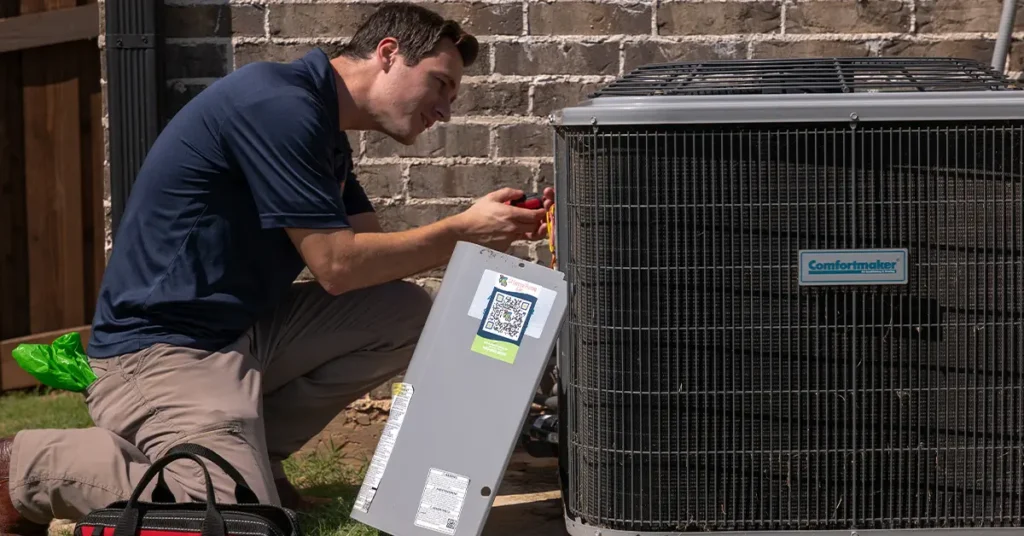
Replacing an air conditioner in Texas typically costs $5,500 to $13,000 for a professionally installed central AC system in 2026, although a basic replacement may cost less and a high-efficiency system or installation requiring additional work can cost more. The final price depends on the AC unit’s size, efficiency rating, installation requirements, and whether you need to replace only the cooling equipment or the entire HVAC system.
For most homeowners, the most important step is understanding what the contractor’s quote includes. Two estimates for the same home can differ significantly if one covers only the outdoor unit and indoor coil while the other includes a new furnace, electrical upgrades, or ductwork repairs.
This guide breaks down AC replacement costs in Texas, explains the factors that affect pricing, and helps you decide whether replacing your existing air conditioner is worth the investment.
How Much Does AC Replacement Cost in Texas in 2026?
AC replacement in Texas generally costs $5,500 to $13,000 for a central AC system, including equipment and professional installation. Premium systems, complete HVAC replacements, and projects requiring additional work can exceed this range.
Published 2026 Texas pricing guides show substantial variation because they do not all include the same equipment and installation work. Kimco Plumbing & Air’s Texas cost guide, for example, places standard to premium central AC replacements across several price tiers. Lightfoot Mechanical’s guide distinguishes between replacing the cooling equipment and replacing the complete split system.
The following ranges provide a practical starting point for budgeting.
| AC replacement type | Estimated installed cost |
| Basic central AC replacement | 5,500–8,000 |
| Mid-range central AC system | 7,500–10,500 |
| Premium, high-efficiency AC system | 10,000–13,500+ |
| Complete HVAC system replacement | 8,000–16,500+ |
These are broad budgeting estimates, not guaranteed prices or a single statewide average. Actual costs depend on the equipment, installation scope, home, and contractor.
A basic replacement generally involves fewer upgrades and a relatively straightforward installation. If you’re planning to install a new system, our guide to AC installation costs explains the expenses involved in installing an air conditioner.
A more expensive project may include higher-efficiency equipment, additional electrical work, or replacement of other HVAC components.
What Is Included in an AC Replacement Quote?
A typical central AC replacement quote may include:
- A new outdoor condenser or condensing unit.
- A compatible indoor evaporator coil.
- Installation labor and equipment setup.
- Removal and disposal of the old equipment, depending on the quote.
- Refrigerant-line inspection and necessary connections.
- System testing and commissioning.
If your indoor coil is damaged, read our guide to AC coil replacement cost to understand how much replacing this component may cost.
Permits, electrical modifications, thermostat upgrades, ductwork repairs, and replacement of a furnace or air handler may be charged separately.
Always ask for an itemized estimate so you can compare contractors on the same scope of work.
AC Replacement Cost by Unit Size
The size of your air conditioner affects its price because larger systems generally require more cooling capacity and may cost more to install. Residential AC capacity is measured in tons, with one ton representing 12,000 BTUs of cooling per hour.
The following table provides illustrative budgeting ranges for common residential system sizes.
| AC unit size | Estimated installed cost |
| 2-ton AC unit | 5,000–8,000 |
| 3-ton AC unit | 6,000–10,000 |
| 4-ton AC unit | 7,000–12,000 |
| 5-ton AC unit | 8,000–13,500+ |
These are approximate planning ranges, not verified prices for every tonnage across Texas. The ranges overlap because efficiency, brand, equipment configuration, and installation complexity can matter as much as nominal capacity.
A larger unit is not automatically the better choice. An oversized air conditioner may cool a home quickly without running long enough to remove humidity effectively. An undersized system may struggle to maintain comfortable temperatures during extreme Texas heat.
A qualified HVAC contractor should assess the home’s cooling load, insulation, windows, orientation, and other relevant factors before recommending a replacement. Ask whether the contractor will perform a Manual J load calculation rather than selecting the unit based only on square footage.
What Factors Affect AC Replacement Cost in Texas?
Several factors determine the final cost of replacing an air conditioner. Understanding them helps you evaluate estimates and avoid paying for equipment or work your home does not need.
1. AC Unit Size and Cooling Capacity
Larger homes may require higher-capacity equipment, but square footage alone does not determine the correct size. Insulation, ceiling height, window exposure, air leakage, and the local climate all affect cooling demand.
For example, two Texas homes with the same floor area may require different AC capacities because one has better insulation and less direct sun exposure.
Choosing the right size helps balance installation costs, comfort, humidity control, and energy consumption.
2. Energy Efficiency and SEER2 Rating
SEER2 measures an air conditioner’s seasonal cooling efficiency. Higher-efficiency systems can use less electricity under comparable operating conditions, but they often cost more upfront.
When comparing systems, consider:
- The installed price of each option.
- The efficiency rating of the equipment.
- How many hours the AC operates during the cooling season.
- Your electricity rate.
- Expected ownership period and maintenance requirements.
Texas homeowners often run their AC systems for extended periods during hot weather, so efficiency deserves careful consideration. However, the most expensive system is not automatically the most cost-effective.
Compare the expected energy savings with the additional purchase price before choosing a higher-efficiency model. Also confirm that the proposed equipment meets the applicable efficiency requirements for your location.
3. Installation Labor and Complexity
Labor costs depend on the equipment being installed and the amount of work required.
Replacing an existing system with a compatible model in an accessible location is generally more straightforward than changing equipment configurations or modifying the installation.
Labor may increase if the job requires difficult access, additional refrigerant-line work, electrical modifications, or changes to the indoor equipment.
Ask contractors to explain any significant differences in labor charges.
4. Ductwork and Electrical Upgrades
Existing ductwork can affect both the cost and performance of a new AC system.
Leaking, damaged, or undersized ducts may prevent the new equipment from delivering the expected airflow. Repairs or replacement can increase the project price, but ignoring significant duct problems may undermine the benefits of a new system.
Electrical work may also be necessary if the existing circuit, disconnect, wiring, or other components do not meet the equipment’s requirements or applicable code.
These upgrades are not necessary for every replacement. Request an explanation of the problem and an itemized price before approving additional work.
If your existing ductwork needs replacing, our guide to air duct replacement cost explains what to consider when budgeting for new ducts.
5. Replacing the AC Unit Versus the Complete HVAC System
Replacing only the cooling equipment can cost less than replacing the complete HVAC system.
A central AC system commonly works with an indoor evaporator coil and a separate heating system. Depending on the home’s configuration, the contractor may recommend replacing the outdoor unit and coil while retaining a compatible furnace or air handler.
A complete replacement may include additional equipment, such as a new furnace or air handler, along with the cooling components.
Ask the contractor to quote both options when appropriate. The best choice depends on the age, condition, compatibility, and expected remaining life of the existing equipment.
If you’re considering replacing both systems, see our guide to the cost to replace an AC and furnace together to compare the potential expense.
Does AC Replacement Cost Vary by Texas City?
Yes. AC replacement costs can differ between Texas cities because of local labor rates, contractor demand, permit requirements, equipment availability, and installation conditions.
For example, 2026 estimates published for Dallas vary by source and project scope. Angi reports a typical range of approximately $4,412 to $8,522 for AC replacement in Dallas, while other cost guides report higher ranges for projects that include different equipment or installation requirements. See Angi’s Dallas cost estimate.
The following locations are useful starting points when requesting local estimates:
- Dallas–Fort Worth: Ask about the proposed system’s capacity, efficiency, and any additional installation or code-related work.
- Houston: Confirm whether the quote includes any necessary ductwork or drainage corrections.
- Austin: Compare equipment specifications, installation scope, and labor charges.
- San Antonio: Check the total installed price, warranty coverage, and any additional work.
These are factors to investigate, not claims that one city always costs more than another. Obtain local quotes before assuming that a statewide estimate accurately reflects your home.
Is It Cheaper to Repair or Replace Your AC?
Repairing an air conditioner is often less expensive in the short term, particularly when the system is relatively new and the problem is minor. Replacement may make more financial sense when the unit is aging, requires repeated repairs, or has a major component failure.
Consider these factors before making a decision.
Repair may be the better option when:
- The AC is relatively young and has been reliable.
- The problem involves a repairable component.
- Repair costs are reasonable compared with replacement.
- The system still cools the home effectively.
Replacement may be worth considering when:
- The system is around 10–15 years old or older and has recurring problems.
- Major components have failed.
- Repair costs are substantial relative to the price of a new system.
- The existing unit struggles to cool the home or control humidity.
- A replacement would address persistent comfort or efficiency problems.
Age alone does not determine whether an AC should be replaced. A well-maintained system may continue operating effectively, while another unit may need replacement earlier because of its condition or repair history.
Before deciding, compare the repair estimate with the total installed replacement price. You can also review typical AC repair costs to compare the cost of fixing your current system with replacing it. Consider expected future repairs, energy use, warranties, and how long you plan to stay in the home.
How to Save Money on AC Replacement in Texas
You do not necessarily need the most expensive AC system to get reliable cooling. Focus on the equipment and installation that suit your home.
Compare at least three written estimates. Ask each contractor to quote comparable equipment and the same installation scope. A lower price may exclude work that another estimate includes.
Choose the correct system size. Avoid paying for unnecessary capacity. Request a documented cooling-load assessment before selecting the equipment.
Compare total installed costs. Equipment prices alone do not show what you will pay. Check labor, removal, permits, electrical work, and any additional charges.
Evaluate efficiency based on your usage. A higher SEER2 rating may reduce electricity consumption, but the savings should justify the additional upfront cost.
Check warranties and available incentives. Review manufacturer warranties and ask your utility or relevant program administrator whether current rebates are available for your chosen system. Verify eligibility, funding, and deadlines before including an incentive in your budget.
Plan replacement before an emergency when possible. If your AC is showing signs of failure, comparing options before it stops working completely may give you more time to evaluate estimates.
Frequently Asked Questions
How much does it cost to replace an AC unit in Texas in 2026?
A central AC replacement commonly falls within an estimated range of $5,500 to $13,000 for a professionally installed system. Basic replacements may cost less, while premium equipment and projects involving additional work can cost more. Your final price depends on the equipment and installation scope.
How much does it cost to replace an AC unit in a 2,000-square-foot house in Texas?
The cost depends on the home’s cooling load, equipment efficiency, existing HVAC configuration, and installation requirements. A 2,000-square-foot home does not automatically need a particular AC size. Request a cooling-load calculation and an itemized estimate for an accurate price.
How much does a 3-ton AC unit cost installed in Texas?
A 3-ton central AC replacement may cost approximately $6,000 to $10,000 installed, depending on equipment specifications and installation conditions. This is a budgeting estimate rather than a guaranteed local price.
How long does AC replacement take?
A straightforward replacement can often be completed in one day. Projects involving ductwork modifications, electrical upgrades, equipment relocation, or a complete HVAC system replacement may take longer.
Is it worth replacing a 10-year-old AC unit?
Not necessarily. A 10-year-old AC may still have useful life remaining if it is reliable and in good condition. Compare the cost of the current repair, the system’s performance, its repair history, and the price of replacement before deciding.
Are there AC replacement rebates in Texas in 2026?
Potential incentives depend on the equipment, program rules, household eligibility, utility provider, and current funding. Check the relevant utility or program administrator for current details before assuming you qualify for a rebate.
Get an AC Replacement Estimate in Texas
If your air conditioner is struggling to cool your home, breaking down frequently, or approaching the end of its useful life, comparing replacement options can help you make an informed decision.
Request a written estimate from a qualified HVAC contractor. Ask for the recommended system size, equipment model, SEER2 rating, total installed price, warranty details, and any additional work required.
The best AC replacement is not necessarily the cheapest or most expensive option. It is the system that fits your home’s cooling needs, your budget, and your long-term comfort goals.