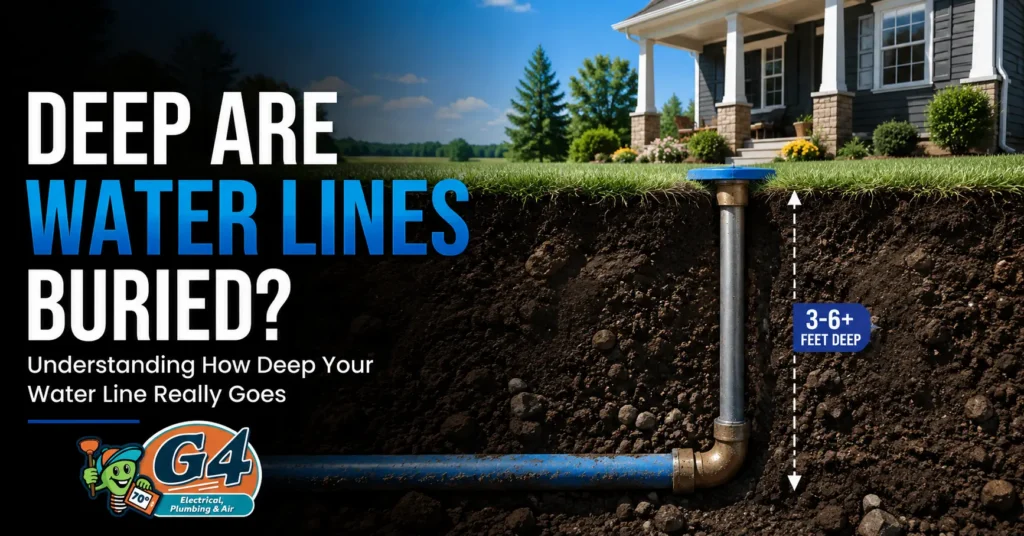
If you’re wondering how deep water lines are buried, most residential water lines need at least 12 inches of soil cover, but the exact depth depends on local plumbing codes and the frost line. In colder areas, the pipe may need to sit several feet underground to prevent freezing.
There isn’t one burial depth that applies to every U.S. home. Mabank, TX, and surrounding communities may follow local plumbing and water utility requirements that differ from other areas. A depth that works in a warm climate may be too shallow in an area with deep frost.
This guide explains how deep water lines typically need to be buried, how the frost line affects the required depth, and what homeowners should check before installing or replacing an underground water line.
How Deep Are Water Lines Usually Buried?
Most residential water lines need at least 12 inches of soil cover, but colder areas often require much deeper burial to protect the pipe from freezing.
The key factor is the local frost line. If the frost line sits deeper than the minimum code depth, the water line may need to go below it to prevent freezing. Local plumbing codes determine the exact requirement.
For example, the International Residential Code (IRC) generally requires water service pipe in applicable freezing areas to sit at least 12 inches below grade and at least 6 inches below the frost line.
So, if the local frost line reaches 36 inches below ground, that IRC requirement would put the water service pipe at least 42 inches deep.
For homeowners in Mabank, TX, and nearby areas, don’t assume a depth from another state applies to your property. Local plumbing requirements and site conditions determine the correct burial depth. Check with your local plumbing authority or a licensed plumber before digging or installing a new water line.
Typical Water Line Burial Depths
Water line burial depth varies by local frost depth and plumbing code, so the numbers below show examples rather than universal requirements.
| Local Frost Depth | Example Depth With 6 Inches Below Frost Line |
| 12 inches | 18 inches |
| 24 inches | 30 inches |
| 36 inches | 42 inches |
| 42 inches | 48 inches |
| 48 inches | 54 inches |
| 60 inches | 66 inches |
These figures show how frost depth can affect the required burial depth. They do not represent legal requirements for every location. Your local plumbing code may set a different minimum, and your water utility may have additional installation requirements.
For a home in Mabank, TX, or the surrounding area, check the local requirements before choosing a trench depth. A licensed plumber can also confirm the proper depth for your water service line.
Why Are Water Lines Buried Below the Frost Line?
Water lines go below the frost line to keep the water inside the pipe from freezing during cold weather.
When frost reaches a buried water line, the water inside can freeze and block or reduce water flow. As water freezes, it expands and can put extra pressure on the pipe and its connections. That pressure can lead to cracks or leaks.
That’s why plumbing codes in colder areas often use the local frost line when setting water line burial requirements. The deeper the ground can freeze, the deeper the water line generally needs to go.
For homeowners in Mabank, TX, and surrounding areas, freezing conditions may be less severe than in northern states, but local plumbing requirements still determine the proper installation depth. If you’re installing or replacing a water line, verify the required depth before digging.
What Is the Minimum Depth for a Water Line?
There is no single minimum water-line depth that applies to every U.S. property; local plumbing codes and frost conditions determine the required depth.
The International Residential Code (IRC) commonly requires water service pipe to sit at least 12 inches below grade and at least 6 inches below the local frost line in areas subject to freezing.
Local governments can adopt different plumbing codes or amend model-code requirements. For example, New York’s 2025 Plumbing Code requires exterior water supply piping to sit at least 6 inches below the frost line and 12 inches below grade.
So, 12 inches should not be treated as a universal water-line depth. The correct depth for your home depends on the requirements that apply to your property.
If you’re installing or replacing a water line in Mabank, TX, or the surrounding area, check local requirements before digging. A licensed plumber can help confirm the required burial depth and make sure the installation meets local code.
How Does the Frost Line Affect Water Line Depth?
The deeper the local frost line, the deeper you may need to bury a water line to protect it from freezing. The frost line marks the maximum depth where the ground can freeze during cold weather.
For example:
- A 12-inch frost line may allow a relatively shallow water-line installation.
- A 36-inch frost line may require much deeper burial.
- A 48-inch frost line may require the pipe to sit several feet underground.
- A 60-inch frost line can require even deeper installation.
The exact requirement depends on the plumbing code adopted in your area. Some jurisdictions set a specific minimum burial depth, while others base the requirement on the local frost line.
For example, North Carolina plumbing-code guidance requires the top of a water pipe to sit below the frost line or at least 12 inches below grade, whichever provides greater depth.
Why Frost Depth Can Differ Within a State
Frost depth can vary within the same state because local climate, elevation, soil, and geography affect how deeply the ground freezes.
Factors that can affect frost depth include:
- Geographic location
- Elevation
- Local climate
- Soil conditions
- Weather patterns
- Local building-code requirements
Because of these differences, don’t rely on a generic statewide frost-depth number when planning a water-line installation. Check the applicable local plumbing code for the property.
How Deep Are Water Lines Buried by State?
Water-line burial depth varies by state and local jurisdiction because each area can adopt different plumbing codes, amendments, and water utility requirements. Some states use the International Plumbing Code (IPC) or Uniform Plumbing Code (UPC), while others follow their own state plumbing codes.
Even when two states use the same model code, local amendments can change the required depth. That’s why you shouldn’t assume a single burial depth applies across an entire state.
Cold-Weather States
Cold-weather states generally require deeper water-line burial because their frost lines reach farther into the ground.
In these areas, plumbing codes often use frost depth to determine how far underground a water service line must go. For example, New York’s current plumbing code requires exterior water supply piping to extend at least 6 inches below the frost line and at least 12 inches below grade.
In areas with deep frost, the required water-line depth can reach several feet.
Warmer States
Warmer states generally have shallower frost depths, so water lines may not need the same burial depth as they do in colder regions.
However, you shouldn’t assume that a water line only needs to sit a few inches underground. Local plumbing codes can still establish a minimum depth, even where freezing presents less of a concern.
Local Rules Can Be More Important Than State Rules
Your local building department and water utility often provide the most accurate requirements for your property.
Cities and counties can adopt local plumbing amendments or utility standards that affect water-line installation. For example, Baltimore requires water service piping to sit below the recorded frost line and provides a 36-inch minimum earth-cover requirement.
That’s why a generic “water line depth by state” chart can give you the wrong answer. For an actual installation, always check the requirements for the specific city or county where the property sits.
How Can You Find the Required Water Line Depth in Your Area?
The best way to find the required water-line depth is to check your local plumbing code, building department, and water utility requirements. These sources can tell you the minimum depth that applies to your property.
1. Check Your Local Plumbing Code
Your local plumbing code tells you which water-line burial requirements apply in your area.
Look for rules covering:
- Water service piping
- Exterior water supply piping
- Frost protection
- Minimum burial depth
- Required soil cover
Don’t rely on a general depth you find online. Local codes can set different requirements.
2. Contact Your Building Department
Your local building department can confirm the plumbing code and amendments that apply to your property.
Ask about the required burial depth before installing a new water line or replacing an existing one. This step can also help you avoid problems during a required inspection.
3. Check With Your Water Utility
Your local water utility may have additional requirements for water service lines connected to the public water system.
Ask whether the utility has specific rules for:
- Service-line depth
- Approved pipe materials
- Connection points
- Required cover
- Installation or inspection
These utility standards may go beyond the basic plumbing-code requirements.
4. Confirm the Local Frost Depth
If your local code bases water-line depth on frost protection, use the official frost depth for your area.
Check your building department or other local authority for the frost-depth information they use. Avoid relying on a generic frost-depth number from an unrelated website because conditions can vary even within the same state.
Once you know the local code, frost depth, and utility requirements, you can determine the correct burial depth for your water line with much more confidence.
Does a 12-Inch Burial Depth Always Work?
No, 12 inches may not provide enough cover for a water line, especially in areas with a deeper frost line.
A 12-inch depth may meet the minimum code requirement in some locations. However, colder areas may require much deeper burial to protect the pipe from freezing.
For example, if the local frost line sits 36 inches below grade and the applicable code requires the water line to sit 6 inches below the frost line, the pipe would need to reach at least 42 inches deep. A 12-inch installation would fall well short of that requirement.
Instead of asking, “Can I bury my water line 12 inches deep?”, ask:
“What minimum burial depth does my local plumbing code require?”
That answer will account for the required soil cover, frost conditions, and any local water utility requirements.
What Happens If a Water Line Is Buried Too Shallow?
A water line buried too close to the surface faces a higher risk of freezing, damage, water loss, and costly repairs. The risk becomes greater when the ground freezes deeply enough to reach the pipe.
Frozen Water Lines
A shallow water line can freeze when frost reaches the pipe. Ice can restrict or completely stop water flow through the line.
Loss of Water Service
A frozen water line can reduce or completely stop water service to your home. You may notice low water pressure or no water from your faucets until the line thaws or a plumber resolves the problem. If you suddenly have no water, our guide explains how to tell whether the issue is with your plumbing or the city water supply.
Pipe Damage
Freezing and thawing can damage a water line and its connections. Frozen water expands inside the pipe, which can create pressure and contribute to cracks or leaks. Some leaks may remain difficult to detect, making it important to know the warning signs of hidden plumbing leaks.
Expensive Repairs
A damaged underground water line can cost more to repair because the plumber may need to locate the break, excavate the area, and replace the damaged section. In some situations, trenchless water line replacement may provide an alternative to traditional excavation. If the line runs beneath a driveway, walkway, or landscaped area, restoring the surface can add to the overall repair cost.
Proper burial depth does more than satisfy plumbing-code requirements. It helps protect your water service from freezing conditions and avoidable underground damage.
How Do You Know How Deep an Existing Water Line Is?
The best way to find the depth of an existing water line is to check available property records and have the line professionally located before digging. Don’t assume an older water line meets today’s plumbing-code requirements.
Older homes may have different installation depths because they were built under earlier codes or standards.
You can start by checking:
- Original building records
- Plumbing installation records
- Water utility records
- Previous repair records
- The point where the water line enters the house
If you still can’t determine the line’s exact location or depth, a licensed plumber or utility-locating professional can help locate it before excavation.
Always contact 811 before you dig. Utility locating helps identify underground lines, but you shouldn’t assume that an 811 locate will tell you the exact depth of a private water service line.
What Depth Should You Use When Installing a New Water Line?
Install a new water line at the depth required by your local plumbing code and water utility, not by a generic depth you find online.
The required depth mainly depends on:
- Local plumbing code: Sets the minimum burial depth for water service piping.
- Local frost depth: Determines how far the ground can freeze in your area.
- State and local amendments: Can change or add to model plumbing code requirements.
- Water utility requirements: May set additional standards for service-line installation.
- Pipe location: The required cover can vary depending on where the line runs.
In areas where the ground freezes, the water line generally needs to sit below the applicable frost line with any additional cover required by local code. Check the requirements before digging so you don’t have to redo the installation later.
Frequently Asked Questions
How deep should a residential water line be buried?
A residential water line should sit deep enough to meet local plumbing code and protect it from freezing. A common IRC requirement calls for at least 12 inches of cover and at least 6 inches below the frost line in applicable freezing areas.
Is 12 inches deep enough for a water line?
Not always; 12 inches may meet the minimum in some areas, but colder locations can require much deeper burial. The local frost line and plumbing code determine the required depth.
How deep does a water line need to be to prevent freezing?
A water line generally needs to sit below the local frost line when the applicable plumbing code uses frost depth for freeze protection. The required clearance below the frost line can vary by jurisdiction.
Can a water line freeze underground?
Yes, an underground water line can freeze if frost reaches the pipe or the installation doesn’t provide enough protection. A frozen line can restrict or stop water flow and may damage the pipe.
How deep are water lines buried in cold climates?
Water lines in cold climates may sit several feet underground because frost can penetrate much deeper than the basic 12-inch minimum used by some codes. The required depth depends on local frost conditions and plumbing requirements.
Does every state require the same water line burial depth?
No, water-line burial requirements can vary by state, city, county, and water utility. Local jurisdictions can adopt different plumbing codes, amendments, and frost-depth requirements.
How do I find my area’s required water line depth?
Check your local plumbing code and contact your building department or water utility for the exact requirement. They can confirm the applicable burial depth, frost-depth standard, and any additional service-line requirements.
Can I use the frost line alone to determine water line depth?
No, the frost line alone may not determine the required burial depth. Your local code may require additional cover below the frost line or establish a separate minimum depth, so follow the complete local requirement.
Final Thought
The right water-line burial depth depends on your local plumbing code, frost depth, and water utility requirements. There is no single depth that works for every home in the U.S.
A common IRC requirement calls for water service piping to sit at least 12 inches below grade and at least 6 inches below the frost line in applicable freezing areas. However, local jurisdictions can adopt different requirements or amendments.
If you’re installing or replacing a buried water line, check with your local building department and water utility before digging. If you need professional help with installation or replacement, our water line services can help ensure the work is handled properly. That helps you confirm the required depth and avoid installing a line too close to the surface.