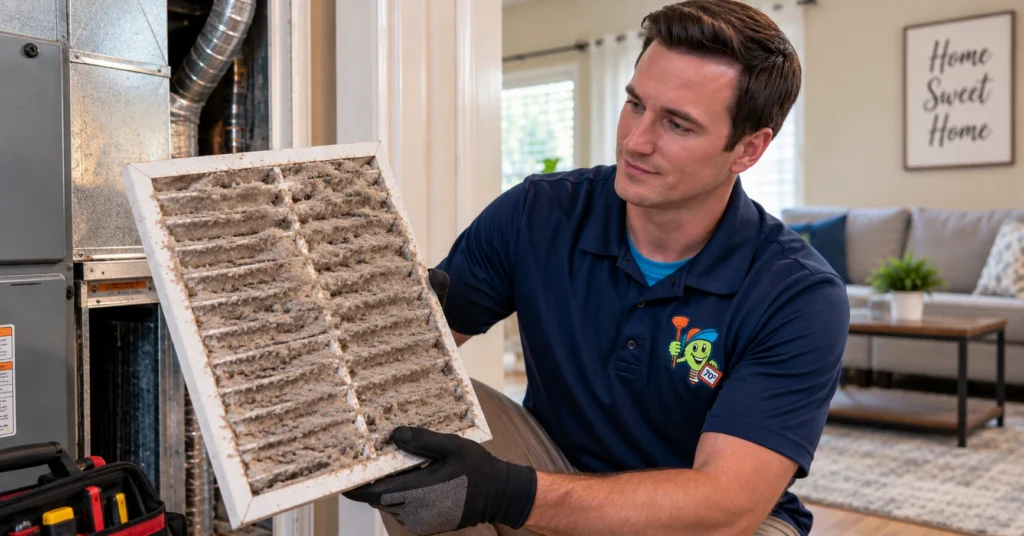
Your home can still feel dusty while the HVAC is running because your system does more than just heat or cool the air. It also moves air through the home, but the filter may not catch every particle.
A dirty filter, leaking ductwork, weak airflow, or dust coming in from outside can all make the problem worse. If you keep cleaning your Kaufman, TX home and the dust quickly comes back, it is worth finding out where it is coming from.
The good news is that you can often narrow down the cause by checking your HVAC filter, vents, airflow, and ductwork.
Why Does My Home Feel Dusty Even When the HVAC Is Running?
Your home can still feel dusty while the HVAC is running because the system does not remove every particle from the air. How well it filters dust depends on the air filter, airflow, ductwork, and condition of the system.
Common causes include:
- Dirty or poorly fitted air filter: A clogged or loose filter may not capture dust effectively.
- Leaking or dirty ductwork: Gaps or damage in the ducts can allow dust and debris to enter the airflow.
- Restricted airflow: A dirty filter, blocked vent, or HVAC problem can reduce air circulation.
- Open doors and windows: Outdoor dust can enter your home and settle on surfaces.
- Carpets and upholstered furniture: These can collect dust, dirt, hair, and other particles and release them back into the air.
- Pets: Pet hair and dander can add to the amount of dust and particles indoors.
- Poor HVAC maintenance: Dirty components or other system problems can affect airflow and filtration.
- Recent construction or remodeling: Renovation work can leave fine dust behind for weeks if it is not cleaned properly.
So, running the HVAC does not automatically mean your home will stay dust-free. The system may simply circulate dust that is already in the home. Finding the source is the first step toward keeping your Kaufman, TX home cleaner and more comfortable.
Can a Dirty HVAC Filter Make Your Home Dusty?
Yes, a dirty or poorly fitted HVAC filter can make it harder to control dust in your home. The filter catches airborne particles as air passes through the HVAC system, but it cannot work properly when it is clogged or installed incorrectly.
When a filter gets packed with dust, it can restrict airflow and put extra strain on the system. If the filter does not fit tightly in its slot, air can also flow around it and carry unfiltered dust into the system.
Check your filter regularly and replace it when it becomes dirty or based on the manufacturer’s recommended schedule. Always use the correct filter size and install it in the direction shown by the airflow arrow.
Even a new filter will not work well if it is the wrong size or does not fit securely.
Can Leaky Air Ducts Cause a Dusty House?
Yes, leaky air ducts can make your home dustier by allowing dust and other particles into the HVAC system or conditioned air. This is especially possible when ductwork runs through an attic, crawl space, garage, or another dusty area.
When ducts have loose connections, cracks, or damaged seals, they may not move air as efficiently as they should. Duct leaks can also increase energy bills and make some rooms harder to heat or cool.
Signs that your ductwork may need attention include:
- Dust around several air vents: More than one dusty vent can point to an airflow or ductwork issue.
- Uneven airflow between rooms: Some rooms may get much less air than others.
- Rooms that are hard to heat or cool: Leaky ducts can make it harder to maintain a comfortable temperature.
- Weak airflow from certain vents: This can happen when air escapes through damaged duct sections.
- Dust that quickly returns: If you clean your home and dust builds up again soon, check the HVAC system as well as other dust sources.
- Higher energy bills: Duct leaks can cause conditioned air to escape, making the HVAC system work harder.
If you suspect leaky ducts, have a qualified HVAC technician inspect the system. They can check accessible duct connections and determine whether sealing or repairs are needed.
Why Is Dust Coming From My Air Vents?
Dust around your air vents does not always mean your HVAC system is blowing dust into your home. The vent can collect normal household dust, especially around the edges where air moves in and out.
However, a large amount of dust around several vents may point to a problem with the filter, airflow, or ductwork. You may also notice dust or debris coming from the vents when the system runs.
Start by cleaning the supply registers and return grilles. Then check the HVAC filter and make sure it fits properly. If the vents become dusty again quickly, or you can actually see debris coming through them, have your HVAC system inspected.
Do not assume duct cleaning will fix the problem. First, find out where the dust is coming from. If the cause is a leaking duct, poor filtration, or another HVAC issue, that problem needs to be addressed.
Can Poor Airflow Make a Home Feel Dusty?
Yes, poor airflow can make your home feel dustier because the HVAC system may not circulate and filter indoor air properly.
Several problems can restrict airflow, including:
- A dirty or clogged air filter
- Blocked supply vents
- Closed registers
- Furniture or curtains covering return grilles
- A dirty blower or other HVAC components
- Ductwork problems
- Mechanical issues with the HVAC system
When airflow is weak, some rooms may feel stuffy while dust settles on furniture, floors, and other surfaces. You may also notice that certain rooms feel warmer or cooler than others.
Start by checking that your filter is clean and that supply vents and return grilles are not blocked. If the airflow is still weak, have an HVAC professional inspect the system to find out whether the problem is related to the ductwork, blower, or another component.
Can the HVAC System Spread Dust Around the House?
Yes, your HVAC system can spread dust around the house as it circulates air through different rooms. However, that does not always mean the HVAC system is creating the dust.
Dust can come from carpets, furniture, pets, outdoor air, and everyday activities. Once those particles become airborne, the HVAC system can move them through the home.
A problem with the air filter, return-air system, ductwork, or blower can make dust circulation worse. For example, a poorly fitted filter may allow particles to bypass the filter and continue through the system.
If you notice dust building up unusually fast after the HVAC runs, check the filter first. Also look for blocked vents, weak airflow, or excessive dust around several registers. If the problem continues, an HVAC professional can inspect the system and identify the source.
What Other Things Make a Home Dusty?
Many things besides your HVAC system can make a home dusty, including carpets, furniture, pets, outdoor air, and recent construction work. Finding these sources can help you reduce dust instead of relying on your HVAC system to handle everything.
Carpets and Rugs
Carpets and rugs can hold dust, dirt, hair, and other particles. Walking across them can stir those particles back into the air.
Vacuum carpets and rugs regularly, especially in high-traffic areas. This can help keep more dust from becoming airborne.
Upholstered Furniture
Sofas, chairs, mattresses, and other fabric-covered furniture can collect dust over time. Sitting or moving around on these surfaces can release some of that dust back into the air.
Regular vacuuming and cleaning can help reduce the buildup.
Pets
Pets can bring dirt and outdoor particles into the house while also adding hair and dander. These materials can quickly add to the dust you see around your home.
Regular grooming, vacuuming, and cleaning pet bedding can help keep these particles under control.
Open Doors and Windows
Open doors and windows can allow outdoor dust, dirt, and other particles to enter your home. Gaps around doors and windows can also let outdoor particles inside.
When appropriate, keep doors and windows closed and check for noticeable gaps that may need sealing.
Renovation and Construction
Recent remodeling or construction can leave a lot of fine dust behind. Drywall work, flooring installation, sanding, and other projects can create particles that settle throughout the home.
Clean affected surfaces, floors, and accessible vents thoroughly after the work is finished. If dust continues to circulate long after a project is complete, check the HVAC filter and consider having the system inspected.
How Can You Reduce Dust in Your Kaufman, TX Home?
You can reduce dust in your Kaufman, TX home by improving HVAC filtration, keeping airflow clear, cleaning regularly, and addressing sources of dust around the house.
Try these simple steps:
- Check the HVAC filter regularly. Replace a dirty filter with the correct size and type for your system. A clean, properly fitted filter helps capture airborne particles.
- Keep vents and return grilles clean. Wipe away dust from accessible registers and grilles so it does not build up and get redistributed.
- Keep airflow paths clear. Make sure furniture, curtains, and other items are not blocking supply vents or return grilles.
- Vacuum carpets and upholstery regularly. These surfaces can hold a lot of dust, dirt, hair, and other particles. Regular vacuuming helps remove them before they become airborne.
- Clean surfaces without stirring up dust. Use a damp microfiber cloth or another method that captures dust instead of simply pushing it into the air.
- Check doors and windows for gaps. Sealing noticeable gaps can help reduce the amount of outdoor dust entering your home.
- Check your ductwork. If you suspect leaks or damage, have a qualified HVAC professional inspect the ducts and repair problem areas.
- Keep up with HVAC maintenance. Routine service can help identify problems with the filter, airflow, blower, ductwork, and other components.
If your home still gets dusty soon after cleaning, do not assume you simply need to clean more often. Persistent dust can point to an HVAC, ductwork, filtration, or indoor air quality problem that needs closer inspection.
Should You Get Your Air Ducts Cleaned?
You do not necessarily need air duct cleaning just because your home is dusty. The first step is to find out what is causing the dust problem.
Duct cleaning may make sense when you have:
- Visible debris inside accessible ductwork
- Signs of pests or contamination inside the ducts
- A large amount of dust or debris left from recent renovation work
- Persistent dust problems that continue after fixing the filter and other obvious sources
However, cleaning the ducts will not fix every dusty-home problem. If the real issue is a leaking duct, poor filtration, restricted airflow, or another HVAC problem, the underlying issue needs to be repaired.
If you are unsure whether your ducts need cleaning, have a qualified HVAC professional inspect the system. They can determine whether duct cleaning, duct repairs, a filter change, or another solution is appropriate for your home.
Would an Air Purifier Help With Dust?
Yes, an air purifier can help reduce airborne dust, but it should be part of a bigger approach to keeping your home clean and your HVAC system working properly.
A portable air purifier can filter air in a specific room. A whole-home air cleaner can work with your HVAC system to filter air as it moves through the house. The right option depends on your home’s size, HVAC setup, and the amount of dust you are dealing with. Choosing the right HVAC system can also affect airflow, filtration, and indoor comfort.
An air purifier cannot fix problems such as leaking ducts, a poorly fitted filter, restricted airflow, or excessive dust entering from outside. Those issues need to be addressed separately.
If you are considering an air purifier, choose one that is properly sized for the space and compatible with your HVAC system if you want whole-home filtration. A qualified HVAC professional can also help you determine whether additional air cleaning is appropriate for your home.
When Should You Call an HVAC Professional?
You should call an HVAC professional when your home stays unusually dusty even after regular cleaning and proper filter replacement. Persistent dust can sometimes point to an airflow, filtration, ductwork, or HVAC problem.
A professional inspection is especially helpful if:
- Dust builds up quickly after cleaning. The problem may be more than normal household dust.
- Several rooms have weak airflow. This can point to a blocked vent, ductwork issue, or HVAC problem.
- Dust appears around multiple vents. Several dusty vents may indicate a filtration or ductwork issue.
- Your HVAC system makes unusual noises. Strange sounds can indicate a problem with a system component.
- Some rooms stay warmer or cooler than others. Uneven temperatures can be a sign of airflow or ductwork problems.
- You suspect damaged or leaking ducts. Duct leaks can affect both airflow and indoor dust levels.
- Your home still feels dusty after changing the filter. If the filter is clean but the problem continues, another source may be involved.
- You want to improve indoor air quality. An HVAC professional can help identify practical options for filtration and air cleaning.
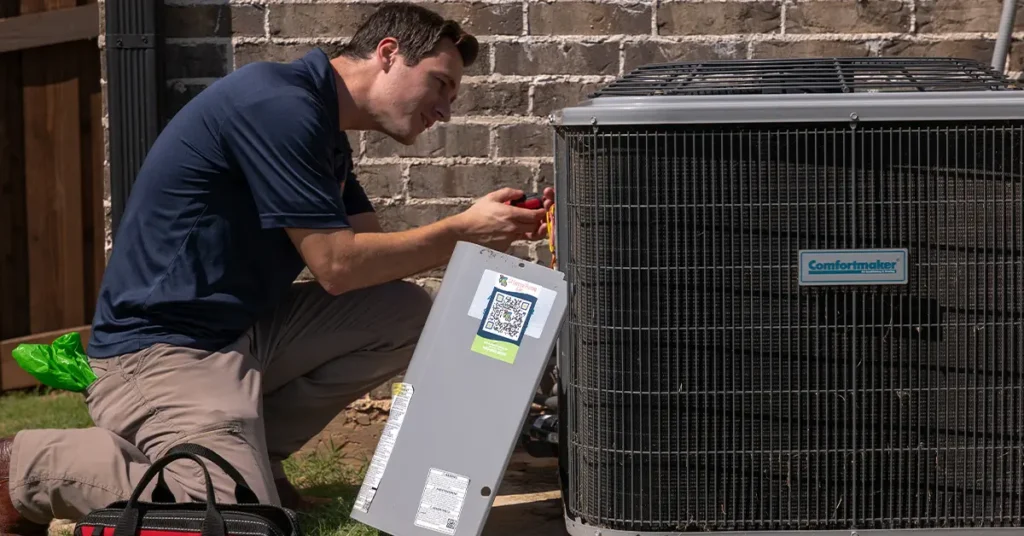
An HVAC technician can check the filter, airflow, blower, ductwork, and other system components as part of HVAC services to help identify the source of the problem. Fixing the underlying issue is usually more useful than simply cleaning the dust again and again.
Frequently Asked Questions
Why is my house dusty even with the AC running?
Your house can stay dusty even when the AC is running because the HVAC system does not remove every airborne particle. A dirty filter, weak airflow, leaking ducts, or everyday dust sources can all play a role.
How often should I change my HVAC air filter?
The right filter replacement schedule depends on your HVAC system, filter type, home, and indoor conditions. Check the filter regularly and follow the manufacturer’s recommendations. Homes with pets or heavier dust may need more frequent filter changes.
Can dirty air ducts make my house dusty?
Yes, dirty or damaged ductwork can contribute to a dusty home, especially if the ducts have leaks or contain a significant amount of debris. However, ducts are only one possible source of household dust.
Why is there dust around my air vents?
Dust around an air vent can simply come from normal household dust settling on the register. If several vents collect excessive dust or debris appears to come through the vents, have the HVAC system inspected.
Can an air purifier help with household dust?
Yes, an appropriately sized air purifier can help remove airborne particles, including some household dust. It works best alongside regular cleaning, proper HVAC filtration, and repairs to any underlying HVAC problems.
Does a higher-MERV filter reduce dust?
A higher-MERV filter can capture smaller particles, but it must be compatible with your HVAC system. A filter that is too restrictive can reduce airflow and may cause problems for the system.
Should I have my air ducts cleaned if my house is dusty?
Not necessarily. A dusty home does not automatically mean the ducts need cleaning. An HVAC inspection can help determine whether duct cleaning, duct repair, improved filtration, or another solution is appropriate.
Can HVAC problems affect indoor air quality?
Yes, HVAC problems with filtration, airflow, ductwork, or other components can affect how air moves and is filtered throughout your home. Fixing the underlying problem can improve indoor comfort and air quality.
Final Thoughts
If your home feels dusty even when the HVAC is running, the cause may be a dirty filter, ductwork problem, poor airflow, or everyday sources of dust.
Start with the basics. Check the HVAC filter, keep vents and return grilles clear, vacuum regularly, and look for anything that could be bringing extra dust into your home.
If the dust keeps coming back or you notice weak airflow, uneven temperatures, unusual HVAC noises, or dust around several vents, have the system inspected by a qualified HVAC professional.
Finding and fixing the source of the dust is more effective than simply cleaning it again and again.