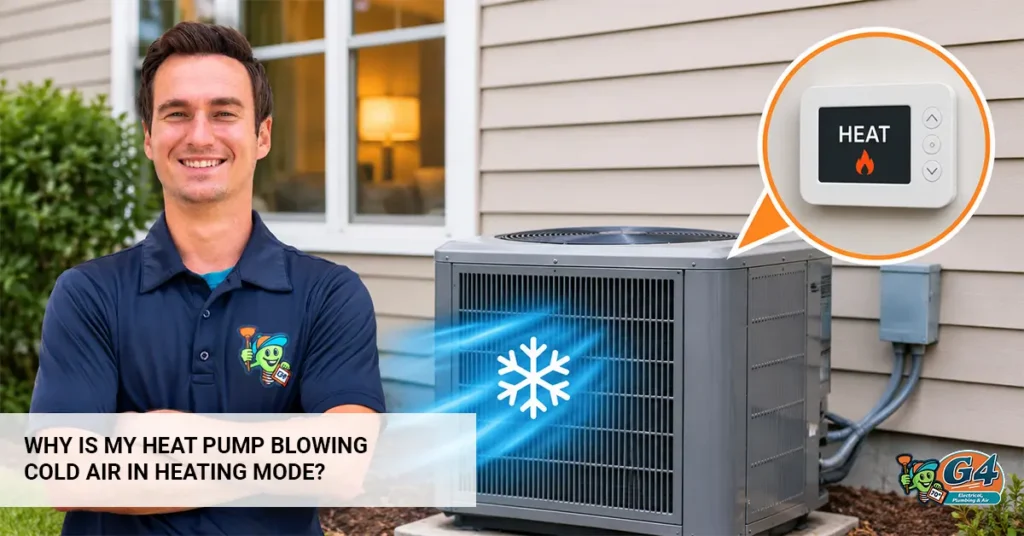
Is your heat pump blowing cold air even though the thermostat is set to HEAT? This can happen for several reasons. Sometimes, it’s just a normal defrost cycle. Other times, a dirty air filter, incorrect thermostat settings, low refrigerant, or a faulty component may be causing the problem.
Unlike a gas furnace, a heat pump doesn’t burn fuel to produce heat. Instead, it pulls heat from outdoor air and transfers it into your home. That’s why the air coming from your vents may feel cooler than furnace air, even when the system is working properly.
However, your home should still stay comfortable. If the vents keep blowing genuinely cold air, your rooms get colder, or the heat pump can’t reach the temperature set on your thermostat, something may be wrong.
Start with two simple checks: make sure your thermostat is set to HEAT and inspect your air filter. If these steps don’t help, the problem may involve refrigerant, the compressor, or another internal component.
In this guide, we’ll explain why your heat pump blows cold air in heating mode, what you can safely check yourself, and when to call an HVAC technician.
Is It Normal for a Heat Pump to Blow Cold Air in Heating Mode?
Yes, a heat pump can blow air that feels slightly cool during normal heating operation. Unlike a gas furnace, which burns fuel to produce hot air, a heat pump transfers heat from the outdoor air into your home.
As a result, the air coming from your vents may feel cooler than the hot air produced by a furnace. However, it should still warm your rooms and maintain the temperature set on your thermostat.
You may also notice cooler airflow when your heat pump enters defrost mode. During cold weather, frost can build up on the outdoor coil. To remove it, the system temporarily switches its operation and may send cooler air through your vents. Once the defrost cycle ends, normal heating should resume.
How can you tell whether the airflow is normal or a sign of trouble?
- Normal operation: The vents produce mildly warm air, and your home stays close to the thermostat’s set temperature.
- Possible problem: The vents keep blowing cold air, indoor temperatures continue dropping, or the heat pump struggles to reach the desired temperature.
If the cold airflow continues and your home isn’t warming up, check the thermostat settings and air filter first. If neither helps, have an HVAC technician inspect the system.
Why Does Heat Pump Air Feel Cooler Than Furnace Air?
Heat pump air feels cooler than furnace air because a heat pump transfers heat rather than generating it by burning fuel.
A gas furnace heats air to a high temperature before sending it through your home’s ductwork. A heat pump works differently. It pulls heat from outdoor air and transfers that energy inside using refrigerant.
Because of this difference, the air coming from heat pump vents usually feels less hot than air from a gas furnace. However, a heat pump can run for longer periods to maintain a steady indoor temperature.
If you’re comparing heating systems, our guide to heat pump vs. furnace explains their key differences, efficiency, and heating performance.
So, don’t assume your heat pump has a problem just because the airflow doesn’t feel very hot. The more important question is whether your home reaches and maintains the temperature set on your thermostat.
How Long Should a Heat Pump Take to Warm Up a Room?
A heat pump may take longer to warm up a room than a traditional furnace, especially when outdoor temperatures drop.
The time depends on several factors:
- Outdoor temperature: Colder weather makes it harder for the heat pump to collect enough heat from outside.
- Indoor temperature: A colder home needs more time to reach your desired temperature.
- Home insulation: Poor insulation allows indoor heat to escape, making your system work harder.
- Heat pump capacity: An undersized unit may struggle to heat a large room or home.
- Ductwork condition: Leaks, blockages, or poor airflow can prevent enough warm air from reaching your rooms.
- Thermostat settings: Incorrect settings can affect how your heat pump operates.
If your heat pump runs continuously but the indoor temperature doesn’t increase, it may not be producing enough heat. Have an HVAC technician inspect the system to find the cause.
Why Is My Heat Pump Blowing Cold Air in Heating Mode?
Your heat pump may blow cold air in heating mode because of a normal defrost cycle, incorrect thermostat settings, restricted airflow, low refrigerant, or a faulty component.
Other heating problems can also affect your system’s performance. Read our guide to heat pumps not heating properly to understand other common heating issues.
Some causes are easy to check, while others need professional attention. Here are eight common reasons your heat pump may not be heating properly.
1. The Heat Pump Is in Defrost Mode
Your heat pump may blow cool air temporarily because it’s running a defrost cycle. This is normal during cold or damp weather.
In heating mode, the outdoor coil collects heat from the surrounding air. However, moisture can freeze on the coil and form a layer of frost. Too much frost makes it harder for the system to absorb heat.
To remove the buildup, the heat pump temporarily switches into defrost mode. It reverses refrigerant flow to warm the outdoor coil and melt the frost. Depending on the system, auxiliary heat may also turn on to help maintain indoor comfort.
Common signs your heat pump is in defrost mode include:
- A light layer of frost appears on the outdoor unit.
- The outdoor fan temporarily stops.
- Steam rises from the outdoor unit as the frost melts.
- Air from the indoor vents briefly feels cooler.
- The system returns to normal heating after the cycle ends.
How to fix it: You usually don’t need to do anything during a normal defrost cycle. Let the system complete the process. Your heat pump should automatically return to heating mode.
However, thick ice that doesn’t melt, unusually frequent defrost cycles, or cold airflow that continues for an extended period may indicate a problem. Faulty defrost controls, damaged sensors, restricted airflow, or refrigerant issues could be responsible.
If you notice these signs, contact an HVAC technician to inspect your heat pump.
2. Incorrect Thermostat Settings
Incorrect thermostat settings can cause your heat pump to blow cold air instead of warming your home. In some cases, correcting a setting is enough to solve the problem.
Your thermostat controls the heat pump’s operating mode, fan, and target temperature. If someone changes these settings by mistake, the system may not heat your home as expected.
For example, the thermostat may be set to COOL instead of HEAT. The fan may also be set to ON, which keeps circulating air even when the heat pump isn’t actively heating.
Common thermostat problems include:
- The system is set to COOL instead of HEAT.
- The fan is set to ON instead of AUTO.
- The temperature setting is too low.
- A programmed schedule changes the temperature unexpectedly.
- A faulty thermostat sensor or wiring issue affects system operation.
How to fix it: Check your thermostat settings before calling for a repair.
- Set the system to HEAT.
- Change the fan setting to AUTO.
- Set the temperature a few degrees above the current room temperature.
- Check the programmed schedule for unexpected temperature changes.
- Give the heat pump time to respond.
If the vents still blow cold air after these adjustments, the thermostat may have a faulty sensor, wiring issue, or another technical problem. Ask a qualified HVAC technician to inspect the thermostat and heating system.
3. A Dirty or Clogged Air Filter
A dirty air filter can restrict airflow and make your heat pump struggle to warm your home. When air can’t move freely through the system, heating performance can suffer.
Your heat pump uses an air filter to capture dust, pet hair, and other airborne particles. Over time, this debris builds up and clogs the filter.
A clogged filter reduces airflow through the system. You may notice weak airflow, longer heating cycles, or rooms that don’t reach the temperature set on your thermostat.
Common signs of a dirty heat pump filter include:
- Weak airflow from supply vents.
- Rooms taking longer than usual to warm up.
- More dust collecting around your home.
- The heat pump running longer than normal.
- Visible dirt and debris covering the filter.
How to fix it: Turn off your heat pump using its normal controls before checking the filter. Locate the filter compartment and inspect the filter.
If it’s dirty or clogged, replace it with the correct size and type recommended by the manufacturer. Make sure the airflow arrow points in the correct direction when installing the new filter.
Check your filter monthly during periods of heavy heating use. Replace it when it becomes dirty or according to the manufacturer’s recommended schedule.
If airflow doesn’t improve after replacing the filter, contact an HVAC technician. The blower motor, evaporator coil, or another airflow component may need inspection.
4. Low Refrigerant Levels
Low refrigerant can prevent your heat pump from transferring enough heat into your home. As a result, the system may blow cool air even when the thermostat is set to HEAT.
Refrigerant is essential to the heating process. It absorbs heat from outdoor air and carries that energy through the system to warm your home.
However, refrigerant doesn’t normally get used up during operation. If the level drops, your heat pump likely has a leak that needs professional attention.
Common signs of low refrigerant include:
- The heat pump blows cool or lukewarm air.
- Your home takes longer to reach the thermostat setting.
- The system runs longer than usual.
- Ice forms on the refrigerant lines or coils.
- Your heat pump struggles to maintain a comfortable indoor temperature.
How to fix it: Contact a qualified HVAC technician to inspect the refrigerant system.
The technician can check refrigerant levels, locate the leak, repair the damaged area, and recharge the system according to the manufacturer’s specifications.
Simply adding more refrigerant won’t fix the problem if a leak remains. The leak must be repaired first. Never attempt to handle or recharge refrigerant yourself. The process requires specialized equipment, proper training, and compliance with refrigerant-handling regulations.
5. A Faulty Reversing Valve
A faulty reversing valve can prevent your heat pump from switching properly between heating and cooling modes. When this happens, the system may blow cold air even when the thermostat is set to HEAT.
The reversing valve controls the direction of refrigerant flow inside your heat pump. In heating mode, it directs refrigerant so the system can absorb heat from outdoor air and transfer it into your home. In cooling mode, it reverses the flow to remove heat from indoors.
Over time, the valve can become stuck or develop a mechanical or electrical fault. This may leave your heat pump operating in cooling mode when it should be heating.
Common signs of a faulty reversing valve include:
- The heat pump blows cold air in heating mode.
- The system doesn’t switch properly between heating and cooling.
- Your indoor temperature doesn’t increase.
- The heat pump operates inconsistently.
- The system runs but fails to provide enough heat.
How to fix it: Contact a qualified HVAC technician to inspect the reversing valve and its electrical controls. The technician can test the valve and determine whether it’s directing refrigerant correctly.
If the valve is stuck or damaged, it may need repair or replacement. Don’t try to force the valve or disconnect its electrical connections yourself. This repair requires specialized tools and technical knowledge.
6. Problems With the Outdoor Unit
Problems with your heat pump’s outdoor unit can prevent it from collecting enough heat to warm your home.
The outdoor unit contains several important components, including the compressor, outdoor coil, fan motor, and electrical controls. If one of these parts stops working properly, your heat pump may struggle to provide enough heat.
For example, leaves, dirt, and other debris can restrict airflow around the outdoor coil. A faulty fan motor can also prevent air from moving across the coil as it should.
Common signs of outdoor unit problems include:
- The outdoor fan doesn’t spin during normal operation.
- The unit makes unusual buzzing or grinding noises.
- Thick ice remains on the outdoor coil.
- Leaves, dirt, or debris block airflow around the unit.
- The heat pump runs but doesn’t produce enough heat.
How to fix it: Start by checking the area around your outdoor unit. Remove loose leaves, branches, and other visible debris that could restrict airflow.
Keep the recommended clearance around the unit so air can circulate freely. However, don’t open the equipment, touch electrical components, or try to remove thick ice with sharp tools.
If the outdoor fan isn’t working, heavy ice doesn’t clear, or your heat pump continues blowing cold air, contact an HVAC technician. The fan motor, outdoor coil, or another internal component may need professional inspection.
7. Auxiliary Heat Isn’t Working
Faulty auxiliary heat can leave your home cold when your heat pump needs extra heating support.
Many heat pumps have an auxiliary heating system that provides additional warmth when outdoor temperatures drop or the heat pump can’t maintain your desired indoor temperature on its own.
Depending on your system, auxiliary heat may use electric heating elements or another supplemental heat source.
If this backup heating system stops working, your heat pump may struggle to keep your home comfortable during colder weather.
Common signs of auxiliary heat problems include:
- Your home gets colder during cold weather.
- The heat pump runs for long periods without reaching the thermostat setting.
- The AUX HEAT indicator appears, but your home doesn’t warm up.
- The system struggles to maintain a comfortable indoor temperature.
- Heating problems become more noticeable as outdoor temperatures drop.
How to fix it: Check your thermostat to see whether the AUX HEAT indicator appears. This means the system is calling for additional heat, but it doesn’t necessarily indicate a problem.
If your home still isn’t warming up, contact an HVAC technician. They can inspect the auxiliary heating elements, relays, wiring, and thermostat controls to identify the fault. A damaged component may need repair or replacement.
Keep in mind that auxiliary heat doesn’t need to run all the time. Its operation depends on outdoor temperatures, thermostat settings, and your heat pump’s design.
8. A Faulty Compressor or Electrical Component
A faulty compressor or electrical component can prevent your heat pump from producing enough heat to warm your home.
The compressor moves refrigerant between the indoor and outdoor units. It helps the system transfer heat into your home. If the compressor fails or stops working properly, your heat pump may run without providing enough warmth.
Other electrical components, such as capacitors, contactors, and control boards, can also cause heating problems. If one of these parts fails, the system may struggle to start, operate inconsistently, or shut down unexpectedly.
Common signs of compressor or electrical problems include:
- The heat pump runs but doesn’t produce enough heat.
- The outdoor unit makes unusual buzzing or clicking sounds.
- The compressor struggles to start.
- The system repeatedly shuts down.
- The circuit breaker trips during operation.
How to fix it: Contact a qualified HVAC technician to inspect the compressor and electrical components. The technician can test the affected parts, check electrical connections, and determine whether repair or replacement is necessary.
Don’t open electrical compartments or try to test the compressor yourself. These components can carry dangerous electrical current and require professional handling.
Why Does My Heat Pump Blow Cold Air Only Sometimes?
A heat pump that blows cold air occasionally may be operating normally or experiencing an intermittent problem. Defrost cycles, low outdoor temperatures, thermostat settings, and faulty components can all affect the air coming from your vents.
Pay attention to when the cold airflow happens and how long it lasts. This can help you determine whether the behavior is normal or needs professional attention. Here are three common situations that may explain the problem.
Heat Pump Blows Cold Air During Defrost Mode
Your heat pump may briefly blow cool air during a defrost cycle. This is normal and helps remove frost from the outdoor coil during cold weather.
During defrost mode, the system temporarily changes its operation to warm the outdoor coil and melt the ice. Depending on your equipment, the indoor fan may continue running and circulate cooler air through your vents.
Once the cycle finishes, the heat pump should automatically return to normal heating.
If the system blows cold air frequently, stays in defrost mode for too long, or fails to warm your home afterward, contact an HVAC technician to inspect the defrost system.
Heat Pump Blows Cold Air When Outdoor Temperatures Drop
Your heat pump may produce less heat when outdoor temperatures become very low. This happens because there’s less heat available for the system to collect from the surrounding air.
As a result, the heat pump may run longer to maintain your desired indoor temperature. Some systems also use auxiliary heat to provide additional warmth during colder weather.
However, modern cold-climate heat pumps can operate in much lower temperatures. Their heating performance depends on the model and its operating limits.
If your heat pump runs continuously but your home keeps getting colder, have an HVAC technician check its heating capacity and overall performance.
Heat Pump Blows Cold Air After Changing Thermostat Settings
Your heat pump may briefly blow cooler air after you change the thermostat settings. This can happen when the system switches between heating and cooling modes or adjusts to a new temperature setting.
The fan setting can also affect how the airflow feels. When the fan is set to ON, it may continue circulating air even when the compressor isn’t actively heating.
To avoid this, set your thermostat to HEAT and the fan to AUTO. If the vents continue blowing cold air, the thermostat, system controls, or another component may need professional inspection.
How to Fix a Heat Pump Blowing Cold Air in Heating Mode
You can check a few things yourself when your heat pump blows cold air in heating mode. Start with the thermostat, air filter, and outdoor unit. These simple checks may help restore normal heating without requiring a repair.
Follow these five steps:
1. Check the Thermostat Mode and Temperature
First, make sure your thermostat is set to HEAT instead of COOL or OFF.
Next, set the fan to AUTO so it runs when the system calls for heating. Then raise the temperature a few degrees above the current room temperature.
Give the heat pump some time to respond. If the vents still blow cold air, another problem may be affecting the heating system.
2. Replace a Dirty Air Filter
Check your air filter for dust and debris. A clogged filter restricts airflow and can reduce your heat pump’s heating performance.
If the filter is dirty, replace it with the correct size and type recommended by the manufacturer. Also, make sure the airflow arrow points in the right direction.
A clean filter helps air move freely through the system and supports normal heating.
3. Check the Outdoor Unit
Take a look around your outdoor unit for leaves, branches, dirt, or other debris that could block airflow.
Clear away loose debris and keep enough space around the unit for proper airflow.
If you notice ice buildup, don’t chip it away with tools or pour hot water over the unit. Light frost should normally clear during a defrost cycle. However, thick ice that remains on the coil needs professional attention.
4. Check the Circuit Breaker
Check your electrical panel to see whether the heat pump’s circuit breaker has tripped.
If it has, don’t keep resetting it. A breaker that trips repeatedly may indicate damaged wiring, a faulty electrical component, or an overloaded circuit.
Leave the breaker off and contact a qualified professional if it trips again.
5. Check for Ice Buildup
Some frost on the outdoor coil is normal during cold weather. Your heat pump should periodically enter defrost mode to melt this ice.
However, thick ice covering the outdoor coil or fan that doesn’t clear may indicate a problem with the defrost system, sensors, or another component.
Don’t try to remove heavy ice yourself. Contact an HVAC technician to inspect the outdoor unit and find the cause.
When Should You Call an HVAC Technician?
Call an HVAC technician if your heat pump keeps blowing cold air, struggles to warm your home, or shows signs of a mechanical or electrical problem.
If your heating system isn’t working properly, our professional heating system repair services can help identify and resolve the problem.
You can check basic things like the thermostat and air filter yourself. However, problems involving refrigerant leaks, reversing valves, compressors, or electrical components need professional attention.
Schedule an HVAC inspection if you notice any of these signs:
- The heat pump continuously blows genuinely cold air.
- Your indoor temperature keeps dropping.
- Thick ice builds up on the outdoor unit.
- The compressor makes unusual buzzing, grinding, or clicking noises.
- The system frequently switches between heating and cooling.
- Auxiliary heat doesn’t provide enough warmth when needed.
- The heat pump runs continuously but doesn’t warm your home.
- The system repeatedly trips its circuit breaker.
Don’t ignore these warning signs. Continuing to run a faulty heat pump may lead to further damage or higher repair costs.
If you notice smoke, sparks, or a burning electrical smell, turn off the system if it’s safe to do so and seek urgent professional help.
An experienced HVAC technician can inspect the refrigerant system, reversing valve, compressor, thermostat, and electrical components. After identifying the problem, they can recommend the right repair to restore your heat pump’s heating performance.
How Much Does It Cost to Fix a Heat Pump That Blows Cold Air?
The cost to fix a heat pump that blows cold air depends on the cause of the problem, the parts required, your system’s model, and local labor rates.
Some problems, such as incorrect thermostat settings or a dirty air filter, may cost very little to fix. However, refrigerant leaks, reversing valve failures, and compressor problems can lead to much higher repair bills.
Here are some common repairs that may be needed:
Thermostat Repair or Replacement
A faulty thermostat sensor, damaged wiring, or control issue can prevent your heat pump from heating properly. Depending on the problem, a technician may be able to repair the thermostat or recommend a replacement.
Refrigerant Leak Detection and Repair
If your heat pump has low refrigerant, a technician must locate and repair the leak before recharging the system. The total cost depends on where the leak is located, how difficult it is to access, and how much repair work is required.
Reversing Valve Replacement
A damaged reversing valve can prevent your heat pump from switching correctly between heating and cooling modes. If the valve is stuck or faulty, it may need professional repair or replacement.
Auxiliary Heat Repair
If your backup heating system isn’t working, the problem may involve heating elements, relays, wiring, or control components. Repair costs depend on which part has failed and whether it can be repaired or needs replacement.
Compressor Repair or Replacement
Compressor problems can be among the most expensive heat pump repairs. The final cost depends on the equipment, the type of failure, and the labor involved. If your heat pump is older or has repeated problems, replacing the system may be worth considering.
Before making a decision, compare the heat pump replacement cost to understand whether installing a new system makes financial sense.
Before approving a major repair, ask your HVAC technician for a detailed inspection and written estimate. Compare the repair cost with your system’s age, condition, and expected remaining lifespan to make an informed decision.
How Can You Prevent Your Heat Pump From Blowing Cold Air?
Regular heat pump maintenance can help prevent heating problems, improve efficiency, and reduce the risk of unexpected breakdowns. Following a regular HVAC maintenance checklist can help you identify potential problems early and keep your heating system operating efficiently.
Follow these simple maintenance tips to keep your system working properly:
1. Replace Air Filters Regularly
Check your air filter every month during heavy heating use. Replace it when it becomes dirty or follow the manufacturer’s recommended replacement schedule. A clean filter helps maintain proper airflow.
2. Schedule Annual Heat Pump Maintenance
Have an HVAC technician inspect your heat pump at least once a year. The inspection should cover the compressor, reversing valve, outdoor coil, electrical connections, and defrost system.
3. Keep the Outdoor Unit Clear
Remove leaves, branches, grass, and loose debris from around the outdoor unit. Maintain the manufacturer’s recommended clearance so air can move freely through the coil.
4. Check Thermostat Settings
Make sure your thermostat is set to HEAT and the fan is set to AUTO. Also, review your programmed schedule to prevent unexpected temperature changes.
5. Address Refrigerant Problems Promptly
If your heat pump struggles to produce enough heat or develops persistent ice buildup, schedule a professional inspection. A refrigerant leak can reduce heating performance and damage system components if left untreated.
6. Pay Attention to Unusual Noises
Listen for unusual humming, grinding, buzzing, or repeated clicking sounds. These noises may indicate a problem with the compressor, fan motor, or electrical components.
7. Keep Supply and Return Vents Clear
Make sure furniture, rugs, curtains, and other objects don’t block your home’s supply and return vents. Clear vents help maintain proper airflow and distribute heat more evenly.
8. Fix Small Problems Early
Don’t ignore signs such as weak airflow, longer heating cycles, frequent shutdowns, or rooms that stay cold. Schedule an inspection before a minor issue develops into a more expensive repair.
Consistent maintenance helps your heat pump provide reliable heating throughout the winter and reduces the chance of unexpected problems.
Frequently Asked Questions
Why Is My Heat Pump Blowing Cold Air but Running?
Your heat pump may blow cold air while running because of a defrost cycle, incorrect thermostat settings, a dirty air filter, low refrigerant, or a faulty reversing valve. If it keeps running without warming your home, have an HVAC technician inspect the system.
Should a Heat Pump Blow Cold Air During Defrost?
Yes, a heat pump may briefly blow cooler air during a normal defrost cycle. The system temporarily reverses refrigerant flow to melt frost from the outdoor coil. Once the cycle finishes, normal heating should resume.
Why Is My Heat Pump Blowing Cold Air When It’s Cold Outside?
Your heat pump may produce less heat when outdoor temperatures drop because there’s less heat available in the surrounding air. It may need to run longer or use auxiliary heat to maintain your desired indoor temperature. If your home keeps getting colder, schedule a professional inspection.
Should I Turn Off My Heat Pump If It’s Blowing Cold Air?
You don’t necessarily need to turn off your heat pump if it’s briefly blowing cool air during a normal defrost cycle. However, if it continuously blows cold air, makes unusual noises, or shows signs of an electrical problem, turn it off if safe and contact an HVAC technician.
Why Is My Heat Pump Blowing Cold Air Instead of Using Auxiliary Heat?
Your heat pump may not activate auxiliary heat because of incorrect thermostat settings, faulty heating elements, damaged wiring, or control problems. An HVAC technician can inspect the backup heating system and identify why it’s not providing additional warmth.
How Long Should a Heat Pump Stay in Defrost Mode?
A typical heat pump defrost cycle lasts several minutes, but the exact time depends on the equipment and outdoor conditions. If your system stays in defrost mode unusually long or doesn’t return to normal heating, have an HVAC technician inspect it.
Can a Dirty Air Filter Make a Heat Pump Blow Cold Air?
Yes, a dirty air filter can restrict airflow and reduce your heat pump’s heating performance. This may cause weak airflow, longer heating cycles, and rooms that don’t warm up properly. Replace a clogged filter with the correct type. If the problem continues, arrange a professional inspection.
Does a Heat Pump Need Refrigerant to Produce Heat?
Yes, a heat pump needs refrigerant to transfer heat between the indoor and outdoor coils. If refrigerant leaks from the system, its heating capacity can drop, making it harder to warm your home. A qualified HVAC technician must locate and repair the leak before recharging the system.
Get Professional Help for a Heat Pump That Isn’t Heating
If your heat pump keeps blowing cold air in heating mode, contact an HVAC technician to find and fix the problem. Sometimes, the cause is a simple thermostat setting or restricted airflow. However, persistent cold air may point to a defrost system issue, refrigerant leak, faulty reversing valve, or compressor problem.
Before scheduling a repair, check the thermostat, replace a dirty air filter, and clear loose debris around the outdoor unit. These simple steps may solve minor problems. But if your home still isn’t getting warm, don’t keep guessing.
An experienced HVAC technician can inspect your heat pump, test its components, and identify what’s stopping it from heating properly. If you need professional heat pump services, contact our team to schedule an inspection or repair. They can recommend the right solution and help prevent further damage.
Don’t ignore warning signs like unusual noises, heavy ice buildup, or repeated electrical problems. Contact a qualified HVAC professional to schedule heat pump service and get your home’s heating back on track.