Indoor air quality testing services usually include a home assessment, targeted testing for specific pollutants, and a report that explains the findings. The exact service and price depend on what you need to test, how many samples the technician collects, your home’s size, and whether the testing requires laboratory analysis.
A standard indoor air quality test does not check for every possible pollutant. A good testing service focuses on the specific concern in your home and uses the right test for that problem.
What Does an Indoor Air Quality Testing Service Include?
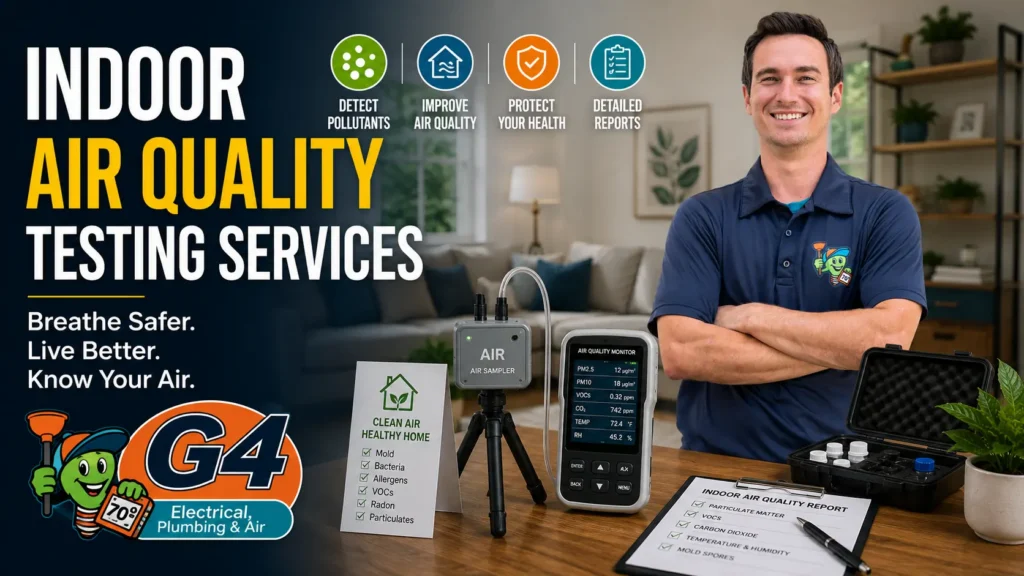
An indoor air quality testing service usually includes a home assessment, targeted pollutant testing, sample collection when needed, and a review of the results.
Depending on the service and the concerns in your home, a technician may:
- Inspect the indoor environment
- Check temperature and humidity
- Look for moisture or water-damage concerns
- Identify possible pollution sources
- Measure selected airborne pollutants
- Collect air or surface samples
- Send samples to a laboratory when required
- Explain the test results
- Recommend practical next steps
The exact service varies by provider. Before booking, ask which pollutants the technician will test, how many samples they will collect, and whether laboratory fees and the written report are included in the price.
What Does Indoor Air Quality Testing Check For?
Indoor air quality testing checks for specific pollutants and conditions such as mold spores, particulate matter, VOCs, radon, and combustion gases, depending on the test you order. No single IAQ test checks for every possible contaminant, so the testing should match the concern in your home.
If you’re noticing persistent indoor-air problems, understanding common HVAC indoor air quality problems can help you identify potential sources before testing.
Mold and Fungal Spores
Mold air testing measures airborne fungal spores in the sampled air, but it does not replace a visual inspection for mold or moisture.
A technician may collect air samples from one or more rooms and compare the results with an outdoor or reference sample. This can provide additional information when you suspect mold but can’t identify the source through a visual inspection alone.
If you can already see mold, finding and fixing the moisture source often matters more than simply measuring airborne spores.
Carbon Monoxide
Carbon monoxide requires dedicated detection equipment because a standard IAQ test does not automatically measure this dangerous combustion gas.
Common indoor sources include:
- Furnaces
- Water heaters
- Fireplaces
- Gas appliances
- Portable generators
- Vehicles operating near the home
Every home should have working carbon monoxide alarms installed according to the manufacturer’s instructions and applicable safety requirements.
Radon
Radon requires a dedicated test because standard indoor air quality testing does not automatically measure radon.
This naturally occurring gas comes from the soil and can enter a home through cracks and openings in the foundation.
If you have concerns about radon, request a dedicated radon test and use a testing method appropriate for your home and location.
Volatile Organic Compounds (VOCs)
VOC testing measures selected volatile organic compounds that can enter indoor air from household products, building materials, and other sources.
Potential sources include:
- Paints
- Adhesives
- Cleaning products
- Solvents
- Furnishings
- Building materials
- Air fresheners
The specific VOCs a test can identify depend on the testing method and laboratory analysis.
Particulate Matter
Particulate matter testing measures small airborne particles that can affect indoor air quality.
Common indoor sources include:
- Cooking
- Smoke
- Burning materials
- Dust
- Outdoor pollution
- Some heating equipment
PM2.5 refers to particles that measure 2.5 micrometers or smaller. A technician may use a particle monitor to measure concentrations over a period of time.
Carbon Dioxide
Carbon dioxide (CO₂) testing can help identify ventilation issues, but CO₂ levels alone don’t provide a complete picture of indoor air quality.
People naturally release CO₂ when they breathe. Indoor concentrations can rise when a space has limited outdoor-air ventilation.
A technician may use CO₂ readings alongside temperature, humidity, and other measurements to evaluate ventilation conditions.
Other Pollutants
An indoor air quality service can test for other pollutants when the home’s conditions or your specific concerns call for them.
Depending on the provider and testing method, testing may include:
- Formaldehyde
- Specific allergens
- Combustion pollutants
- Other chemical contaminants
Ask exactly what the service tests before booking it. A package labeled “comprehensive” doesn’t necessarily mean it measures every indoor pollutant.
How Does Indoor Air Quality Testing Work?
Indoor air quality testing usually starts with a home assessment, followed by targeted measurements or sample collection and a review of the results. The exact process depends on which pollutants or indoor-air concerns you want to investigate.
1. Initial Home Assessment
The technician first assesses the home’s conditions to identify possible indoor air problems.
They may look for:
- Moisture or excessive humidity
- Visible mold
- Water damage
- Poor ventilation
- Unusual odors
- Combustion sources
- HVAC-related concerns
This initial assessment helps the technician decide which tests make sense for the property.
2. Identify Indoor Air Concerns
The technician selects testing based on the home’s conditions and the specific concern you’re trying to investigate.
For example, a persistent musty odor may warrant mold-related testing. Recent remodeling may raise questions about VOCs or other chemical pollutants.
Testing should target a specific concern rather than simply measuring as many pollutants as possible.
3. Collect Air Samples
The technician collects air samples when the selected testing method requires them.
The number and location of samples depend on the property and the pollutants being tested.
For example, a technician may sample multiple rooms when conditions differ between areas. More samples can provide more information, but they can also increase the overall testing cost.
4. Send Samples to a Laboratory When Required
Some IAQ tests require laboratory analysis to identify or measure specific contaminants.
The technician collects the samples using the appropriate method and sends them to a laboratory for analysis when required.
Other measurements, such as temperature, humidity, carbon dioxide, or particulate matter, may come directly from monitoring equipment during the visit.
5. Review the Results
The final step involves reviewing the results and explaining what they mean for your home.
A useful report should identify:
- What the technician tested
- Where they collected samples
- The measured results
- Any relevant comparison information
- Recommended next steps
Don’t judge an indoor air problem from one number alone. The testing method, sampling location, outdoor conditions, and overall condition of the home can all affect how you interpret the results.
How Much Does Indoor Air Quality Testing Cost?
Indoor air quality testing often costs about $200 to $800 for residential services, but the actual price depends on the testing scope, number of samples, laboratory work, and your location.
A basic IAQ assessment usually costs less than a comprehensive investigation that tests several pollutants and sends multiple samples to a laboratory.
The final price can depend on:
- Number of pollutants tested
- Number of samples collected
- Home size
- Laboratory fees
- Testing equipment used
- Technician time
- Local service rates
- Type of testing
- Follow-up testing
Because testing companies offer different packages, ask for an itemized estimate before scheduling the service. Make sure you know which tests, samples, laboratory fees, and reports the price includes.
| Testing Service | Main Cost Factors |
| Basic IAQ assessment | Home size, equipment, technician time |
| Mold air testing | Number of samples, laboratory analysis |
| VOC testing | Compounds tested, laboratory method |
| Radon testing | Test type, testing duration |
| Comprehensive IAQ testing | Number of pollutants, samples, laboratory analysis |
These ranges provide general context, not a guaranteed price. Local providers may charge more or less depending on the testing scope, property, and local market.
What Should an IAQ Testing Quote Include?
An IAQ testing quote should clearly state what pollutants the provider will test, how many samples they will collect, and whether laboratory analysis and the final report are included.
Before booking, ask:
- Which pollutants will you test?
- How many samples are included?
- Does the price include laboratory fees?
- Will I receive a written report?
- Does the technician perform a visual assessment?
- Are follow-up tests charged separately?
This helps you compare providers based on the actual service rather than price alone.
What Factors Affect Indoor Air Quality Testing Cost?
The main factors that affect indoor air quality testing cost include the number of pollutants tested, number of samples, laboratory analysis, home size, local service rates, and follow-up testing.
Number of Pollutants Tested
Testing for more pollutants usually increases the total cost because different contaminants may require different testing methods or laboratory analysis.
For example, a homeowner investigating mold may need a different service from someone testing for VOCs, radon, or combustion pollutants.
Number of Air Samples
Collecting more air samples usually increases the cost because each sample requires additional collection and, when applicable, laboratory analysis.
A technician may recommend multiple samples when different rooms have different conditions or when you need to compare areas of the home.
Home Size
A larger home may require more sampling locations, but home size alone doesn’t determine the testing price.
The testing scope matters more. A small home that needs several pollutant tests can cost more than a larger home that only needs a basic assessment.
Laboratory Testing
Laboratory analysis can increase the cost because specialized testing requires additional processing and analysis.
Before booking, ask whether laboratory fees come with the quoted price or whether the provider charges them separately.
Location
Local labor rates and market conditions can affect what providers charge for indoor air quality testing.
Two companies can charge different prices for similar services, so compare what each package actually includes rather than choosing based only on the advertised price.
Follow-Up Testing
Follow-up testing increases the total cost when you need to verify indoor conditions after correcting a problem.
For example, you may want another test after fixing a moisture issue or completing mold remediation.
Ask whether the provider recommends follow-up testing and whether that service carries a separate fee before you book the initial test.
When Should You Get an Indoor Air Quality Test?
You should consider indoor air quality testing when you have a specific indoor-air concern that a targeted test can investigate.
Common reasons to schedule testing include:
- Persistent musty odors
- Suspected mold or moisture problems
- Recent water damage
- Poor ventilation
- Strong chemical odors
- Excessive indoor dust
- Recent remodeling or construction
- Concerns about combustion pollutants
- Buying or selling a home
- Suspected radon exposure
Regular HVAC maintenance can also help identify equipment and airflow issues that may affect indoor comfort and air quality.
Testing works best when you know what problem you’re trying to investigate. Different concerns require different testing methods.
For example, a general IAQ assessment doesn’t automatically measure radon. If radon concerns you, request a dedicated radon test.
Likewise, if you see visible mold and know there’s an active moisture problem, fixing the moisture source may matter more than simply collecting an air sample.
Do You Need an Indoor Air Quality Test?
You may need an indoor air quality test when you have a specific concern that a visual inspection or routine HVAC service can’t explain.
Testing can help identify certain pollutants, but not every home needs a general IAQ test. The value depends on what you’re trying to find.
Some problems require a physical inspection instead. For example, visible mold combined with an obvious moisture source may tell you more than an air sample. In that situation, fixing the moisture problem should take priority.
A carbon monoxide concern also requires dedicated CO detection, not a general indoor air quality test.
The best approach is simple: identify the suspected problem first, then choose a testing method that can actually measure it. This helps you avoid paying for tests that don’t answer your specific concern.
Indoor Air Quality Testing vs. Home Inspection
Indoor air quality testing measures selected pollutants and indoor environmental conditions, while a home inspection evaluates the physical condition of major parts of the property.
| Indoor Air Quality Testing | Home Inspection |
| Measures selected air pollutants | Examines major home systems and components |
| May use air or surface samples | Primarily uses visual inspection |
| May include laboratory analysis | Usually doesn’t include detailed pollutant testing |
| Focuses on indoor environmental conditions | Focuses on the home’s physical condition |
| Targets specific air-quality concerns | Evaluates the overall condition of the property |
An IAQ test isn’t a replacement for a home inspection, and a home inspection doesn’t replace targeted air-quality testing.
The two services can complement each other. For example, a home inspection may identify water damage, visible mold, or ventilation concerns, while IAQ testing can provide additional information about specific airborne pollutants.
If you’re buying a home, consider what you actually need to evaluate before paying for either service.
What Happens After an Indoor Air Quality Test?
After an indoor air quality test, the next step depends on the results and the source of the problem. The goal should be to address the cause rather than simply treat the air.
Depending on the findings, recommendations may include:
- Improving ventilation
- Controlling indoor humidity and moisture
- Repairing water leaks
- Servicing HVAC equipment
- Improving air filtration
- Removing a pollution source
- Addressing mold or other contamination
- Performing targeted follow-up testing
In some cases, dirty air ducts may also contribute to indoor-air concerns and may need to be inspected.
Don’t assume that an abnormal test result automatically means you need expensive equipment or treatment. For example, if testing points to excess moisture, fixing the leak or humidity problem may provide more benefit than simply installing an air cleaner.
Ask the testing provider to explain what the results mean, what may have caused the problem, and which corrective steps make sense before paying for additional services.
How to Choose an Indoor Air Quality Testing Service
Choose an indoor air quality testing provider that clearly explains what it tests, how it collects samples, how it analyzes results, and what the quoted price includes.
Ask What Pollutants They Test
Ask the provider to list the specific pollutants included in the testing package.
Don’t assume a service called a “complete” or “comprehensive” air quality test checks every possible contaminant. Different pollutants require different testing methods.
Ask Whether Samples Go to a Laboratory
Ask whether the provider analyzes samples on-site or sends them to a laboratory.
Some tests require laboratory analysis to identify or measure specific contaminants. Confirm whether those laboratory fees come with the quoted price.
Ask What the Report Includes
A useful IAQ report should identify what the technician tested, where they collected samples, the results, and what those results mean.
If you’re unsure what you’ll receive, ask the provider to show you a sample report before booking.
Check Credentials and Experience
Choose a provider with relevant training and experience with the specific type of testing you need.
Ask about their experience with issues such as mold, VOCs, radon, or other indoor-air concerns relevant to your home.
If your indoor-air concerns are related to your heating or cooling system, professional HVAC services can help identify and address equipment-related issues.
Get a Clear Price Before Testing
Get an itemized estimate that explains exactly what’s included before the technician begins testing.
Ask whether the price includes:
- Sample collection
- Laboratory fees
- Testing equipment
- Written report
- Additional samples
- Follow-up testing
This makes it easier to compare providers on the actual scope of service.
Ask Whether Follow-Up Testing Costs Extra
Ask about the cost of follow-up testing before booking the initial service if you may need to compare results later.
Some providers offer follow-up testing separately, while others may include it in certain packages. Knowing the cost upfront can help you avoid unexpected charges.
Frequently Asked Questions
How much does indoor air quality testing cost?
Indoor air quality testing often costs around $200 to $800 for residential services, but the actual price varies by location, testing scope, number of samples, and laboratory analysis.
What is included in an indoor air quality test?
An indoor air quality test may include a home assessment, targeted pollutant measurements, air or surface sampling, laboratory analysis, and a written report. The exact service depends on the provider and pollutants tested.
What does an indoor air quality test detect?
An IAQ test can detect selected pollutants such as mold spores, VOCs, particulate matter, radon, or other contaminants when you order the appropriate test. No single test checks every indoor pollutant.
How long does indoor air quality testing take?
Testing time depends on the pollutants, number of samples, and testing method. Some measurements take only minutes, while other tests require longer sampling periods or laboratory analysis.
Is indoor air quality testing worth it?
Indoor air quality testing can be worthwhile when you have a specific concern that a targeted test can investigate. It can provide useful information when the source of an indoor-air problem isn’t obvious.
Does indoor air quality testing detect mold?
Some IAQ tests can measure airborne mold spores, but air testing doesn’t replace a visual inspection for visible mold or moisture problems.
Can an air quality test detect carbon monoxide?
A general IAQ test doesn’t automatically detect carbon monoxide; you need dedicated carbon monoxide detection equipment. Every home should have working CO alarms installed according to the manufacturer’s instructions.
Does an indoor air quality test check for radon?
A general IAQ test doesn’t automatically include radon testing. Radon requires a dedicated test designed to measure radon levels.
How often should you test indoor air quality?
There is no universal testing schedule for every home; consider testing when you have a specific concern, a significant change in the home, or a reason to check a particular pollutant. Follow the recommended testing schedule for pollutants that require specific monitoring, such as radon.
Final Thought
Indoor air quality testing can help identify specific pollutants and indoor environmental problems, but the right test depends on what you’re trying to find.
A testing service may include air measurements, sample collection, laboratory analysis, and a written report. Residential testing often costs around $200 to $800, but the final price can vary based on the number of pollutants, samples, testing method, home size, and location.
Before booking an IAQ test, ask exactly what the provider will test, how they will collect and analyze the samples, what the report includes, and whether laboratory fees are included.
That makes it easier to compare services and avoid paying for testing that doesn’t address your actual concern.