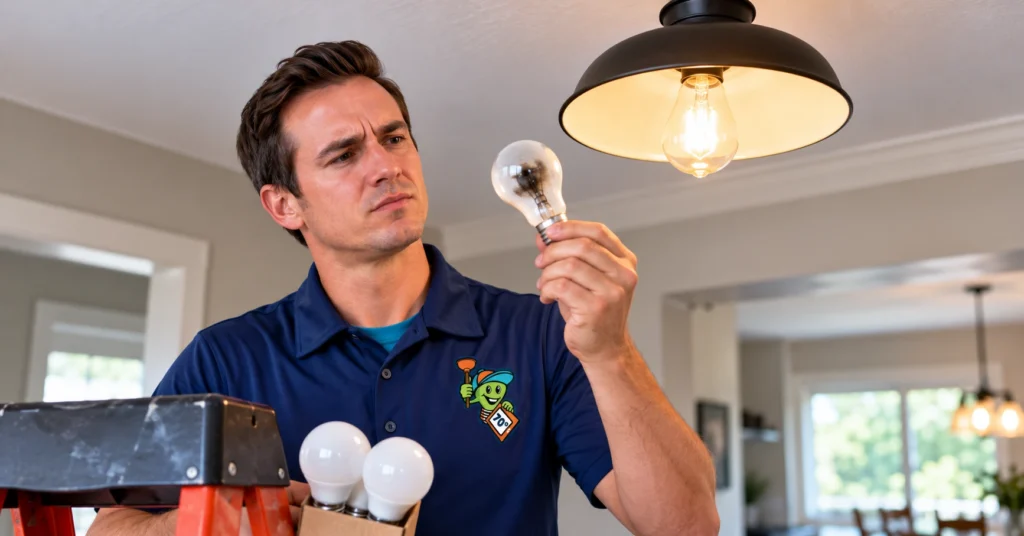
If your light bulbs keep burning out in your Athens, TX home, the bulbs may not be the real problem. Heat, the wrong bulb type, an incompatible dimmer, a loose socket, vibration, or an electrical issue can all cause bulbs to fail sooner than they should.
If the same light fixture keeps burning out bulbs, it is worth checking the fixture instead of simply replacing the bulb again. Frequent bulb failure can be a sign that something needs to be fixed.
Why Do My Light Bulbs Keep Burning Out?
Light bulbs usually burn out early because of excess heat, the wrong bulb, a poor connection, vibration, or an electrical problem. Some causes are easy to fix, while others may need an electrician to check the fixture or wiring.
1. The Bulb Is Too Powerful for the Fixture
A bulb with a higher wattage than the fixture allows can get too hot and burn out sooner. Every light fixture has a maximum wattage rating, so check the label before installing a replacement.
For example, if a fixture is rated for 60 watts, don’t use a 75-watt incandescent bulb. Too much heat can damage both the bulb and the fixture.
LED bulbs use less power than incandescent bulbs, but you should still check the bulb’s specifications and make sure it is suitable for the fixture.
2. The Fixture Gets Too Hot
Excessive heat can shorten a bulb’s lifespan, especially when the fixture is enclosed. Heat can build up around the bulb when there is little room for air to circulate.
This can be a problem with some LED bulbs, too. Although LEDs generally last longer than incandescent bulbs, high temperatures can still reduce their lifespan.
If bulbs keep burning out in an enclosed fixture, check whether the bulb is rated for use in that type of fixture.
3. The Bulb and Dimmer Switch Are Not Compatible
An incompatible dimmer switch can cause an LED bulb to flicker, buzz, or fail early. Not every LED bulb works with every dimmer.
If the light is connected to a dimmer, check that both the bulb and dimmer are designed to work together. Replacing the bulb without addressing an incompatible dimmer may not solve the problem.
4. The Light Socket Has a Poor Connection
A loose or damaged socket can cause poor electrical contact and make bulbs fail repeatedly. The problem may be inside the socket rather than with the bulb itself.
You may notice:
- The bulb feels loose in the socket
- The light flickers
- The socket looks dark or discolored
- You see burn marks
- The fixture feels unusually hot
- New bulbs keep failing
If you notice damage around the socket, turn off the power and have the fixture checked rather than trying to repair the electrical connection yourself. If the light is also flickering, learn more about flickering lights in your home and what may be causing them.
5. The Fixture Experiences Too Much Vibration
Repeated vibration can shorten the life of some light bulbs. This can happen with lights attached to ceiling fan light fixtures or fixtures near equipment that creates regular movement.
If bulbs keep burning out in one fixture while bulbs elsewhere last normally, vibration could be part of the problem.
Check whether the fixture moves when the fan or nearby equipment is running. If it does, the fixture may need to be secured or inspected.
6. There May Be a Voltage Problem
An abnormal electrical voltage can cause light bulbs to fail sooner than expected. This becomes more worth investigating when bulbs are burning out in several different fixtures around your home.
However, don’t assume voltage is the cause just because bulbs keep failing. Other problems, such as heat, poor connections, or incompatible bulbs, are also possible.
An electrician can test the electrical system and determine whether the voltage is within the proper range.
Why Does the Same Light Fixture Keep Burning Out Bulbs?
If the same light fixture keeps burning out bulbs, the fixture itself may have an underlying problem. A loose socket, poor wiring connection, excessive heat, an incompatible dimmer, or the wrong bulb can cause repeated failures.
If bulbs in other fixtures last normally, the problem is more likely to be limited to that particular fixture.
A few things can cause this:
- Loose or damaged socket: A poor connection can make the bulb flicker, overheat, or fail early.
- Loose wiring connection: A wiring problem inside the fixture can interrupt the electrical connection.
- Too much heat: Enclosed fixtures can trap heat and shorten bulb life.
- Incompatible dimmer: Some LED bulbs do not work properly with certain dimmer switches.
- Wrong bulb: A bulb that is not suitable for the fixture can fail sooner than expected.
- Excessive vibration: Fixtures attached to ceiling fans or exposed to regular movement can wear out bulbs faster.
Simply replacing the bulb won’t fix an underlying fixture problem. If you have replaced several bulbs and they keep failing in the same fixture, have the fixture inspected to find the actual cause.
Why Do LED Bulbs Keep Burning Out?
LED bulbs can burn out early when they overheat, are not compatible with the fixture or dimmer, or have a poor electrical connection. Since LEDs are designed to last much longer than traditional incandescent bulbs, repeated failures are worth investigating.
If an LED bulb burns out quickly, check these common causes:
- The bulb is not compatible with the fixture: Some LED bulbs are not suitable for certain fixtures or applications.
- The fixture is enclosed: Heat can build up inside an enclosed fixture and shorten the bulb’s life.
- The bulb is not rated for enclosed fixtures: Check the manufacturer’s instructions before using an LED bulb in an enclosed fixture.
- The dimmer is not LED-compatible: An older or incompatible dimmer can cause LED lights to flicker after installation, buzz, or fail early. Not every LED bulb works with every dimmer.
- The fixture gets too hot: Poor heat dissipation can reduce an LED bulb’s lifespan.
- The socket has a poor connection: A loose or damaged socket can cause inconsistent electrical contact and repeated failures.
Bulb quality can also make a difference. But if you have tried several different LED bulbs and they keep failing in the same fixture, the fixture may be the real problem.
Replacing the bulb again may not solve the issue if the underlying cause is heat, the socket, the dimmer, or the electrical connection. In that situation, having the fixture inspected can help identify what is causing the repeated failures.
How Can I Stop My Light Bulbs From Burning Out So Quickly?
You can help your light bulbs last longer by using the right bulb, avoiding excess heat, and making sure the bulb and fixture are compatible. Avoiding common lighting mistakes can also help prevent premature bulb failure and other lighting problems. If bulbs keep failing in the same fixture, the fixture may need to be checked.
Check the Fixture’s Wattage Rating
Using a bulb within the fixture’s recommended wattage can help prevent excess heat and premature failure. Check the label on the fixture before installing a new bulb.
Do not exceed the maximum wattage listed by the manufacturer.
Use the Correct Bulb Type
Choose a bulb that is designed for your specific fixture and how you use it. For example, some bulbs are made for enclosed fixtures, while others are not.
If you use a dimmer switch, check that the bulb supports dimming.
Use Compatible LED Bulbs With Dimmer Switches
Use an LED bulb that is specifically compatible with your dimmer switch. An incompatible combination can cause flickering, buzzing, or early bulb failure.
If LED bulbs keep burning out on a dimmer, check the compatibility information for both products.
Avoid Using Bulbs in Fixtures They Are Not Designed For
Using a bulb in the wrong type of fixture can shorten its lifespan. This is especially important with enclosed fixtures or areas where temperatures can get high. Proper lighting installation can also help ensure the fixture and bulb are installed correctly.
Check the bulb packaging or manufacturer’s instructions before installing it.
Pay Attention to Repeated Failures
If the same fixture keeps burning out bulbs, replacing the bulb again may not fix the problem. A damaged socket, loose connection, excessive heat, or another fixture-related issue could be causing the failures.
If several bulbs fail in the same fixture, have it inspected to find the underlying cause rather than continuing to replace bulbs.
When Should I Call an Electrician for Bulbs That Keep Burning Out?
You should call an electrician when bulbs keep burning out and you also notice flickering, unusual heat, buzzing, burning smells, or other electrical problems. Other warning signs, such as electrical switch sparking, should also be addressed rather than ignored. These signs can point to an issue with the fixture, wiring, voltage, or another electrical component.
Call an electrician if you notice:
- Bulbs burning out repeatedly
- Several bulbs failing in different fixtures
- Lights flickering or suddenly changing brightness
- Buzzing, crackling, or popping sounds
- A light socket or fixture becoming unusually hot
- Scorch marks or dark discoloration around the fixture
- A burning smell near a light
- Breakers tripping when lights are used
- A new bulb failing shortly after installation
You may not have an electrical problem every time a bulb burns out. But repeated failures, especially when they happen in the same fixture or come with other warning signs, should not be ignored.
If you are in Athens, TX, an electrician can inspect the fixture and determine whether a loose connection, damaged socket, voltage issue, dimmer, or wiring problem is causing the bulbs to fail.
If replacing bulbs has not solved the problem, you can contact G4 Electrical for electrician services in Athens, TX to have the issue checked.
Frequently Asked Questions
Why do my light bulbs burn out so quickly?
Light bulbs can burn out quickly because of excess heat, the wrong bulb, a poor electrical connection, vibration, or an incompatible dimmer. If you keep replacing bulbs and they fail again soon after, look for an issue with the fixture instead of assuming the bulbs are bad.
Why does the same light fixture keep burning out bulbs?
The same fixture may keep burning out bulbs because of a damaged socket, loose connection, excessive heat, vibration, or an incompatible dimmer. If bulbs in other fixtures last normally, have the problem fixture checked.
Why do my LED bulbs keep burning out?
LED bulbs can burn out early because of excessive heat, an incompatible dimmer, an unsuitable fixture, or a poor electrical connection. If different LED bulbs keep failing in the same fixture, the fixture itself may be causing the problem.
Can a bad socket cause a light bulb to burn out?
Yes, a loose or damaged socket can cause a bulb to fail prematurely. A poor connection can also cause flickering, heat, or intermittent operation. If the socket looks burned, discolored, or damaged, have it inspected.
Can high voltage cause light bulbs to burn out?
Yes, abnormal voltage can shorten a light bulb’s lifespan. If bulbs are failing in several fixtures around your home, an electrician can test the electrical system to see whether voltage is contributing to the problem.
How often should a light bulb normally need replacing?
How often you need to replace a bulb depends on its type, quality, fixture, and how often you use it. If a bulb fails much sooner than its rated lifespan, especially when the same fixture keeps causing failures, find the cause instead of repeatedly replacing the bulb.
Final Thoughts
If your light bulbs keep burning out, finding the cause is more important than simply replacing them again. Heat, an incompatible dimmer, vibration, a damaged socket, or an electrical problem can all cause bulbs to fail sooner than they should.
Start by checking that you are using the right bulb for the fixture. If the same fixture keeps burning out bulbs, or you notice flickering, buzzing, unusual heat, scorch marks, or a burning smell, have it checked by a qualified electrician.
Fixing the underlying problem can help your bulbs last longer and prevent a small lighting issue from turning into a larger electrical problem.