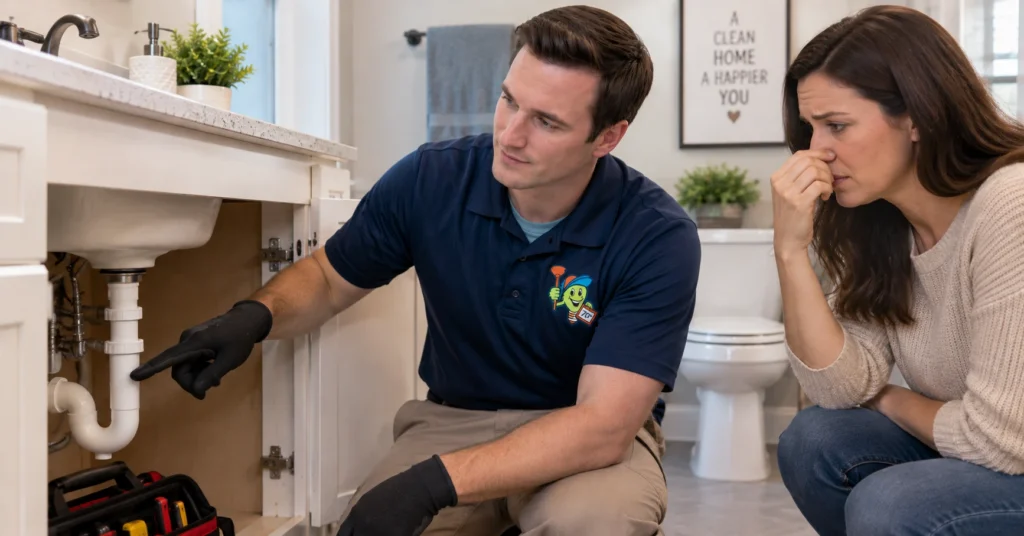
Sewer odors in your Kaufman, TX home usually mean sewer gas is getting into the house through a plumbing trap, seal, vent, or damaged pipe. Common causes include dry P-traps, clogged drains, damaged toilet seals, blocked plumbing vents, and broken sewer lines.
A sewer smell that keeps coming back should not be ignored. The location of the odor can often give you a clue about the source. Finding the cause early can help prevent a small plumbing problem from turning into a bigger repair.
What Causes Sewer Odors in Kaufman, TX Homes?
Sewer odors in Kaufman, TX homes usually come from dry P-traps, clogged drains, damaged toilet seals, blocked plumbing vents, or sewer line problems.
Common causes include:
- Dry P-traps: Sinks, showers, tubs, and floor drains use water-filled traps to block sewer gas. If a trap dries out, odors can enter the home.
- Drain buildup: Grease, soap, hair, and other debris can build up inside drains and create unpleasant smells.
- Damaged toilet seals: A worn or damaged seal around the toilet can allow sewer gas to escape into the bathroom.
- Blocked plumbing vents: Plumbing vents help maintain proper air pressure in the drain system. A blockage can cause odors, slow drains, or gurgling sounds.
- Cracked or leaking sewer pipes: Damaged sewer lines can release sewer gas and may cause persistent odors inside or around the home.
- Loose drain connections: A loose or damaged connection can create a path for sewer gas to enter the house.
- Unused plumbing fixtures: Fixtures that are not used for long periods can develop dry traps and allow sewer odors inside.
- Sewer problems outside the home: A damaged sewer connection or problem near the property can sometimes cause strong odors around the house.
The location of the smell can help identify the cause. An odor coming from one sink may point to a drain or P-trap problem, while sewer smells from several drains could indicate a vent or sewer line issue.
If the odor keeps returning or you cannot find where it is coming from, have a plumber inspect the plumbing system.
Can a Dry P-Trap Cause a Sewer Smell?
Yes, a dry P-trap can let sewer gas enter your home because there is no water barrier to block the odor.
A P-trap is the curved pipe under a sink, shower, tub, or other plumbing fixture. It holds a small amount of water that helps keep sewer gases from coming back through the drain.
The trap can dry out when a fixture sits unused for a long time. This is common with:
- Guest bathroom sinks
- Unused showers or tubs
- Floor drains
- Utility sinks
- Other rarely used fixtures
If you suspect a dry P-trap, run water through the fixture for a few seconds. This refills the trap and may stop the sewer smell.
If the odor returns soon after, the dry trap may not be the only problem. A plumber can check for drain issues, blocked vents, damaged seals, or other plumbing problems.
Why Does My Bathroom Smell Like Sewer Gas?
A bathroom can smell like sewer gas because of a dry P-trap, damaged toilet seal, blocked plumbing vent, or drain problem.
First, find where the smell is strongest. An odor near the sink, shower, or tub drain may point to a dry P-trap or buildup inside the drain. A smell around the base of the toilet could indicate a damaged or worn toilet seal.
A blocked plumbing vent can also cause sewer odors. You may notice other signs, such as gurgling drains, slow drainage, or a toilet that does not flush properly.
If the smell comes from a rarely used drain, run water through it to refill the P-trap. If the sewer odor continues or returns quickly, have a plumber inspect the bathroom plumbing to find the source.
Why Does My Sink Drain Smell Like Sewer?
A sink drain can smell like sewer because of drain buildup, a dry P-trap, or a plumbing problem that allows sewer gas to enter the drain.
Food particles, grease, soap, and other debris can collect inside the drain and create a bad smell. Persistent drain odors can also be a sign that professional drain cleaning is needed. This does not always mean there is a problem with the sewer line.
If the sink has not been used for a while, the P-trap may have dried out. Run water for a short time to refill it and see if the odor goes away.
If the smell continues or returns soon after, the problem may involve the drain, P-trap, vent, or nearby plumbing. A plumber can inspect the system and find the source of the odor.
Can a Bad Toilet Seal Cause a Sewer Smell?
Yes, a damaged toilet seal can let sewer gas escape around the base of the toilet. The seal connects the toilet to the drain and helps keep sewer gas and wastewater from entering the bathroom.
A failed seal may cause a noticeable sewer smell, especially when the odor is strongest around the toilet base. You may also notice:
- A toilet that rocks or moves
- Moisture around the toilet base
- Water stains or floor damage
- A sewer smell that keeps returning
Do not ignore these signs. A damaged seal can allow moisture to reach the flooring and cause additional damage over time. Have the toilet inspected and the seal repaired if needed.
Can a Blocked Plumbing Vent Cause Sewer Odors?
Yes, a blocked plumbing vent can cause sewer odors by disrupting airflow and pressure inside your home’s drain system.
Plumbing vents help balance air pressure in the pipes and allow sewer gases to vent outside. When a vent becomes blocked, drains may not work properly, and sewer odors can enter the home.
Common signs of a blocked plumbing vent include:
- Sewer smells inside the home
- Gurgling or bubbling drains
- Slow-draining sinks or showers
- Toilets that flush poorly
- Changes in the water level inside toilet bowls
Because plumbing vents often extend through the roof, avoid trying to inspect or clear one yourself. A plumber can safely check the vent system and determine whether a blockage or another plumbing problem is causing the odor.
Can a Broken Sewer Line Cause a Sewer Smell in the House?
Yes, a broken or damaged sewer line can let sewer gas or wastewater escape and cause a persistent smell in or around your home.
A sewer line problem often affects more than one plumbing fixture. If you notice multiple slow drains, foul odors, or backups, these can also be warning signs of bigger sewer problems. Look for other warning signs, such as:
- Several slow-draining fixtures
- Frequent drain backups
- Sewer odors that keep returning
- Sewage or wastewater near a cleanout
- Wet or unusually damp areas in the yard
- Unusual patches of green or fast-growing vegetation near the sewer line
These signs do not always mean the sewer line is broken, but several symptoms occurring together deserve attention. A damaged sewer line can worsen over time and may lead to sewage backups or property damage.
If you notice persistent sewer odors along with drainage problems, have a qualified plumber inspect the sewer system.
Why Does My House Smell Like Rotten Eggs?
A rotten-egg smell in your home can come from sewer gas, but it can also indicate a natural gas leak, so the source should not be assumed.
Sewer gas may contain hydrogen sulfide, which has a strong rotten-egg odor. It can enter through a dry P-trap, damaged toilet seal, blocked vent, or sewer line problem.
Natural gas is also given a rotten-egg-like odor to help people notice a leak. If you suspect the smell could be natural gas, leave the area and follow your local gas utility’s emergency instructions. Avoid flames, electrical switches, and other possible ignition sources until the situation has been assessed safely.
If the smell is clearly coming from a drain or plumbing fixture, a plumber can inspect the plumbing system and help identify the cause.
Can a Sewer Smell Be Dangerous?
Yes, a persistent sewer smell should be investigated because sewer gas can contain gases that may be harmful at high concentrations or with prolonged exposure.
The level of risk depends on which gases are present, their concentration, and how long you are exposed. A strong odor in an enclosed or poorly ventilated area should not be ignored.
If you notice a strong sewer smell:
- Ventilate the area if you can do so safely.
- Limit time in the affected area until the source is identified.
- Check nearby plumbing fixtures for obvious sources, such as dry drains or toilet problems.
- Treat it as a possible gas leak if the odor could be natural gas. Leave the area and follow your local gas utility’s emergency instructions.
- Call a qualified plumber if the smell appears to be coming from the plumbing system.
Do not simply mask a persistent sewer odor with air fresheners. Finding and fixing the source is the best way to address the problem.
How Can You Find the Source of a Sewer Odor?
You can often narrow down a sewer odor by checking individual plumbing fixtures and looking for other signs of a plumbing problem.
Start with these simple checks:
- Check rarely used fixtures. Run water through unused sinks, showers, tubs, and floor drains. A dry P-trap may be allowing sewer gas into the home.
- Check around toilets. If the smell is strongest near the toilet base, the toilet seal may be damaged.
- Check drains. Find which sink, shower, or floor drain has the strongest odor.
- Look for slow drains. Several slow drains may indicate a venting or sewer line problem.
- Listen for gurgling. Gurgling sounds from drains can point to a drainage or plumbing vent issue.
- Check for backups. Sewage or wastewater backing up into the home needs prompt attention.
- Look for moisture. Water around a toilet, drain, or cleanout may indicate a leak or damaged connection.
If the odor continues or you cannot find the source, have a qualified plumber inspect the plumbing system. They can check the drains, vents, seals, and sewer line to identify the cause.
How Can You Get Rid of Sewer Odors in Your Home?
The best way to get rid of a sewer odor is to find and fix the plumbing problem causing it instead of simply covering up the smell.
The right solution depends on the source. Common fixes include:
- Refilling a dry P-trap: Run water through unused sinks, showers, tubs, and floor drains.
- Cleaning a dirty drain: Remove buildup from drains that contain grease, soap, hair, or other debris.
- Replacing a damaged toilet seal: A worn seal can allow sewer gas to escape around the toilet base.
- Clearing a blocked plumbing vent: A plumber can inspect and clear the vent if it is affecting drainage or allowing odors into the home.
- Repairing a leaking connection: Loose or damaged drain connections may need to be resealed or replaced.
- Repairing damaged sewer piping: Cracked or broken sewer pipes may require professional repair or replacement.
If the odor keeps coming back, do not rely on air fresheners or drain cleaners to hide the problem. A professional plumbing inspection can identify the source and determine what needs to be repaired.
When Should You Call a Plumber?
You should call a plumber when a sewer odor keeps returning, affects multiple fixtures, or comes with other signs of a plumbing problem.
Professional help is especially important if:
- Several drains smell at the same time.
- Multiple drains are slow or backing up.
- Toilets gurgle or do not flush properly.
- You have repeated sewage backups.
- A toilet smells around its base or shows signs of a damaged seal.
- You notice sewage or water near a cleanout.
- You suspect a damaged or leaking sewer line.
- The odor continues after refilling dry P-traps.
- You cannot identify where the smell is coming from.
A plumber can inspect the drains, P-traps, toilet seals, plumbing vents, sewer connections, and other parts of the system as part of our plumbing services. Finding the source early can help prevent a small plumbing issue from becoming a larger repair.
Frequently Asked Questions
Why does my house smell like sewer gas?
Your house may smell like sewer gas because of a dry P-trap, clogged drain, damaged toilet seal, blocked plumbing vent, or damaged sewer pipe. The location of the odor can help identify the source.
Why does my bathroom smell like sewage?
A bathroom can smell like sewage because of a dry drain trap, drain buildup, damaged toilet seal, or blocked plumbing vent. Check where the smell is strongest to narrow down the cause.
Can a dry P-trap cause sewer odors?
Yes, a dry P-trap can allow sewer gas into your home because it no longer has enough water to block the gas. Running water through an unused fixture can refill the trap.
Why does my sink smell like rotten eggs?
A rotten-egg smell from a sink can come from drain buildup, a dry P-trap, or sewer gas. If cleaning the drain and refilling the trap does not stop the odor, have the plumbing inspected.
Can a toilet leak sewer gas?
Yes, a damaged seal between the toilet and drain pipe can allow sewer gas to escape around the toilet base. A loose toilet or moisture around the base can also indicate a seal problem.
How do I know if my sewer line is broken?
Common signs of a damaged sewer line include persistent sewer odors, multiple slow drains, repeated backups, sewage near a cleanout, and unusually wet areas near the sewer line. A plumber can inspect the system to confirm the cause.
Are sewer gas odors dangerous?
Sewer gas odors should not be ignored, especially when the smell is strong or persistent. If the odor could be natural gas rather than a plumbing problem, leave the area and follow your local gas utility’s emergency instructions.
How do I get rid of sewer smells in my house?
The best way to get rid of sewer smells is to find and fix the source. Refilling a dry P-trap may solve a simple odor, while damaged toilet seals, blocked vents, clogged drains, or sewer line problems may require professional repair.
Final Thoughts
Sewer odors in a Kaufman, TX home usually mean there is a plumbing issue that needs attention. A dry P-trap may be an easy fix, but persistent smells can also come from damaged toilet seals, blocked vents, clogged drains, or sewer line problems.
Start by checking rarely used drains and looking around toilets and other fixtures for obvious signs of a problem. If the odor keeps coming back, affects multiple areas, or comes with slow drains or backups, have a qualified plumber inspect the system.
Finding and fixing the source is the best way to get rid of the sewer smell and prevent it from returning.