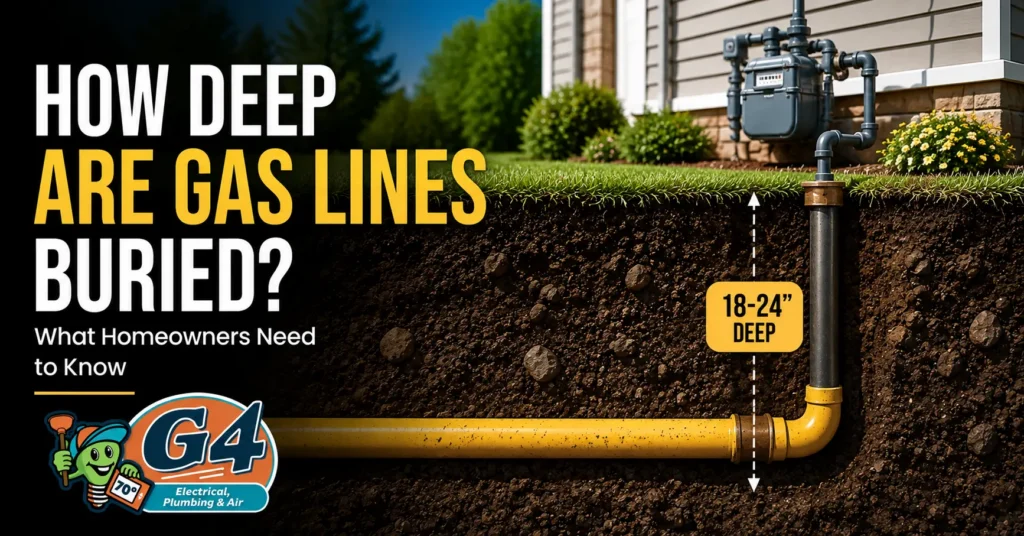
If you’re wondering how deep gas lines are buried, many residential underground gas lines need at least 18 inches of cover, but the exact depth depends on local code, the type of line, and where it runs. Some locations require more cover, especially when a gas line crosses a driveway, roadway, or other area exposed to vehicle loads.
There isn’t one burial depth that applies to every gas line in the U.S. Local building codes and gas utility requirements can set different minimums.
If you’re planning to dig, install landscaping, or work near an existing gas line, never guess its location or depth. Call 811 before you dig.
How Deep Are Gas Lines Usually Buried?
Many residential underground gas lines require at least 18 inches of cover, but local codes may require more depth. The required burial depth depends on the type of gas line, where it runs, and the code that applies to the property.
A gas line running through a lawn may have different requirements from one installed beneath a driveway or an area with vehicle traffic. That’s because surface loads and the risk of physical damage can change the installation requirements.
When checking gas-line depth, pay attention to the term cover. It usually refers to the amount of soil between the top of the gas pipe and the finished ground surface.
What Does “18 Inches Deep” Actually Mean?
An 18-inch cover requirement means you measure 18 inches from the top of the gas pipe to the finished ground surface, not from the ground to the bottom of the trench.
For example, if a gas pipe measures 1 inch across and needs 18 inches of cover, the bottom of the trench must sit deeper than 18 inches. You need enough room to place the pipe while keeping 18 inches of soil above its top.
This distinction matters when planning excavation. The required pipe cover and the total trench depth are not necessarily the same measurement.
What Is the Minimum Depth for a Gas Line?
There is no single minimum burial depth for every underground gas line in the United States. The required cover depends on the applicable fuel-gas code, local amendments, installation conditions, and gas utility requirements.
An 18-inch cover requirement applies to many residential gas-line installations, but don’t treat it as a universal rule. Your local requirements may call for more cover based on where and how the line runs.
The required depth can depend on:
- Gas line location: A yard, driveway, and roadway may have different requirements.
- Type of installation: Different installations can require different levels of protection.
- Pipe material: Approved materials and installation methods can affect code requirements.
- Driveway crossings: Vehicle loads may require additional cover or protection.
- Traffic above the line: Heavier surface loads can change the installation requirements.
- Local building codes: Your jurisdiction may adopt or amend model fuel-gas codes.
- Gas utility standards: The utility may have additional requirements for service lines.
Before installing, relocating, or replacing an underground gas line, check the current requirements for your property and confirm the required depth with the appropriate local authority or gas utility.
How Deep Are Gas Lines Buried Under a Yard?
Gas lines running through a yard must meet the minimum cover required by local code, which may differ from the depth required under a driveway or roadway.
A lawn usually doesn’t place the same weight on the ground as a driveway or road. However, shallow gas lines can still face damage from landscaping and digging.
Before you plant a tree, install fence posts, build a shed, or dig for a sprinkler system, find out where the gas line runs. Never assume the line sits at a standard depth.
How Deep Are Gas Lines Buried Under a Driveway?
Gas lines under driveways may need additional cover or protection because vehicles place greater loads on the ground above the pipe.
Don’t assume that the required depth under a lawn also applies beneath a driveway. Local code and utility standards may require different protection for areas exposed to vehicle traffic.
If you’re installing or replacing a driveway, locate the gas line before excavation. A qualified professional can confirm the applicable requirements and determine whether the existing installation needs additional protection.
Why Are Gas Lines Buried Underground?
Gas lines run underground to protect the piping from everyday outdoor hazards and safely deliver gas to the home.
Underground installation protects the pipe from weather and normal surface activity. However, it doesn’t make the line safe from excavation damage.
Digging poses a major risk to buried utilities. Homeowners can hit gas lines while:
- Installing fence posts
- Planting trees
- Building decks or sheds
- Installing sprinkler systems
- Digging drainage trenches
- Doing other landscaping work
Always locate underground utilities before you dig. Call 811 and follow the required excavation procedures for your area.
What Happens If a Gas Line Is Buried Too Shallow?
A shallow gas line faces a higher risk of damage from digging, landscaping, vehicles, and other surface activity. Damage to the pipe can cause a gas leak and create a serious fire or explosion hazard.
Damage From Digging
Digging can damage a shallow gas line when tools or excavation equipment strike the pipe.
Even a small backyard project can become dangerous if you don’t know where the gas line runs.
Common risks include:
- Fence installation
- Tree planting
- Sprinkler installation
- Deck construction
- Drainage work
- Landscaping
- Post-hole digging
Always locate underground utilities before starting excavation.
Damage From Landscaping
Landscaping can damage a buried gas line when you dig without first locating the utility.
Don’t assume a gas line sits deeper than your planned excavation. A shovel, auger, or post-hole digger can damage a line if you hit it.
Call 811 before digging, even for routine yard projects.
Damage Under Driveways
A gas line under a driveway can face additional stress from vehicle loads and driveway construction.
If you’re replacing, widening, or building a driveway, locate the gas service before excavation. Check the applicable code and utility requirements to determine whether the existing line has adequate cover and protection.
Gas Leaks
A damaged gas line can release natural gas into the surrounding soil or nearby structures.
If you smell gas or think you’ve damaged a gas line, stop work and move away from the area immediately. Don’t operate electrical switches, start a vehicle, use an open flame, or do anything that could create a spark near the suspected leak.
Once you’re in a safe location, contact the gas utility or emergency services and follow their instructions.
How Can You Find the Depth of an Existing Gas Line?
The safest way to locate an existing gas line is to contact 811 before digging and use a qualified professional when you need more precise information.
Don’t dig into the ground to find the pipe yourself. Utility markings can show the approximate path of a gas line, but they don’t necessarily show its exact depth.
Keep in mind that standard 811 services may not locate privately owned gas lines on your property. If the line isn’t covered by the utility-locate service, you may need a qualified private utility locator or licensed professional to locate it.
Does 811 Tell You How Deep a Gas Line Is?
No, 811 markings generally show where a gas line runs, not its exact depth.
The utility-locate process helps identify the approximate horizontal location of underground utilities before excavation. It does not guarantee the depth of the pipe.
If you need to know the actual depth for a construction project, ask the appropriate gas utility or hire a qualified utility-locating professional rather than digging to find out.
Can You Dig Near a Buried Gas Line?
You can dig near a buried gas line only after you locate the utility and follow the required excavation procedures for your area.
Before you start digging:
- Contact 811 and request an underground utility locate.
- Wait for the utility markings before starting work.
- Check for private utility lines that the standard locate service may not cover.
- Keep the markings visible throughout the project.
- Follow your local excavation requirements when working near marked utilities.
- Stop digging immediately if you encounter an unexpected pipe or utility.
Never assume a gas line sits at a standard depth. Knowing its general location doesn’t tell you how deep it is. When you’re unsure about the line’s location or depth, get help from the gas utility or a qualified professional before continuing.
How Do Gas Line Burial Requirements Vary by Code?
Gas-line burial requirements vary by jurisdiction because states, cities, and counties can adopt different fuel-gas codes, local amendments, and utility standards.
The International Fuel Gas Code provides model requirements, but the code adopted in your area controls the installation. Local authorities can also add or modify requirements, while gas utilities may set additional standards for service lines and connections.
The required burial depth can depend on:
- Pipe material
- Installation location
- Soil conditions
- Vehicle or traffic loads
- Required cover
- Pipe size
- Local code amendments
- Gas utility requirements
Because these factors can change the required depth, don’t rely on a single number you find online. Check the current local code and utility requirements before installing, replacing, or relocating an underground gas line.
What Should You Do Before Installing or Replacing an Underground Gas Line?
Before installing or replacing an underground gas line, check local code requirements, confirm permits, locate underground utilities, and use a qualified professional for the gas work.
If you’re planning a new gas-line installation or replacement, understanding the gas line installation cost can also help you plan the project.
A safe gas-line project starts with planning before anyone breaks ground.
Before work begins:
- Confirm the applicable gas-piping code.
- Check local permit and inspection requirements.
- Determine the required burial depth and cover.
- Contact 811 before digging.
- Identify private underground utilities that 811 may not locate.
- Confirm the approved pipe, fittings, and installation method, including whether flexible propane gas line is appropriate for the specific installation.
- Complete all required pressure testing and inspections.
Don’t guess the burial depth or try to improvise a gas-line installation. New gas piping, relocation, and connections should follow the applicable code and be handled by a qualified professional who provides gas line services.
Frequently Asked Questions
How deep are residential gas lines buried?
Residential gas lines often require at least 18 inches of cover, but the exact depth depends on local code and installation conditions. Some locations require more cover or additional protection.
Is 18 inches deep enough for a gas line?
Eighteen inches may meet the minimum requirement in some installations, but it isn’t a universal depth. Local codes can require greater cover based on the line’s location and surrounding conditions.
How deep are gas lines buried under a driveway?
Gas lines under driveways may require more cover or additional protection than lines installed in open yard areas. Check local code and utility requirements before starting driveway work.
Can gas lines be buried only 12 inches deep?
Twelve inches may not provide enough cover for an underground gas line. Never choose a burial depth based on a general rule; follow the requirements for the specific installation.
Does 811 tell you how deep a gas line is?
No, 811 markings generally show the approximate location of a gas line rather than its exact depth. Don’t use utility markings as a guaranteed measurement of pipe depth.
Can I dig over a buried gas line?
You should follow the required utility-locating and excavation procedures before digging near a gas line. Contact 811 first and follow the instructions for your area.
How do I find an underground gas line on my property?
Start by contacting 811 and checking available utility information, then arrange additional locating if a private gas line isn’t covered by the standard locate service.
Do gas-line burial requirements vary by state?
Yes, gas-line burial requirements can vary by state and local jurisdiction. Local code amendments and gas utility standards can also change the required depth.
What should I do if I hit a gas line while digging?
Stop digging immediately, move away from the area, and contact the gas utility or emergency services from a safe location if you smell gas or suspect a leak. Never attempt to repair, move, or cover a damaged gas line yourself.
Final Takeaway
Many residential underground gas lines require at least 18 inches of cover, but the correct depth depends on local code, installation location, and utility requirements.
Don’t treat 18 inches as a universal rule. A gas line under a driveway, roadway, or other high-traffic area may require additional cover or protection.
Most importantly, never dig based on an assumed gas-line depth. Contact 811 before excavation, and use a qualified professional for gas-line installation, relocation, or repair. Knowing where the gas line runs before you dig can help prevent serious damage, safety hazards, and costly repairs.