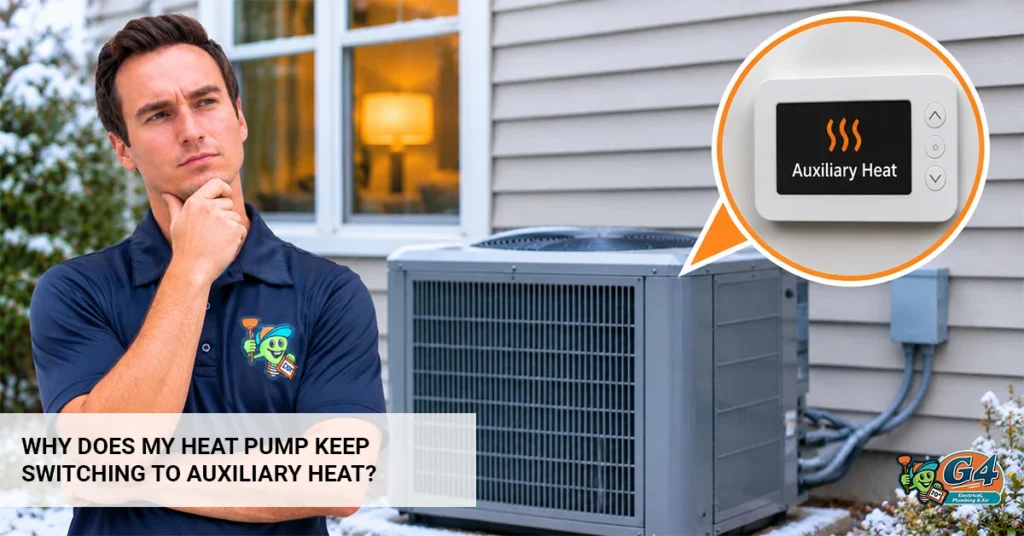
If your heat pump keeps switching to auxiliary heat, it usually means the system needs extra help to keep your home warm. This often happens when outdoor temperatures drop, but it can also happen because of a dirty air filter, incorrect thermostat settings, or a problem with the heat pump.
Auxiliary heat, also called AUX heat, acts as a backup heating source. It helps your heat pump warm your home when the system can’t keep up with the heating demand. However, frequent AUX heat use can increase your electricity bill, especially if your system relies on electric heating strips.
So, should you be worried? Not necessarily. It’s normal for auxiliary heat to turn on during very cold weather or when your heat pump runs a defrost cycle. However, if it stays on for long periods or keeps activating during mild weather, your system may need attention.
In this guide, we’ll explain the most common reasons your heat pump keeps switching to auxiliary heat. You’ll also learn what you can check yourself, how to reduce unnecessary AUX heat use, and when it’s time to call an HVAC technician.
What Does Auxiliary Heat Mean on a Heat Pump?
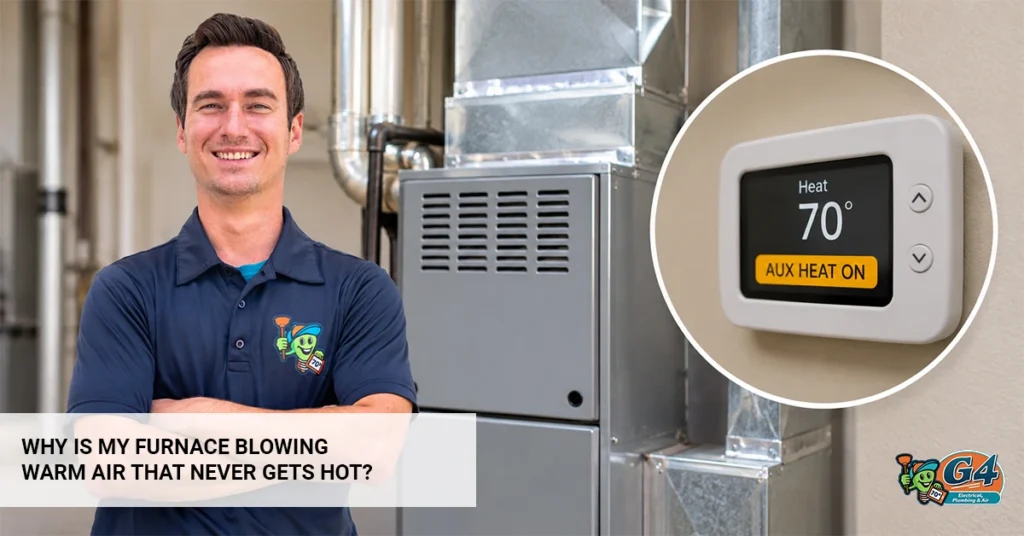
Auxiliary heat is a backup heating source that helps your heat pump keep your home warm when it can’t produce enough heat on its own. You’ll usually see it displayed as AUX HEAT on your thermostat when the system needs extra heating power.
A heat pump works by pulling heat from the outdoor air and transferring it inside your home. However, as outdoor temperatures drop, the system may struggle to meet your home’s heating needs. When that happens, auxiliary heat steps in to provide extra warmth.
Most heat pumps use electric resistance heating strips for backup heat. These strips generate heat by using electricity. Some homes also have a dual-fuel system that uses a compatible gas or propane furnace as backup heating.
Keep in mind that auxiliary heat isn’t a sign that your heat pump is broken. It’s a normal part of many heating systems. However, if AUX HEAT appears too often or stays on for long periods, it’s worth checking whether your system has an underlying problem.
How Does Auxiliary Heat Work?
Auxiliary heat works alongside your heat pump to provide extra warmth when your home needs more heat than the heat pump can supply alone.
Here’s how the process works:
- Your thermostat detects that your indoor temperature is below the set temperature.
- Your heat pump starts pulling heat from the outdoor air.
- If the heat pump can’t keep up with the heating demand, the thermostat activates auxiliary heat.
- The backup heating source provides additional warmth to help raise the indoor temperature.
- Once the heating demand decreases, auxiliary heat turns off and your heat pump continues heating your home.
For example, if your thermostat is set to 70°F but your home is still at 66°F during cold weather, your system may turn on AUX heat to help reach the desired temperature.
The exact activation point depends on your thermostat settings, outdoor temperature, and heat pump capacity.
When Does a Heat Pump Automatically Switch to AUX Heat?
A heat pump automatically switches to auxiliary heat when your thermostat determines that additional heating is needed to maintain your desired indoor temperature.
This can happen in several situations:
- During very cold weather: Your heat pump may struggle to extract enough heat from the outdoor air.
- After a sudden temperature increase: Raising your thermostat several degrees at once can trigger backup heating.
- During a defrost cycle: Your heat pump may temporarily use auxiliary heat while removing frost from its outdoor coil.
- When indoor temperatures drop quickly: AUX heat helps your home reach the desired temperature faster.
- When the heat pump can’t meet heating demand: The thermostat activates backup heating to maintain indoor comfort.
Occasional AUX heat operation is normal. However, if it activates frequently during mild weather, have an HVAC technician check your system.
Auxiliary Heat vs. Emergency Heat: What’s the Difference?
Both auxiliary heat and emergency heat provide extra warmth when your home needs backup heating. During normal operation, auxiliary heat automatically works alongside the heat pump when outdoor temperatures drop. By contrast, emergency heat is a manually activated backup mode used when the heat pump cannot operate properly. Emergency heat typically shuts off the heat pump’s compressor and uses the backup heating source instead.
Here’s a quick comparison:
| Feature | Auxiliary Heat (AUX) | Emergency Heat (EM Heat) |
| How it works | Works alongside the heat pump | Typically operates without the heat pump compressor |
| Activation | Usually turns on automatically | Usually selected manually |
| Main purpose | Helps the heat pump meet heating demand | Provides backup heating when the heat pump can’t operate |
| Energy use | Can increase electricity consumption | Can cost more because the heat pump isn’t providing its usual heating |
When should you use auxiliary heat?
You don’t need to turn on auxiliary heat yourself. Your thermostat usually activates it when the heat pump needs extra heating power. For example, this may happen during very cold weather or a defrost cycle.
When should you use emergency heat?
Use emergency heat when your heat pump isn’t working properly and needs to be taken out of operation. For example, if the outdoor unit has a serious mechanical problem, emergency heat may help keep your home warm until an HVAC technician can repair the system.
Keep in mind that emergency heat can be expensive, especially when your system uses electric resistance heating strips. Don’t leave it on unnecessarily.
If you’re unsure which setting to use, check your heat pump’s owner’s manual or contact an HVAC technician.
Why Does My Heat Pump Keep Switching to Auxiliary Heat?
Your heat pump keeps switching to auxiliary heat when it can’t produce enough warmth to maintain your desired indoor temperature. This often happens during cold weather, but thermostat settings, airflow restrictions, and equipment problems can also trigger AUX heat.
Here are eight common reasons your heat pump may keep relying on backup heating.
1. Outdoor Temperatures Are Too Low
Your heat pump may switch to auxiliary heat when outdoor temperatures drop below the point where it can comfortably meet your home’s heating needs.
A heat pump pulls heat from outdoor air and transfers it inside your home. However, as the temperature drops, there’s less heat available, and the system may need to work harder to maintain indoor comfort.
When the heat pump can’t keep up, your thermostat may automatically turn on AUX heat to provide extra warmth.
Common signs include:
- AUX HEAT appears more often during cold mornings.
- Your heat pump runs longer than usual.
- Your home takes longer to reach the thermostat’s set temperature.
- AUX heat runs less often when outdoor temperatures rise.
What can you do?
Keep your thermostat at a steady temperature during cold weather. Also, avoid making sudden temperature increases because they can trigger backup heating.
If your heat pump keeps switching to AUX heat even when outdoor temperatures are mild, have an HVAC technician inspect the system. There may be an issue with its heating capacity, airflow, or controls.
Remember: There’s no single outdoor temperature that triggers auxiliary heat on every heat pump. The activation point depends on your equipment, thermostat settings, and home’s heating requirements.
2. Your Thermostat Has a Large Temperature Setback
A large thermostat adjustment can cause your heat pump to switch to auxiliary heat because the system needs extra heating power to reach your new temperature setting.
For example, suppose you keep your thermostat at 64°F overnight. In the morning, you raise it to 72°F. That’s an 8-degree increase, which may be too much for your heat pump to handle quickly.
As a result, your thermostat may turn on AUX heat to warm your home faster. This is especially common when outdoor temperatures are already low.
How can you prevent this problem?
Try these simple steps:
- Avoid raising your thermostat several degrees at once.
- Keep your indoor temperature relatively consistent throughout the day.
- Use a programmable thermostat with settings designed for heat pumps.
- Ask an HVAC technician to check your auxiliary heat staging and lockout settings.
Gradual thermostat adjustments can help reduce unnecessary AUX heat use. However, don’t disable auxiliary heat just to lower your electricity bill. Your system needs it when additional heating is necessary.
3. Your Heat Pump Is Undersized
An undersized heat pump may switch to auxiliary heat frequently because it can’t produce enough warmth to meet your home’s heating needs.
Every heat pump has a specific heating capacity. If the unit is too small for your home, it may run for long periods without reaching the temperature you set on your thermostat.
When this happens, your thermostat may activate AUX heat to provide the extra warmth your home needs.
Several factors can contribute to an undersized heat pump:
- Your home needs more heating capacity than the unit can provide.
- The heat pump was incorrectly sized during installation.
- Poor insulation allows indoor heat to escape.
- Air leaks around windows and doors increase heating demand.
- Home renovations or additions have changed your heating requirements.
What can you do?
Ask an HVAC professional to inspect your system and calculate your home’s heating requirements. A proper load calculation helps determine whether your heat pump has enough capacity to heat your entire home.
If the unit is undersized, the technician can recommend suitable solutions based on your home’s needs. If your system needs replacement, review the factors that affect heat pump replacement cost before making a decision.
However, replacing your heat pump with a larger unit isn’t always necessary. Improving insulation, sealing air leaks, and correcting airflow problems may also help your existing system perform better.
4. Dirty Air Filters Are Restricting Airflow
A dirty air filter can restrict airflow and make your heat pump work harder to keep your home warm. When air can’t move freely through the system, your heat pump may struggle to deliver enough heat to your rooms.
As a result, the system may run longer, and your thermostat may activate auxiliary heat to help maintain the desired temperature.
What are the common warning signs?
Look for these signs of restricted airflow:
- Weak airflow from your supply vents.
- Uneven temperatures between rooms.
- Longer heating cycles.
- Higher energy consumption.
- More dust around vents and air registers.
How can you fix it?
Start by checking your HVAC air filter. If it’s covered in dust and debris, replace it with the correct size and type recommended by your manufacturer.
Most standard HVAC filters need replacement every 30 to 90 days. However, the right schedule depends on the filter type, household conditions, pets, and system usage.
Also, check your supply and return vents. Move furniture, rugs, and other objects that may block airflow.
Regular filter replacement and clear vents can help your heat pump maintain proper airflow and reduce unnecessary auxiliary heat operation.
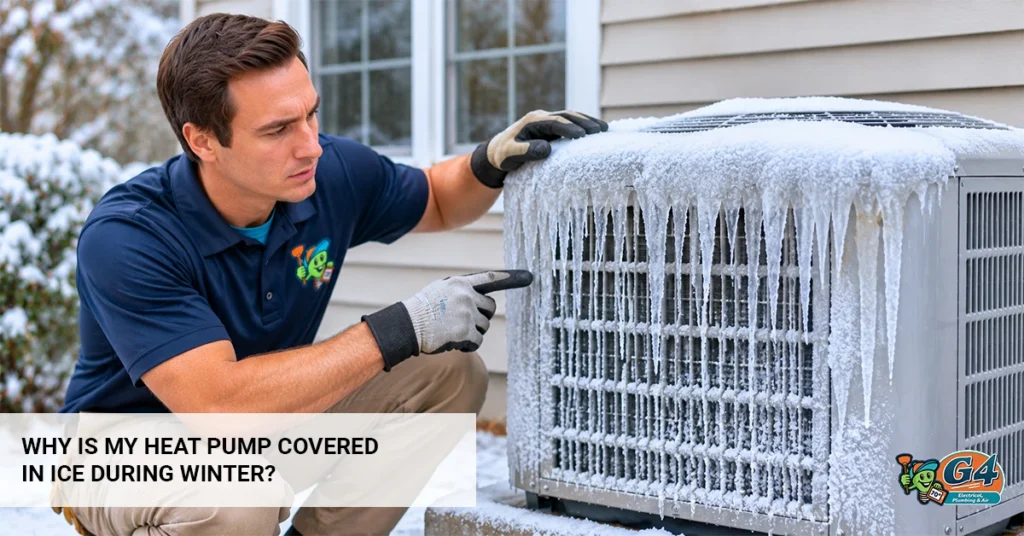
5. Your Outdoor Unit Has Ice Buildup or Defrost Problems
Ice buildup on your outdoor heat pump can reduce heating performance and cause the system to rely on auxiliary heat more often. However, a light layer of frost is normal during cold, damp weather.
Your heat pump has a built-in defrost cycle that removes frost from the outdoor coil. During this cycle, the system temporarily changes how it operates to warm the outdoor coil and melt the ice. It may also turn on auxiliary heat to keep your indoor temperature comfortable.
However, if too much ice builds up or the defrost cycle doesn’t work properly, your heat pump may struggle to produce enough heat.
What are the signs of a defrost problem?
Watch for these warning signs:
- Thick ice covering the outdoor unit.
- Ice that remains on the coils for a long time.
- AUX HEAT turning on frequently.
- Poor heating performance inside your home.
- Unusual noises coming from the outdoor unit.
What can you do?
Keep the area around your outdoor unit clear of leaves, snow, and debris. Also, make sure nothing blocks the unit’s airflow.
Avoid chipping away ice with sharp tools or pouring hot water over the equipment. These methods can damage the coils and other components.
If thick ice continues to cover your outdoor unit, contact an HVAC technician. They can inspect the defrost controls, sensors, outdoor coil, and other components to find the cause.
6. Your Heat Pump Has Low Refrigerant
Low refrigerant can reduce your heat pump’s heating capacity and cause it to switch to auxiliary heat more often. If your system still struggles to warm your home, read our guide on what to do when your heat pump isn’t heating properly.
Refrigerant helps your heat pump transfer heat between the indoor and outdoor units. When a leak causes the refrigerant level to drop, the system may struggle to move enough heat into your home.
As a result, your heat pump may run longer without reaching the temperature set on your thermostat. Your system may then rely on AUX heat to provide additional warmth.
What are the common signs of low refrigerant?
Look for these warning signs:
- Your heat pump isn’t heating your home properly.
- The system runs longer than usual.
- Ice forms on the indoor or outdoor coil.
- You hear unusual hissing or bubbling sounds.
- AUX HEAT appears more frequently on your thermostat.
How can you fix it?
Contact a qualified HVAC technician to inspect your refrigerant system. The technician can check the refrigerant charge, look for leaks, and test the system’s heating performance.
If there’s a refrigerant leak, it needs to be repaired before the technician restores the correct refrigerant charge.
Simply adding more refrigerant won’t fix the problem if the leak is still there. A proper repair helps your heat pump transfer heat effectively and reduces unnecessary reliance on auxiliary heating.
7. Your Thermostat Has Incorrect Settings or Wiring Issues
Incorrect thermostat settings or faulty wiring can cause your heat pump to switch to auxiliary heat more often than necessary.
Your thermostat controls when the heat pump and backup heating system operate. If it’s configured incorrectly, it may activate AUX heat too early or send the wrong signals to your heating system.
For example, incorrect temperature differential settings, heating stages, or heat pump equipment configurations can affect when auxiliary heat turns on. A faulty temperature sensor or loose wiring can also cause unexpected operation.
What can you do?
Try these simple checks:
- Make sure your thermostat is set to HEAT, not EMERGENCY HEAT.
- Check whether the thermostat is configured for your specific heat pump system.
- Compare the thermostat’s temperature reading with a separate indoor thermometer.
- Look for unusual temperature differences between the two readings.
- Ask an HVAC technician to inspect the thermostat wiring and system controls.
Avoid changing advanced installer settings unless you know the correct configuration for your equipment. If AUX heat keeps turning on unexpectedly, a professional can test the thermostat and identify the cause.
8. Your Heat Pump Has a Mechanical Problem
A mechanical problem can prevent your heat pump from producing enough heat, causing it to rely on auxiliary heating more often.
Your heat pump depends on several components to move heat into your home. If one of these parts stops working properly, the system may struggle to maintain your desired indoor temperature.
Here are some common mechanical problems that can affect heating performance:
- Compressor failure: The compressor moves refrigerant through the system. If it fails or loses performance, your heat pump may struggle to produce enough heat.
- Reversing valve problems: The reversing valve changes the direction of refrigerant flow between heating and cooling modes. If it gets stuck or malfunctions, your heat pump may not heat properly.
- Blower motor issues: A faulty blower motor can reduce airflow, making it harder to distribute warm air throughout your home.
- Electrical problems: Damaged wiring, faulty capacitors, or control board issues can prevent your heat pump from operating correctly.
What can you do?
If your heat pump keeps switching to AUX heat and isn’t warming your home properly, contact a qualified HVAC technician.
They can inspect the compressor, reversing valve, blower motor, electrical connections, and other components to identify the problem.
Avoid trying to repair electrical or mechanical parts yourself. A professional diagnosis can help prevent further damage and restore your heat pump’s heating performance.
Is It Normal for Auxiliary Heat to Keep Turning On?
Yes, it’s normal for auxiliary heat to turn on occasionally, especially during very cold weather, defrost cycles, or sudden thermostat adjustments. However, if AUX heat runs frequently or stays on for long periods, your heat pump may have a problem.
Auxiliary heat is designed to support your heat pump when it can’t produce enough warmth on its own. The system uses it to maintain your desired indoor temperature when heating demand increases.
How often AUX heat turns on depends on your heat pump’s capacity, outdoor temperature, thermostat settings, and your home’s insulation.
When Is Auxiliary Heat Operation Normal?
Auxiliary heat normally turns on when your heat pump needs extra heating power to keep your home comfortable.
You may notice AUX heat activating in these situations:
- During very cold weather: Your heat pump may struggle to extract enough heat from outdoor air, so the backup heating system provides extra warmth.
- During the defrost cycle: Your heat pump temporarily changes how it operates to remove frost from the outdoor coil. AUX heat may turn on to maintain indoor comfort.
- After a large thermostat adjustment: Raising your thermostat several degrees at once can increase heating demand and trigger backup heat.
- When indoor temperatures drop quickly: AUX heat helps your home reach the desired temperature when the heat pump can’t keep up.
These situations don’t automatically mean your heat pump is broken. Occasional AUX heat operation is part of normal heat pump operation.
Signs Your Heat Pump Is Using Too Much Auxiliary Heat
Frequent auxiliary heat activation may indicate that your heat pump isn’t working as efficiently as it should.
Watch for these warning signs:
- AUX HEAT stays on for several hours.
- Your heat pump frequently uses backup heat during mild weather.
- Your electricity bills increase without an obvious reason.
- Your home struggles to reach the thermostat’s set temperature.
- Your heat pump runs almost continuously.
- Thick ice continues to build up on the outdoor unit.
If you notice these problems, have an HVAC technician inspect your system. They can check the thermostat, airflow, refrigerant charge, and heating components to find the cause.
How Long Should Auxiliary Heat Run?
Auxiliary heat doesn’t have a fixed runtime because its operation depends on your home’s heating needs and outdoor conditions.
For example, it may run briefly during a defrost cycle or stay on longer during extremely cold weather when your heat pump needs additional heating support.
Pay attention to how well your system maintains indoor comfort. If AUX heat runs for hours during mild weather, your heat pump struggles to reach the set temperature, or your electricity bills suddenly increase, schedule a professional inspection.
A technician can determine whether the system is operating normally or using backup heat because of an underlying problem.
How to Stop Your Heat Pump From Switching to Auxiliary Heat
You can reduce unnecessary auxiliary heat use by improving airflow, adjusting your thermostat habits, and keeping your heat pump properly maintained. However, you shouldn’t try to stop AUX heat completely because your system needs it during certain conditions, such as extremely cold weather or defrost cycles.
Here are six practical ways to help your heat pump run more efficiently and avoid unnecessary backup heating.
1. Check and Replace Your Air Filter
A dirty air filter can restrict airflow and make it harder for your heat pump to warm your home. Check your filter regularly and replace it when it becomes clogged with dust and debris.
Here’s what you can do:
- Turn off your HVAC system before removing the filter.
- Check the filter for visible dust buildup.
- Replace it with the correct size and type recommended by your manufacturer.
- Check it regularly, especially during the heating season.
A clean filter helps maintain proper airflow and allows your heat pump to distribute warm air more effectively.
2. Adjust Your Thermostat Gradually
Large thermostat adjustments can trigger auxiliary heat because your heat pump needs extra heating power to reach the new temperature.
For example, if your thermostat is set to 65°F, raising it immediately to 73°F may cause AUX heat to turn on.
Instead, make smaller temperature adjustments and give your heat pump enough time to warm your home. Keeping a consistent indoor temperature can also help reduce unnecessary backup heating.
3. Check Your Thermostat’s AUX Heat Settings
Incorrect thermostat settings can cause auxiliary heat to activate earlier or more often than necessary.
Some thermostats allow HVAC professionals to adjust heating stages, temperature differentials, and outdoor temperature lockouts.
Check your thermostat’s user manual to understand how these settings work. If you suspect incorrect configuration, ask an HVAC technician to review it.
Avoid disabling auxiliary heat or changing advanced installer settings without confirming that they’re suitable for your heat pump.
4. Keep the Outdoor Unit Clear of Snow and Debris
Your outdoor heat pump needs enough airflow to pull heat from the surrounding air. Leaves, snow, dirt, and other debris can block airflow and reduce heating performance.
To keep the outdoor unit clear:
- Remove leaves and debris around the unit.
- Keep snow away from the air intake and discharge.
- Maintain the clearance recommended by the manufacturer.
- Keep objects and vegetation away from the unit.
- Avoid covering the outdoor unit while it’s operating.
If thick ice continues to build up on the outdoor coil, contact an HVAC technician instead of trying to remove it yourself.
5. Check for Blocked Supply and Return Vents
Blocked supply and return vents can reduce airflow and make it harder for your heat pump to distribute warm air throughout your home.
Walk through each room and check that furniture, rugs, curtains, or other objects aren’t covering the vents.
Also, pay attention to rooms that feel colder than others. Uneven heating may indicate blocked vents, duct leaks, or other airflow problems.
Keeping vents clear helps your heating system circulate warm air more evenly.
6. Schedule Professional Heat Pump Maintenance
Regular heat pump maintenance helps keep your system running efficiently and reduces the risk of problems that cause frequent AUX heat activation. You can also follow our HVAC maintenance checklist to keep your heating and cooling system in good condition.
During a professional inspection, an HVAC technician can:
- Check refrigerant levels and inspect for leaks.
- Clean the indoor and outdoor coils.
- Inspect electrical connections.
- Test thermostat operation and settings.
- Check the outdoor unit’s defrost cycle.
- Inspect the compressor and reversing valve.
- Test airflow and blower motor performance.
- Check the auxiliary heating components.
Routine maintenance can help identify small problems before they affect your heat pump’s heating performance. It also gives you a better chance of avoiding unexpected breakdowns during the heating season.
Does Auxiliary Heat Increase Your Electricity Bill?
Yes, auxiliary heat can increase your electricity bill, especially when your heat pump uses electric resistance heating strips for backup heat. These heating elements use more electricity than normal heat pump operation, particularly when they run for long periods.
A heat pump works by transferring heat from the outdoor air into your home. It doesn’t need to generate all that heat using electricity, which makes it an efficient way to heat your home.
However, electric resistance auxiliary heat works differently. It uses electricity to heat metal elements, which then warm the air moving through your system. As a result, your heat pump may consume significantly more electricity when AUX heat runs frequently.
Why Does Auxiliary Heat Use More Electricity?
Auxiliary heat uses more electricity because electric resistance heating generates heat directly instead of transferring existing heat from the outdoor air.
When AUX heat turns on, your system may use the heat pump and electric heating elements at the same time. This depends on your equipment and thermostat settings.
The additional electrical demand can increase your monthly energy costs. The longer the backup heating operates, the more electricity it can consume.
How Much More Expensive Is AUX Heat?
The cost of auxiliary heat depends on your heating system, the size of its backup heater, your electricity rate, and how long it operates.
Here are the main factors that affect your AUX heat costs:
- Heater capacity: A higher-capacity electric heating system generally uses more electricity.
- Electricity rates: Higher utility rates increase the cost of running backup heat.
- Operating time: The longer AUX heat runs, the more electricity it consumes.
- Home insulation: Poor insulation increases heating demand and can cause more frequent backup heating.
- Heat pump efficiency: An efficient heat pump can reduce the need for auxiliary heat.
- Outdoor temperatures: Colder weather can increase the demand for backup heating.
For example, a 10 kW electric resistance heater running continuously for one hour uses 10 kWh of electricity.
If your electricity rate is $0.15 per kWh, that hour of operation costs approximately $1.50.
This is an illustrative calculation. Actual costs depend on how your system stages its heating elements and how long they operate.
How to Reduce Auxiliary Heat Energy Costs
You can reduce unnecessary AUX heat use by improving your home’s heating efficiency and keeping your heat pump in good condition.
Try these practical steps:
- Keep your thermostat at a relatively consistent temperature.
- Replace dirty air filters regularly.
- Improve insulation in your attic, walls, and other areas.
- Seal air leaks around windows and doors.
- Keep supply and return vents clear.
- Schedule regular heat pump maintenance.
- Ask an HVAC professional to check your thermostat’s auxiliary heat settings.
These simple steps can help your heat pump maintain indoor comfort without relying on backup heating more than necessary.
When Should You Call an HVAC Technician?
You should call an HVAC technician if your heat pump keeps switching to auxiliary heat, especially when it happens during mild weather or your home isn’t getting warm enough.
Occasional AUX heat activation is normal during cold weather or defrost cycles. However, frequent or prolonged operation may indicate an issue with your heat pump, thermostat, or airflow.
Schedule a professional inspection if you notice these signs:
- Auxiliary heat runs almost constantly: Your heat pump may not be producing enough heat to maintain your desired indoor temperature.
- Your home stays cold: The system struggles to reach the temperature set on your thermostat.
- Your electricity bills suddenly increase: Frequent backup heating may be consuming more electricity than usual.
- Your outdoor unit has heavy ice buildup: The defrost system may not be removing frost properly.
- Your heat pump makes unusual noises: Grinding, buzzing, or rattling sounds may indicate a mechanical or electrical problem.
- Your system blows cold air during heating: There may be an issue with the refrigerant cycle, airflow, or system controls.
An HVAC technician can inspect your heat pump, test its electrical components, check refrigerant levels, and identify why auxiliary heat keeps turning on. Once they find the problem, they can recommend the right repair.
If your heat pump has recurring problems, learn when it’s better to repair or replace your HVAC system.
Don’t ignore frequent AUX heat activation, particularly when outdoor temperatures are mild. Getting the problem checked early can help prevent further damage, reduce unnecessary energy use, and keep your home comfortable.
Frequently Asked Questions
Why Does My Heat Pump Go Into AUX Heat When It’s 40 Degrees Outside?
Your heat pump may switch to AUX heat at 40°F if it can’t produce enough heat to maintain your desired indoor temperature. This can happen because of your system’s heating capacity, thermostat settings, or home insulation. The exact temperature varies by system, so 40°F doesn’t automatically mean something is wrong.
Should I Turn Off Auxiliary Heat on My Thermostat?
No, you shouldn’t turn off auxiliary heat just to reduce your electricity bill. It provides extra warmth when your heat pump can’t meet your home’s heating needs. Let your thermostat control it automatically, and have an HVAC technician investigate if it activates too frequently.
Is Auxiliary Heat Supposed to Run All the Time?
No, auxiliary heat doesn’t need to run continuously under normal conditions. It usually activates when your heat pump needs extra heating support, such as during very cold weather or a defrost cycle. If it stays on for hours during mild weather, your system may need an inspection.
Does AUX Heat Mean My Heat Pump Is Broken?
No, seeing AUX HEAT on your thermostat doesn’t automatically mean your heat pump is broken. It’s a normal backup heating feature. However, frequent activation, poor heating performance, or unexpectedly high electricity bills may indicate a problem with your system.
Why Does My Heat Pump Switch to AUX Heat at Night?
Your heat pump may switch to AUX heat at night because outdoor temperatures usually drop, making it harder to maintain indoor comfort. Also, if you lower the thermostat overnight and raise it several degrees in the morning, your system may activate backup heating to reach the new temperature faster.
Is Emergency Heat More Expensive Than Auxiliary Heat?
Emergency heat can cost more to operate because it typically uses the backup heating source without running the heat pump compressor. However, the actual cost depends on your backup system, electricity rates, and heating requirements. Electric resistance backup heating is generally more expensive to operate than normal heat pump heating.
Can a Dirty Air Filter Cause Auxiliary Heat to Turn On?
Yes, a dirty air filter can restrict airflow and reduce your heat pump’s heating performance. When the system struggles to distribute enough warm air, it may run longer and activate auxiliary heat more often. Check your filter regularly and replace it when it becomes dirty.
Keep Your Heat Pump Running Efficiently
If your heat pump keeps switching to auxiliary heat, start by checking your thermostat settings, air filter, and outdoor unit. These simple checks can help you identify common problems that may cause your system to rely on backup heating.
Keep in mind that auxiliary heat is a normal part of many heat pump systems. It provides extra warmth during very cold weather, defrost cycles, and periods of high heating demand.
However, if AUX heat keeps turning on during mild weather, your electricity bills increase, or your home doesn’t reach the desired temperature, your heat pump may need professional attention.
Regular maintenance, proper airflow, and correct thermostat settings can help your system heat your home more efficiently. Also, addressing small problems early can prevent more expensive repairs later.
If your heat pump continues relying on auxiliary heat, contact a qualified HVAC technician. They can inspect the system, find the cause, and recommend the right solution to restore reliable heating.