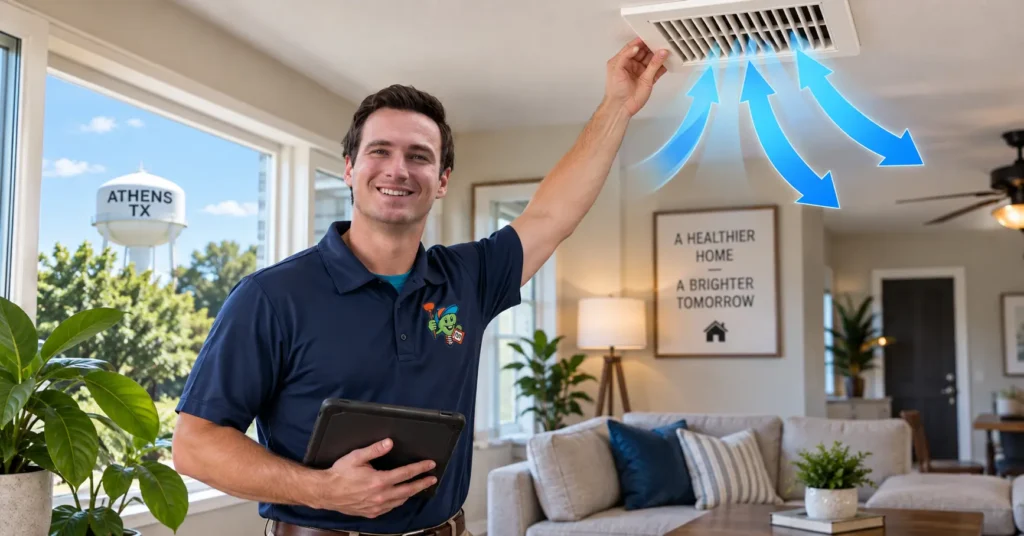
Improving ventilation in your Athens, TX home starts with removing stale indoor air and bringing in fresh air when outdoor conditions allow.
If your house feels stuffy, odors hang around, or some rooms feel stagnant, poor ventilation could be part of the problem. Running the AC can cool and circulate indoor air, but that doesn’t always mean your home is getting enough fresh air.
A few simple changes can make a noticeable difference. Use bathroom and kitchen exhaust fans, keep HVAC vents and return grilles clear, check for ductwork problems, and use natural ventilation when the outdoor air is comfortable.
If your home still feels stuffy after these basic steps, the HVAC system or ductwork may need a closer look.
What Does Good Home Ventilation Mean?
Good home ventilation means replacing stale indoor air with fresh air while helping remove excess moisture, odors, and other unwanted air from your home.
Ventilation and air circulation are not the same thing. Your AC or ceiling fan can move air around the house, but that doesn’t necessarily bring fresh outdoor air inside or remove stale indoor air.
In a well-ventilated Athens home, air should move through the living space without leaving rooms feeling constantly stuffy or stagnant. Bathroom and kitchen exhaust fans can remove moisture and odors, while fresh-air exchange brings cleaner outdoor air inside when conditions are suitable.
If your home still feels stuffy even when the AC is running, the problem may be a lack of fresh-air exchange, restricted airflow, or an issue with the HVAC system or ductwork. These issues can also contribute to HVAC indoor air quality problems that affect comfort inside your home.
How Can I Improve Ventilation in My Athens, TX Home?
You can improve ventilation in your Athens, TX home by removing stale air, keeping HVAC airflow clear, and bringing in fresh outdoor air when conditions are comfortable.
Start with these simple steps:
- Use bathroom exhaust fans during and after showers. This helps remove humid air before it spreads through the house.
- Run the kitchen exhaust fan while cooking. It can remove steam, cooking odors, and moisture from the kitchen.
- Make sure exhaust fans vent outdoors. A fan that sends air into an attic or another enclosed space isn’t properly removing it from your home.
- Keep HVAC supply and return vents clear. Move furniture, curtains, or other items that block airflow.
- Check your ductwork for airflow problems. Leaky, damaged, or disconnected ducts can reduce airflow to certain rooms.
- Open windows when outdoor conditions are comfortable. This can bring fresh air inside, but avoid doing it when outdoor air is very hot or humid.
- Use ceiling fans to improve air movement. They can help reduce stagnant air, although they don’t replace fresh-air ventilation.
- Consider mechanical ventilation when needed. If your home stays stuffy despite these steps, an HVAC professional can determine whether a dedicated ventilation system would help.
You don’t always need a major HVAC upgrade to improve ventilation. Start with the basics and pay attention to which rooms still feel stuffy. If the problem continues, an HVAC professional can check the system, airflow, and ductwork for underlying issues.
Use Bathroom Exhaust Fans to Remove Moisture
Bathroom exhaust fans help remove humid air before shower moisture spreads through the rest of your Athens, TX home.
A hot shower quickly adds moisture to the air. If you don’t remove that moisture, it can move into nearby bedrooms, hallways, and other rooms. Over time, this can make the house feel damp or stuffy.
Turn on the bathroom exhaust fan while showering and leave it running for a while after you finish. Keep the bathroom door closed during the shower when practical so the moist air stays contained while the fan removes it.
Also, make sure the exhaust fan vents outdoors. If it releases moist air into an attic or another enclosed area, it isn’t properly removing the moisture from your home.
If the bathroom remains steamy long after a shower, check the fan for weak airflow or other ventilation problems. A professional can inspect the fan and ductwork if you’re not sure whether it’s working properly.
Improve Kitchen Ventilation When Cooking
Using your kitchen exhaust fan while cooking helps remove steam, moisture, and cooking odors before they spread through your Athens, TX home.
Turn on the range hood when boiling water, frying food, or cooking anything that creates a lot of steam. Let it run for a few minutes after cooking to help clear the remaining moisture and odors.
If you have a choice, use a range hood that vents air outdoors instead of one that only recirculates air back into the kitchen. An outdoor-vented hood removes the moist air from your home rather than simply filtering and returning it.
Good kitchen ventilation can make the room feel fresher and help prevent cooking moisture from adding to indoor humidity. If your kitchen still feels steamy or stuffy when the exhaust fan is running, the fan or its ductwork may need to be checked.
Make Sure Your Exhaust Fans Vent Outside
Your exhaust fans should vent air outdoors so moisture and stale air actually leave your Athens, TX home.
Bathroom and kitchen fans remove humid air, steam, and odors from the room. But if that air gets released into an attic, crawl space, or another enclosed area, the moisture is still inside your home.
Check where your bathroom and kitchen exhaust fans discharge air. If you notice moisture, dampness, or a musty smell near the outlet, there may be a problem with the ventilation setup.
If you can’t safely access the ductwork or aren’t sure where a fan vents, have an HVAC professional inspect it. Properly vented exhaust fans can remove moisture more effectively and help keep your home from feeling stuffy or overly humid.
Keep HVAC Vents and Return Air Open
Keeping your HVAC supply vents and return grilles clear helps air move properly through your Athens, TX home.
Furniture, curtains, rugs, and other items can block supply vents and reduce the amount of conditioned air reaching a room. Return grilles need clear space too. If a return is blocked, your HVAC system may have a harder time pulling indoor air back through the system.
Walk through your home and check each supply vent and return grille. Move anything that covers or sits directly in front of them.
Pay extra attention to rooms that always feel warmer, stuffier, or less comfortable than the rest of the house. Uneven comfort can be a sign that air isn’t moving properly.
If the vents are clear but one or more rooms still have weak airflow, the problem may be related to the ductwork or HVAC system and may require a professional inspection. If weak airflow continues, learn more about weak airflow from AC vents and the common causes behind it.
Check Your Home’s Ductwork
Checking your ductwork can help improve ventilation when some rooms have weak airflow or feel more stuffy than others.
Ducts carry conditioned air from your HVAC system to different rooms and return indoor air to the system. If a duct is leaking, disconnected, damaged, or poorly connected, the right amount of air may not reach the room. Dirty air ducts can also affect airflow and contribute to rooms feeling stuffy or uncomfortable.
Look for these common signs of a ductwork or airflow problem:
- Weak airflow from some vents
- Rooms that stay warmer than others
- Certain areas that feel stuffy
- Uneven comfort throughout the house
- Your HVAC system running longer than usual
If your vents are open but airflow still feels weak, don’t simply lower the thermostat. Duct leaks can reduce airflow and make it harder for your HVAC system to distribute conditioned air properly. Have the ductwork and HVAC airflow checked to find the actual problem.
An HVAC professional can inspect the accessible ductwork, check airflow, and determine whether leaks, damaged ducts, or another HVAC issue is affecting ventilation in your Athens home.
Open Windows When Outdoor Conditions Allow
Opening your windows can improve ventilation by letting fresh outdoor air into your Athens, TX home when the weather is comfortable.
Opening windows on a mild day can help clear out stale indoor air and make rooms feel fresher. For better airflow, open windows in different parts of the house so air can move through the home instead of entering and leaving from the same spot.
But check the outdoor conditions first. If it’s hot, humid, or very uncomfortable outside, open windows can bring extra heat and moisture indoors. That can make your AC work harder and may increase indoor humidity.
On hot or humid days, keep the windows closed and use your HVAC system along with bathroom and kitchen exhaust fans. This can help maintain indoor comfort while removing moisture and stale air.
Use Ceiling Fans to Improve Air Movement
Ceiling fans can improve air movement and make rooms feel more comfortable, but they do not replace proper home ventilation.
A ceiling fan simply circulates the air already inside the room. It can reduce that stagnant feeling and help distribute air more evenly, but it does not remove moisture, odors, or stale air from your home.
Use ceiling fans along with bathroom and kitchen exhaust fans, and bring in fresh outdoor air when conditions are suitable. This combination can help air move through your Athens home more effectively.
If a room still feels stuffy or has weak airflow even with the fan running, the problem may be related to the HVAC system, ductwork, or overall ventilation setup.
When Should You Consider Mechanical Ventilation?
You may want to consider mechanical ventilation when exhaust fans, open windows, and other basic methods aren’t providing enough fresh-air exchange.
This can be worth discussing with an HVAC professional if:
- Your home regularly feels stuffy. The air may feel stagnant even when the HVAC system is running.
- Outdoor conditions make opening windows impractical. Hot or humid weather can make natural ventilation uncomfortable.
- Certain rooms consistently have poor airflow. This may point to an airflow or ductwork issue that needs to be checked.
- Indoor odors linger despite using exhaust fans. Persistent odors can indicate that stale air isn’t leaving the home effectively.
- Your home has limited natural ventilation. Some homes simply don’t get enough fresh air through windows and normal air movement.
- You want a more consistent supply of fresh air. A mechanical system can provide controlled ventilation without relying on open windows.
An HVAC professional can assess your home’s airflow, ductwork, and existing ventilation. If indoor air quality is also a concern, indoor air quality testing can help identify potential problems inside your home. They can then determine whether additional ventilation equipment is appropriate or whether another HVAC issue is causing the problem.
Signs Your Athens Home May Have Poor Ventilation
Common signs of poor ventilation include stuffy air, lingering odors, condensation, and rooms that feel stagnant even when your HVAC system is running.
Watch for these signs in your Athens, TX home:
- Stale or stuffy indoor air: The house feels uncomfortable or stagnant instead of fresh.
- Cooking or bathroom odors that linger: Smells remain in the air long after cooking or showering.
- Condensation on windows or cool surfaces: Moisture regularly collects on glass or other cool areas.
- Rooms that feel more stagnant than others: One or two rooms may feel stuffier because air isn’t moving properly.
- Excess moisture after showers: Steam and humidity remain in the bathroom for a long time.
- Weak or uneven airflow: Some vents may have noticeably less airflow than others.
- Discomfort even when the HVAC is running: The temperature may seem fine, but the air still feels stale or heavy.
One of these signs doesn’t automatically mean you have a ventilation problem. But when several occur together, it’s worth checking your exhaust fans, HVAC airflow, and ductwork.
If basic steps don’t improve the problem, an HVAC professional can inspect your home’s airflow and ventilation setup to find the underlying cause.
When Should You Call an HVAC Professional?
Call an HVAC professional when your home still has ventilation or airflow problems after you’ve tried the basic fixes.
Professional help is a good idea if you notice:
- Weak airflow from certain vents
- Rooms that stay warmer or stuffier than others
- Persistent stuffiness even when the AC is running
- Lingering odors despite using exhaust fans
- Suspected ductwork leaks or damage
- Poor airflow that doesn’t improve after clearing blocked vents
An HVAC technician can check the system’s airflow, ductwork, supply vents, and return air. If the problem continues, professional HVAC services can help identify and address airflow or ventilation issues. They can also determine whether your home needs additional ventilation or whether an HVAC problem is causing the poor airflow.
If your AC seems to be working normally but certain rooms still feel stagnant, don’t assume you simply need to run the system longer. A professional inspection can help identify whether the issue is with the HVAC system, ductwork, or the home’s overall ventilation setup.
FAQs About Home Ventilation in Athens, TX
What is the best way to ventilate a house?
The best way to ventilate a house is to remove stale indoor air while bringing in fresh air when outdoor conditions are suitable. Use bathroom and kitchen exhaust fans, keep HVAC vents and returns clear, and address ductwork or airflow problems when needed.
How do I get better airflow in my house?
You can improve airflow by keeping supply vents and return grilles clear, replacing a dirty HVAC filter, and making sure furniture or doors aren’t blocking air movement. If some rooms still have weak airflow, the HVAC system or ductwork may need an inspection.
Should I open windows to ventilate my Athens home?
Yes, you can open windows when outdoor temperature and humidity are comfortable. On hot or humid days, keeping windows closed may be better because outdoor air can add unwanted heat and moisture to your home.
Do bathroom fans improve ventilation?
Yes. Bathroom exhaust fans remove humid air and odors from the bathroom before they spread through the house. Run the fan during showers and for a while afterward, and make sure it vents outdoors.
Should a kitchen exhaust fan vent outside?
Yes, an outdoor-vented kitchen exhaust fan can remove steam, moisture, and cooking odors from your home. A recirculating fan filters and returns the air to the room instead of removing it from the house.
Can an AC system improve ventilation?
An AC system can circulate and condition indoor air, but a standard AC does not necessarily bring fresh outdoor air into the home. Proper ventilation may require exhaust fans, natural ventilation, or a dedicated mechanical ventilation system.
Why does my house feel stuffy when the AC is running?
Your house may feel stuffy when the HVAC system is circulating indoor air without enough fresh-air exchange. Blocked vents, poor return airflow, ductwork problems, and inadequate ventilation can also contribute.
How often should I run bathroom exhaust fans?
Run the bathroom exhaust fan while showering and leave it running for a while afterward to remove excess moisture. If the bathroom remains steamy long after the shower, the fan or its ductwork may need to be checked.
Final Thoughts
Improving ventilation in your Athens, TX home starts with removing stale indoor air and bringing in fresh air when outdoor conditions are comfortable.
Start with the basics. Run bathroom and kitchen exhaust fans, keep HVAC vents and return grilles clear, and check for ductwork problems if airflow feels weak or uneven. Ceiling fans can help move air around, but they don’t replace proper ventilation.
If your home still feels stuffy after these steps, an HVAC professional can inspect the airflow, ductwork, and ventilation setup. Finding the actual problem can help you improve comfort without simply running the AC longer or lowering the thermostat.