
Poor indoor air quality can make your Kaufman, TX home feel dusty, stuffy, damp, or uncomfortable. Common causes include dust, allergens, high humidity, poor ventilation, moisture, and HVAC problems.
Your HVAC system also affects the air inside your home. It filters and circulates air every time it runs. If the filter is dirty, airflow is poor, or parts of the system need cleaning, indoor air quality can suffer.
The good news is that many indoor air quality problems can be traced to a specific source. Identifying the cause first makes it easier to choose the right solution.
What Causes Poor Indoor Air Quality in Kaufman, TX Homes?
Poor indoor air quality usually comes from dust, allergens, excess moisture, poor ventilation, household pollutants, or HVAC problems. In many homes, more than one of these issues can affect the air at the same time.
Common causes include:
- Dust and airborne particles: Dust can build up on surfaces and circulate through your HVAC system.
- Pet dander and allergens: Pets, pollen, and other allergens can enter and remain in the home.
- High indoor humidity: Too much moisture can make the air feel uncomfortable and create conditions for mold growth.
- Mold and moisture: Leaks, condensation, and water damage can lead to mold and musty odors.
- Poor ventilation: Without enough fresh-air exchange, odors, moisture, and pollutants can stay trapped indoors.
- Dirty HVAC filters: A clogged filter can restrict airflow and reduce the system’s ability to capture airborne particles.
- Dirty or damaged ductwork: Leaky or dirty ducts can contribute to dust and odor problems.
- Household products: Cleaning products, paints, air fresheners, and other materials can release substances into indoor air.
- Outdoor pollutants: Pollen, dust, smoke, and other outdoor particles can enter through doors, windows, and ventilation systems.
Your home’s age, construction, insulation, ventilation, and HVAC condition can also affect indoor air quality.
If you keep noticing excessive dust, musty smells, high humidity, or stale air, look for the underlying cause. Changing the filter or using an air purifier may help, but they will not fix a moisture, ventilation, or HVAC problem.
What Are the Most Common Indoor Air Quality Problems?
The most common indoor air quality problems include dust, allergens, high humidity, mold, odors, poor ventilation, and HVAC-related issues. These problems can make the air feel stale or uncomfortable and may be difficult to identify when several occur at once.
Dust and Airborne Particles
Dust and airborne particles can build up around your home and circulate through the HVAC system. You may notice dust on furniture, floors, vents, and other surfaces even after cleaning.
Common sources include outdoor dust, pollen, pet dander, carpets, and everyday household activity. A dirty HVAC filter can also allow more particles to circulate.
Excess Humidity
Excess indoor humidity can make your home feel warmer and create conditions that support mold and microbial growth. It can also contribute to condensation and musty odors.
Cooking, showering, poor ventilation, and HVAC problems can all add to indoor moisture. If your home consistently feels damp, check the humidity level and look for the source of the excess moisture.
Mold and Moisture
Mold can grow when moisture remains in an area for too long. Leaks, condensation, water damage, and high indoor humidity are common moisture sources.
You may notice a musty smell, visible spots, or recurring damp areas. Fixing the moisture problem is important because cleaning the affected area alone may not prevent mold from returning.
Pet Dander and Allergens
Pet dander, pollen, and other allergens can build up indoors and circulate through the air. Pets can add dander to carpets, furniture, and bedding, while pollen can enter through doors, windows, and ventilation systems.
Regular cleaning, proper filtration, and keeping HVAC filters in good condition can help reduce airborne allergens.
Poor Ventilation
Poor ventilation can trap stale air, odors, moisture, and indoor pollutants inside your home. This is especially noticeable when a home stays closed for long periods.
Bathroom and kitchen exhaust fans can help remove moisture and odors at the source. If your home still feels stuffy, an HVAC professional can check whether the ventilation and airflow are adequate.
HVAC-Related Air Quality Problems
HVAC problems can affect indoor air quality by reducing airflow, increasing humidity, or allowing dust and odors to circulate. Dirty filters, dirty components, clogged drains, and damaged ductwork can all contribute.
Regular HVAC maintenance helps keep the system clean and operating properly. If you notice persistent odors, excessive dust, or uneven airflow, having the system inspected can help identify the underlying problem.
High Indoor Humidity Can Affect Air Quality
High indoor humidity can make your Kaufman home feel damp and uncomfortable while creating conditions that support mold and microbial growth. It can also contribute to musty odors and condensation.
Several things can cause humidity levels to rise, including:
- Poor ventilation
- Plumbing leaks
- Roof or other water leaks
- Condensation
- Cooking and showering
- An oversized or poorly operating AC system
- Insufficient dehumidification
You may have a humidity problem if you notice condensation on windows, a damp feeling indoors, musty smells, or recurring moisture around certain areas of your home.
Your air conditioner removes some moisture from the air as it cools your home. If your home still feels damp even when the AC is running, the system may not be controlling humidity properly. An HVAC professional can check the system and determine whether an equipment, airflow, or dehumidification issue is contributing to the problem.
Dust and Allergens Can Build Up Indoors
Dust and allergens can build up in your home when particles enter faster than your cleaning and HVAC filtration can remove them. This can leave surfaces dusty and cause particles to circulate through the air.
Common sources include:
- Outdoor dust and dirt
- Pet dander
- Pollen
- Carpets and rugs
- Bedding and upholstered furniture
- Everyday household activities
- Dirty or clogged HVAC filters
Regular cleaning can reduce dust on surfaces, while a clean HVAC filter helps capture airborne particles as air moves through the system.
If your home gets dusty again soon after cleaning, check the HVAC filter first. Make sure air can move freely through the system. If excessive dust continues, an HVAC professional can inspect the system and ductwork to look for airflow or other problems.
Mold and Moisture Problems Can Affect Indoor Air
Mold can affect indoor air quality when moisture stays in an area long enough for mold to grow. Moisture problems can also lead to musty odors and other signs that something is wrong inside the home.
Common sources of moisture include:
- Plumbing leaks
- Condensation
- Roof leaks
- Poor drainage
- High indoor humidity
- Water damage
- HVAC condensate problems
Mold is not always easy to spot. It can grow in hidden areas where moisture collects. A persistent musty smell can be a warning sign, especially if you also notice damp walls, ceilings, floors, or other surfaces.
The key is to fix the source of the moisture. Cleaning visible mold without addressing the leak, condensation, or humidity problem may allow it to come back.
If you have extensive mold growth, recurring moisture, or cannot find the source of a musty odor, have the affected area evaluated by a qualified professional.
Poor Ventilation Can Trap Pollutants Inside
Poor ventilation can trap odors, moisture, dust, and other airborne pollutants inside your home. When fresh air does not circulate well, indoor air can start to feel stale or stuffy.
Everyday activities can add moisture and particles to the air. Cooking, showering, cleaning, and using household products are common examples. Without enough ventilation, these pollutants can stay indoors longer.
A few simple steps can improve air circulation:
- Use bathroom exhaust fans when showering.
- Run kitchen exhaust fans while cooking.
- Open windows when outdoor conditions are suitable.
- Keep HVAC vents clear so air can move freely.
- Have airflow and ventilation checked if rooms regularly feel stuffy.
If your Kaufman home stays closed most of the time while the HVAC system is running, basic ventilation may not provide enough fresh-air exchange. An HVAC professional can check your home’s airflow and determine whether a whole-home ventilation system would be appropriate.
Dirty HVAC Filters Can Reduce Indoor Air Quality
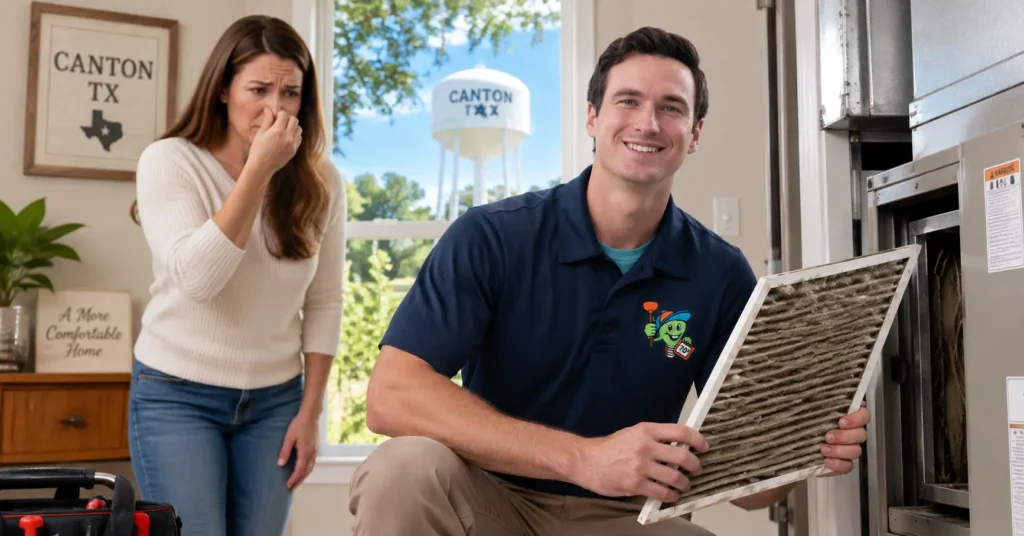
A dirty HVAC filter can reduce indoor air quality by restricting airflow and making it harder for your system to capture airborne particles. A clogged filter can also put extra strain on the HVAC system.
Your filter catches dust, pollen, pet dander, and other particles as air passes through the system. Over time, these particles build up on the filter. If you leave it in place too long, airflow can drop, and the system may not circulate air as efficiently.
Check your HVAC filter regularly and replace it based on the manufacturer’s recommendations. You may need to check it more often if you have pets, high indoor dust levels, or other conditions that cause the filter to get dirty quickly.
Using the right filter also matters. A filter that is too restrictive for your HVAC system can reduce airflow and affect system performance. If you’re unsure which filter your system needs, check the manufacturer’s specifications or ask an HVAC professional.
Can Your HVAC System Affect Indoor Air Quality?
Yes, your HVAC system can affect indoor air quality because it filters, conditions, and circulates the air throughout your home. When the system is dirty or not working properly, it can contribute to dust, odors, humidity, and poor airflow. These are common HVAC indoor air quality problems that may require an inspection to identify the underlying cause.
Common HVAC problems that can affect indoor air quality include:
- Dirty evaporator coils
- Dirty blower components
- Clogged or dirty filters
- Poor airflow
- Excess indoor humidity
- Damaged or leaking ductwork
- Condensate drainage problems
- Improper HVAC operation
A well-maintained HVAC system can help keep air moving properly and reduce the buildup of dust and other particles. Regular maintenance also helps catch problems before they affect comfort or air quality.
If you notice unusual odors, excessive dust, high humidity, or poor airflow, have your HVAC system inspected. Finding the cause can help you fix the air quality problem instead of treating only the symptoms.
Can Ductwork Cause Indoor Air Quality Problems?
Yes, damaged, leaking, or heavily contaminated ductwork can contribute to indoor air quality problems. Since ducts carry conditioned air through your home, problems inside the duct system can affect the air coming from your vents.
Dust and debris can collect inside ducts over time. If significant dust has built up inside the system, dirty air ducts may contribute to indoor air quality and airflow problems. Leaks, loose connections, or damaged sections can also affect airflow and allow unwanted particles to enter the system in some situations.
You may want to have your ductwork inspected if you notice:
- Excessive dust throughout your home
- Uneven airflow between rooms
- Unusual odors coming from vents
- Weak airflow from certain vents
- Visible damage around accessible ductwork
- More dust after the HVAC system runs
Duct cleaning is not necessary for every home. A professional inspection can determine whether the problem calls for cleaning, duct sealing, repairs, or another solution. This helps you address the actual cause instead of paying for unnecessary work.
Persistent weak airflow from AC vents can also point to ductwork or HVAC problems that affect air circulation.
How Can You Improve Indoor Air Quality in Your Kaufman Home?
You can improve indoor air quality by controlling moisture, keeping your HVAC system clean, improving ventilation, and reducing common sources of indoor pollutants.
Start with these simple steps:
- Replace HVAC filters regularly. A clean filter helps your system capture dust, pollen, and other airborne particles.
- Control indoor humidity. Keep moisture levels comfortable and address sources of excess humidity.
- Use kitchen and bathroom exhaust fans. They help remove moisture, odors, and particles at the source.
- Clean dust regularly. Vacuum carpets and rugs and wipe dust from furniture, floors, and other surfaces.
- Fix leaks quickly. Address plumbing leaks, water damage, and other moisture problems before they lead to bigger issues.
- Maintain your HVAC system. Regular maintenance can help keep components clean and support proper airflow.
- Reduce outdoor pollutants. Keep doors and windows closed when outdoor air contains high levels of dust, smoke, or pollen.
- Inspect persistent HVAC or ductwork problems. Ongoing odors, dust, humidity, or airflow issues may need professional attention.
If these steps do not improve the air in your home, the problem may be related to ventilation, ductwork, humidity control, or the HVAC system itself. An HVAC professional can inspect the system and help identify the underlying cause.
Following an HVAC maintenance checklist can help you keep up with routine maintenance and catch potential problems early.
Which Indoor Air Quality Products Can Help?
The right indoor air quality product depends on the specific problem in your home. No single system can solve every air quality issue, so it is better to identify the cause before buying equipment.
Common options include:
Air Cleaners and Whole-Home Filtration
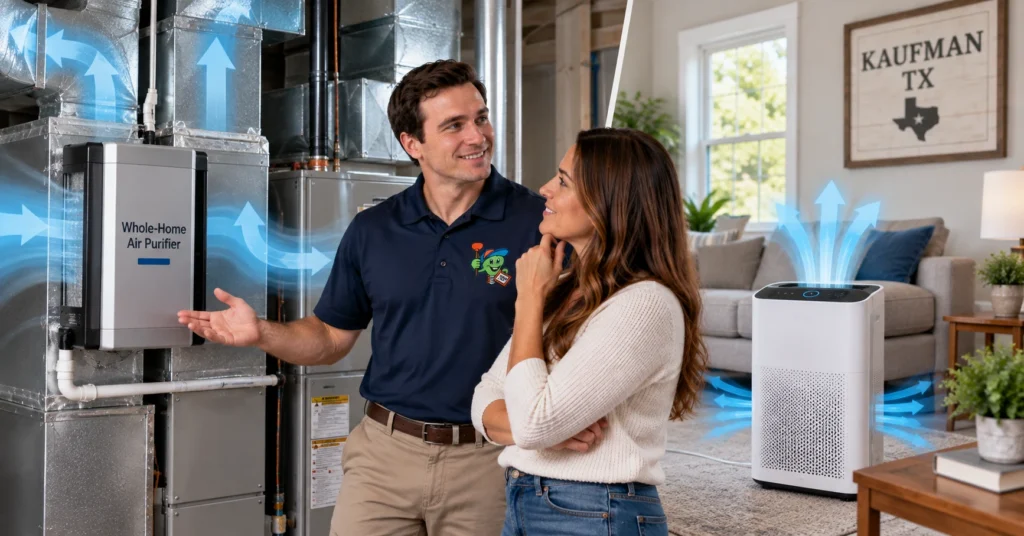
Air cleaners and whole-home filtration systems can help remove airborne particles such as dust, pollen, and pet dander. They can be useful when airborne particles are the main concern.
Dehumidifiers
A whole-home dehumidifier can help control excess moisture when your HVAC system does not keep indoor humidity at a comfortable level. This can also help reduce conditions that contribute to musty odors and mold growth.
Humidifiers
A whole-home humidifier can add moisture when indoor air becomes too dry. This may be more useful during cooler weather when heating can lower indoor humidity.
UV Air Treatment
UV air treatment systems can be part of an indoor air quality setup for certain HVAC applications. The equipment should be selected based on your HVAC system and the specific problem you are trying to address.
Ventilation Systems
A ventilation system can bring in fresh outdoor air and remove stale indoor air. This can help when poor ventilation allows moisture, odors, and other pollutants to build up inside the home.
Before purchasing any indoor air quality equipment, identify the problem first. An HVAC professional can evaluate your home’s airflow, humidity, filtration, and ventilation to help determine which solution makes sense.
When Should You Call an HVAC Professional?
You should call an HVAC professional when indoor air quality problems keep coming back, basic maintenance does not help, or you cannot identify the cause. Some problems may come from the HVAC system, ductwork, airflow, or humidity levels.
Professional help may be useful if you notice:
- Persistent musty or unusual odors
- Excessive dust throughout the home
- High indoor humidity
- Poor or uneven airflow
- Recurring condensation or moisture
- Suspected HVAC or ductwork problems
- An HVAC system that is not working properly
- Indoor air quality problems that keep returning
An HVAC professional can inspect your system, check airflow and humidity, and look for problems with the equipment or ductwork. If the cause is still unclear, indoor air quality testing may provide more information about the air inside your home.
Finding the underlying cause can help you choose the right solution instead of relying on temporary fixes. Professional HVAC services can help identify and address problems involving airflow, humidity, ductwork, and HVAC performance.
FAQs About Indoor Air Quality in Kaufman, TX
What are the most common indoor air quality problems in Kaufman, TX?
Common indoor air quality problems include dust, pollen, pet dander, excess humidity, mold, odors, poor ventilation, and HVAC-related issues. More than one problem can affect a home at the same time.
How do I know if my home has poor indoor air quality?
Common signs include excessive dust, persistent odors, stale air, high humidity, condensation, and recurring moisture problems. If these issues continue, testing or an HVAC inspection can help identify the cause.
Why is my Kaufman home so dusty?
Your home may be dusty because of outdoor particles, pets, carpets, household activity, dirty filters, or HVAC and ductwork problems. Start by checking the HVAC filter and making sure it is clean and properly fitted.
Can high humidity cause indoor air quality problems?
Yes. High humidity can make your home feel damp and uncomfortable and create conditions that support mold growth. It can also contribute to condensation and musty odors.
Can an HVAC system improve indoor air quality?
Yes. A properly maintained HVAC system can filter some airborne particles, circulate air, and remove some moisture. Additional equipment may help when the existing system cannot address a specific air quality problem.
How often should I change my HVAC filter?
The replacement schedule depends on the filter type, HVAC system, household conditions, and manufacturer’s recommendations. Check the filter regularly and replace it when it becomes dirty or according to the recommended schedule.
Can dirty air ducts affect indoor air quality?
Dirty or damaged ductwork can contribute to dust, odors, and airflow problems in some homes. However, duct cleaning is not always necessary. An inspection can determine whether the ductwork is actually contributing to the problem.
What is the best way to improve indoor air quality?
The best approach depends on what is causing the problem. Regular filter replacement, moisture control, proper ventilation, cleaning, and HVAC maintenance are good places to start.
Do air purifiers help with indoor air pollution?
Air purifiers can help reduce certain airborne particles, depending on the type of filtration they use. They are most useful when the equipment matches the specific air quality concern in your home.
When should I have my home’s indoor air quality tested?
Consider testing when air quality problems persist and you cannot identify the cause through normal cleaning and HVAC maintenance. Testing can provide more information about specific indoor air quality concerns.
Final Thoughts
Indoor air quality problems in Kaufman, TX homes can come from dust, allergens, high humidity, moisture, poor ventilation, or HVAC issues. Finding the actual cause is the first step toward improving the air in your home.
Start with simple steps such as replacing dirty HVAC filters, controlling humidity, improving ventilation, and keeping your home and HVAC system clean. If the problem continues, an HVAC professional can inspect the system and help find the source.
You do not always need new equipment to improve indoor air quality. Identify the problem first, then choose a solution that addresses what is actually affecting your home.